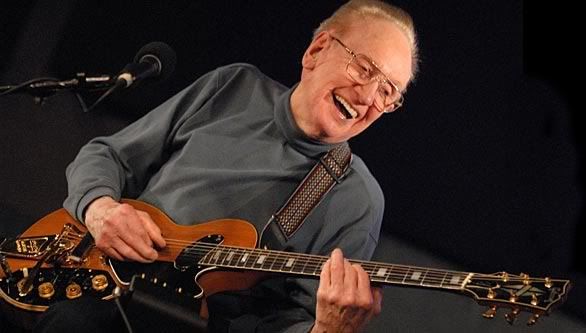
If you are a victim of G.A.S. (guitar acquisition syndrome), and I know some of you are...it's time to open your wallets or cash in your CD's. Julien's Auctions of Beverly Hills California is putting a portion of Les Paul's collection of guitars and equipment up for bid.
The auction will take place on June 8th and 9th of this year. June 9th would coincide with what would have been Mr. Paul's 97th birthday. Anyone familiar at with Les' guitars and equipment will be impressed and include:
• 1968 Prototype Gibson Les Paul Custom Recording Model (Est. $60,000 - $80,000). White flat top with Bigsby tail piece and note in Paul’s hand reading, “Reward this is the property of Les Paul A.K.A. Lester William Polfuss…Mahwah, New Jersey USA…” (I have profiled this guitar.)
• 1951 Fender Nocaster serial number 1751(Est. $40,000 - $60,000). Butterscotch with black pick guard, neck date “5-10-51 T.G.”, no body date, with original thermometer case. Guitar has replaced volume and one tone pot but originals are present. This guitar was personally gifted to Les Paul by Leo Fender who signed the back of the headstock “Leo Fender.” The guitar is uncharacteristically light weighing only 7.4 pounds.
• Early 1940s Epiphone Zephyr serial number 7133– Klunker #3 (Est. $14,000 - $16,000) Blonde, electric trap door model arch top with two chicken head knobs, one volume and one a toggle switch, with bard door opening in the back and Paul’s aluminum support system which led him to use solid body construction. This is one of three early experimental models called the “Klunkers” by Paul.
• 1927 Gibson L-5 Sunburst Cremona serial number 87230. (Est. $10,000 - $15,000) Hole drilled through the original pick guard, back re-finished, no original case. This is one of the two L-5s purchased by Les Paul, and then going by the name Rhubarb Red, at Gibson in Kalamazoo Michigan with his friend and band mate Sunny Joe Wolverton in 1933. Paul discusses the trip and purchasing this guitar extensively in his autobiography. He later gave this guitar to a friend Dave Moran, who requested the guitar be returned to Paul upon his death.
• 1952 Gibson Les Paul Goldtop (Est. $14,000 - $16,000) No serial number, Trapeze tailpiece, tuners have been changed to Grover’s, patent pending with original case. This is one of the very first Les Paul guitars produced. The back of the headstock is hand signed, “Les Paul."
• Boss BCB-6 Pedal Effects in Case (Est. $3,000 - $5,000). Six Boss pedals including: chromatic tuner TU-2 white, super chorus ch-1 blue, digital delay DD3 silver, digital reverb/delay RV3 grey. The case also contains tools including a pair of Les Paul’s sunglasses and have all of his settings recorded on masking tape. This is the gigging case used by Les Paul during his weekly shows at both Fat Tuesdays and the Iridium Jazz Club for decades.
• 1955 Steinway & Sons Grand Model B in Ebony (Est. $20,000 - $30,000) Steinway & Sons serial number 348128 (Case #K1304 3035) New York Music Room grand model B piano from Les Paul’s legendary main recording studio in his home in Mahwah, New Jersey; this is the only piano used for recordings made in the house. Steinway records indicate that the piano was completed on August 22, 1955 and delivered to the home of Les Paul and Mary Ford in New Jersey on August 25, 1955.
• Early 1970s Ampex MM1000 (Est. $3,000 - $5,000) Sixteen track recording machine using two inch tape, with custom VSO, serial number 260, with AC cable and side block. Has been re-built in good condition. This was the first Ampex sixteen track machine and is one of the most sought after sixteen track machines to this day. This machine was used in the downstairs recording studio at Les Paul’s Mahwah, New Jersey home.
• Late 1960s API Recording Mixing Console (Est. $40,000 - $60,000) Twenty eight by sixteen console believed to be one of the first few made with the desirable configuration of twenty eight mic line input channels and sixteen buss. Originally a twenty-channel mixer with an eight-channel side car added later, three 12 point patch bay main console and 144 patch bay on side car. Modules include: five – 558 EQs, one – 550 EQ, four – 553 EQs, 9 – Aengus 8 band EQs, one – old school audio mic pre 580 series size, two – 525 compressors, one – 575 oscillators, one – talk back module, four – 553 EQs, sixteen buss VU meters, and an elaborate master section with buss and cue system. The board is made by Automated Processes Inc. of Farmingdale New York, one of the most notable American made mixing consoles. Original masking tape label with channel identifications in Les Paul’s hand including, “channel 1 Les Guitar.”
• Les Paul’s Touring Rig (Est. $5,000 - $7,000) Gibson LP1 guitar amplifier pre-amp controller serial number 1038. A prototype designed by Les Paul featuring a Plexiglass panel on front with “Les Paul” two channel amplifier with a normal and box switch, crossover switch, ;vibrola switch. Les Paul’s markings in red nail polish indicated his settings on the knobs and a plexiglass panel. Additional tape markings reading Les Paul Road 1 and #1 pre-amp among others.
Les Paulveriser
Single fifteen Altec Lansing speaker with high frequency horn, power amp and Paulverizer attachment built into the cabinet. Topped with a Nakimichi 700, three head cassette player which Paul used to play along with pre-recorded tracks. This was Paul’s long-time tour rig. Sold together with a spare Nakamichi 700 and identical Altec Lansing single fifteen cabinet. (I have mentioned this guitar and the Paulverizer in a prior article.)
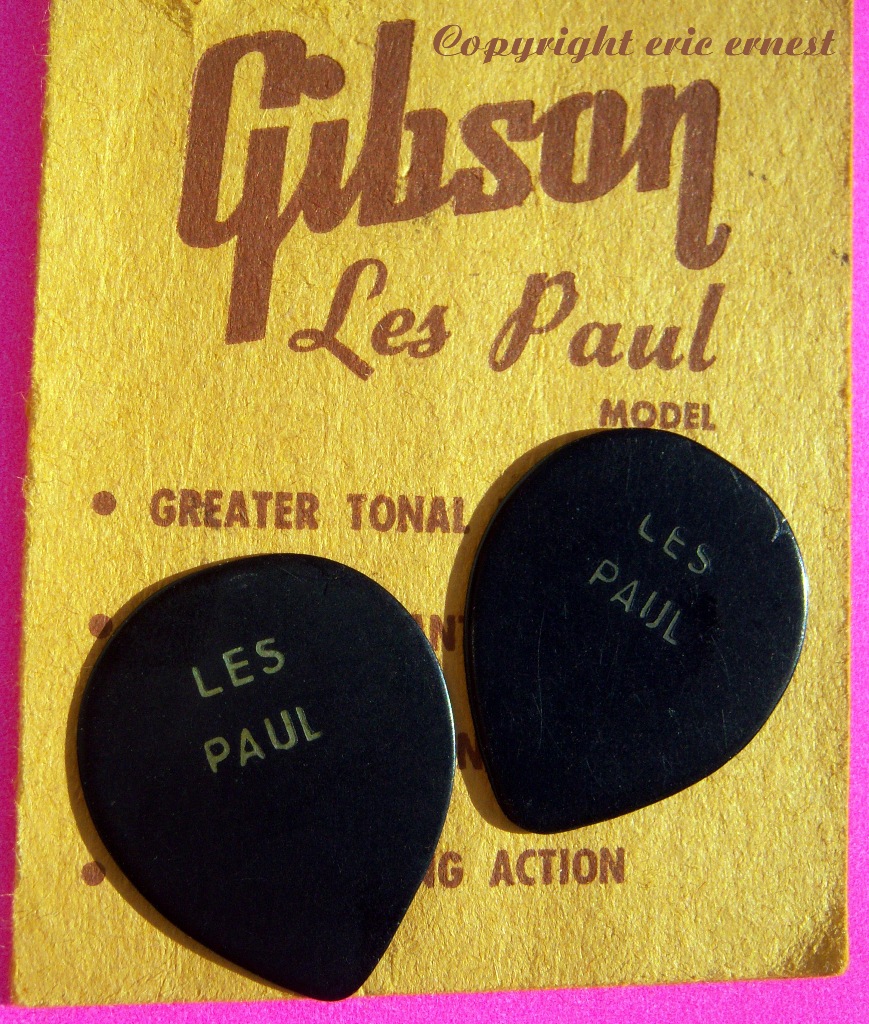
I'd like to get my hands on the touring rig, but at the moment all I can afford are a couple of Les' picks and I didn't see any mention of them.
Good luck bidding. If anyone buys anything please let me know by e-mail.
There are a handful of amplifier designers and builders that viewed the guitar and bass amplifier as a musical instrument. After all, the amplifier is the tone box and sound board for the electric guitar.
Leo Fender spent countless hours with Dick Dale, coming up with a guitar amplifier that would produce the sound that Dale needed.
Howard Dumble’s amplifiers are sought after, by those who can afford them, due to their tone-worthy sound.
Dr. Rick Jones, the president and chief designer of Acoustic Image, created lightweight amplifiers that are meant to make jazz guitarists and string basses get that smooth jazz sound.
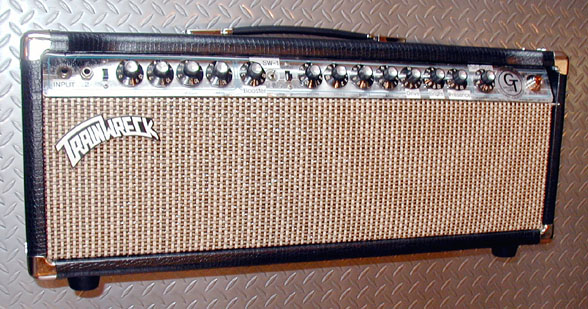
And Ken Fischer created what might be considered the first boutique amplifier, the Trainwreck amplifier.
Trainwreck took its name from Fischer’s nickname. His passion was not just building amplifiers, but building and riding motorcycles. The reckless behavior of his style of biking gave him the nick name.
After working at the Marcus transformer company, Fischer became hooked on electronics. He did mandatory service in the Navy. For those of you that do not remember the war in Viet Nam mandated compulsory military service known as the draft.
Ken was fortunate enough to study electronics while in the armed service. After completing his tour of duty, he had a number of jobs before he signed on with the Ampeg Amplifier Company. He worked at Ampeg until the company was sold to new owners.
After a few other jobs, including motorcycle repair, Ken opened his amplifier repair and modification company.
Ken’s goal was to build an amplifier that would behave as a musical instrument. Instead of just amplifying the sound of the guitar, it would compliment and flavor the guitars tone and would do so without the aid of integrated circuits, as those used in stomp boxes and modeling amps.
In his words, “I want an amp to be fast and dynamic. I want to hear the note with multiple layers of harmonic complexity, giving a fat, euphonic, and lyrical tone .I like an amp to have an awesome clean sound, yet rock my world when I dig in. My goal is to make amps that make the soundtrack to people’s lives.”
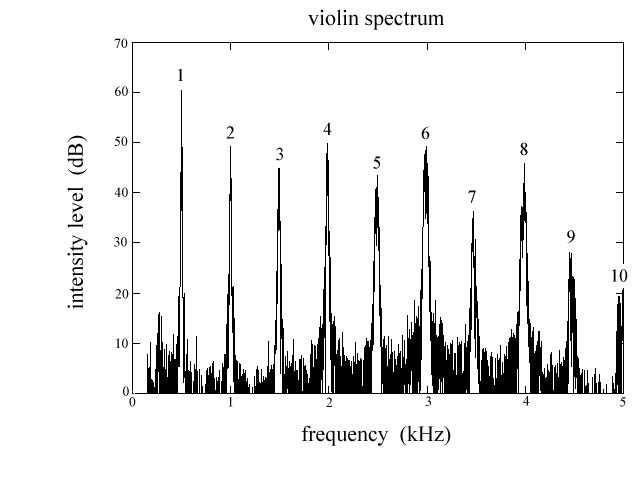
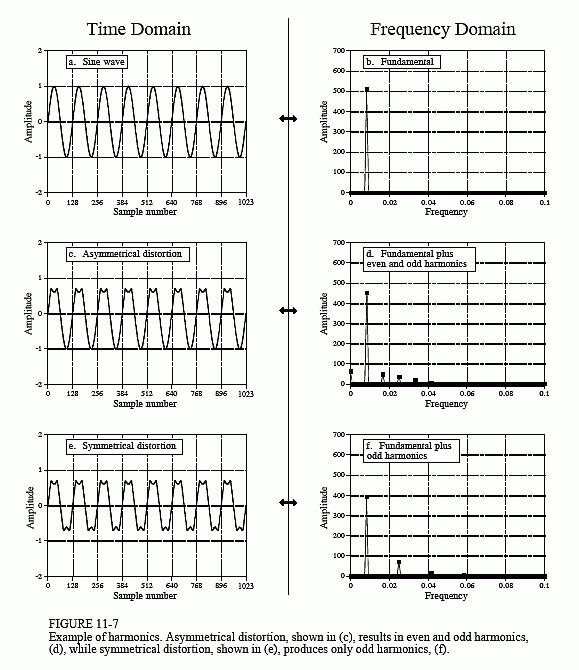
Fischer understood the concept of harmonics. A subject taught in most music theory courses. Each musical instrument has its own set of complex harmonic overtones that cause it to sound the way it sounds.
Companies that manufacture synthesizer alter the pattern of sound waves and harmonics, so that a synth can sound like a trumpet, violin or Hammond organ.
Through the use of the finest quality parts and experimentation Fischer came up with an amplifier that enhanced the guitars sound.
Trainwreck Liverpool
Trainwreck had its beginnings in 1981 in Colonia, New Jersey. Within a year later Fischer registered the Trainwreck name and was set up as a genuine business, complete with a tax ID. Word of mouth boosted his popularity.
While working at Ampeg, he developed a trouble shooting system that would pinpoint amplifier problems without taking the amplifier apart. Most repairs using this method could be done while the customer waited.
Trainwreck modded GT amp
Dean Farley and Aspen Pittman were launching Groove Tubes at the time and invited Fisher to be a dealer. Trainwreck Amp Repair became a “tube amp only” repair business as a result of this venture.
This same year a friend found some old Ampeg 2 X 12 cabinets. They did not have logos, so a friend designed the Trainwreck logo which went on to the cabs.
Another friend, Casper McCloud, persuaded Fisher to build a customized amplifier. McCloud was in the original production of Beatlemania and under contract to Atlantic records.
The organization had given him a Mesa Boogie amplifier, but McCloud was not happy with the tone. He preferred the sound of the Vox AC 30. Ken came up with his first amplifier for McCloud. It was a 15 watt model that used EL-84’s. The amp was housed in a gutted Fender amplifier.
A year later Ken went to work building a second amplifier for McCloud. This one produced 30 watts. McCloud’s friends loved the amp and wanted their own “Kenny” amp. Ken called this amp, The Liverpool 30. Although it is similar in ways to the Vox amplifier, Ken’s amp is his own unique design.
Fischer came up his vision of his ultimate amplifier. His first step was to eliminate the need for more than one channel.
Multi-channel amplifiers were in vogue at the time, but Ken felt that mixing circuits compromised the sound and response.
He wanted an amplifier that would immediately respond to pick attack and changes in touch. He eschewed any reverb and felt it a way to make up for amplifiers that sounded dry and flat. It goes without saying this would be a tube amplifier.
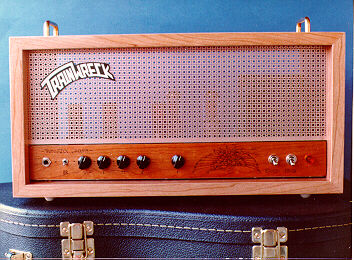
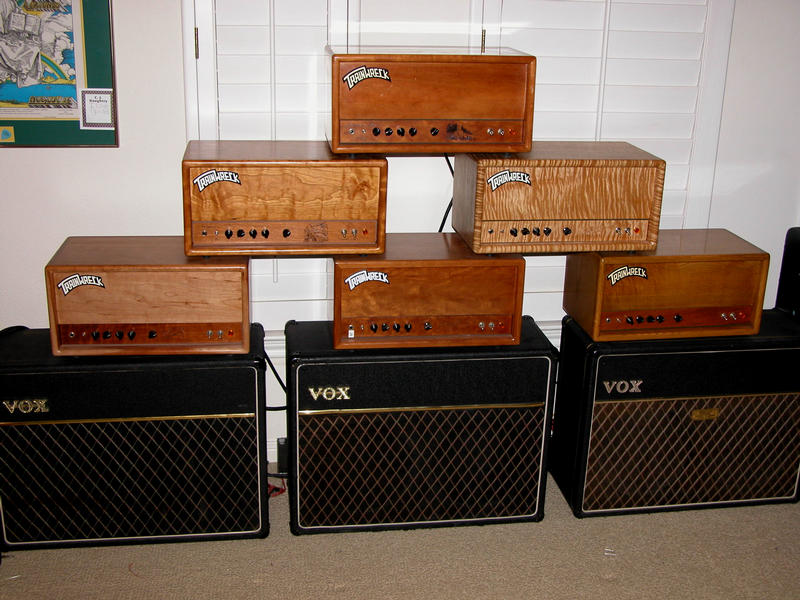
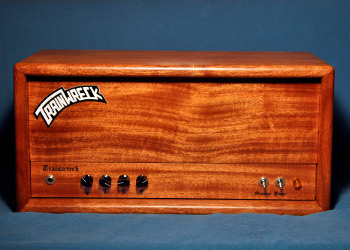
Ken’s sister-in-law came up with the hardwood design for the amplifier heads. This distinctive style set Trainwreck apart from other amps and is still being copied to this day.
Another customer had been playing through 100 watt Marshall Amplifiers. He complained that those amps were too loud and did not get the lead solo tones he was going after. The customer took a Marshall Head to Fischer for modification.
Ken cut the amp down to one channel and one input preamp. He also installed phase inverter circuitry. This mod really beefed up the gain and the harmonics.
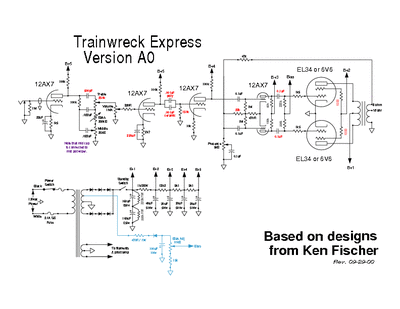
A year later, Fisher later changed this design to use EL-34 power tubes. This amp was named The Express.
One thing you need to know about Trainwreck amps; no two amps sound alike. Each amp was hand built and signed by Fischer inside the cabinet. Each new amp was sold with a signed owner’s manual.
Ken’s blueprint for his ultimate amplifier came down to simplicity. One channel provided better response. In his opinion multiple channels compromised the sound. He eschewed reverb and claimed that it was used as a cover up to improve the sound of amplifiers that sounded too dry.
Ken was equally adamant about not using effects loops. The amp’s sound was good enough. If the guitarist must use effects, they should come in front of the amp to not compromise the amps sound.
Ken went on to build a variety of amps. Each was housed in a hard-wood cabinet with the Trainwreck logo burned into the wood. Ken showed a disdain for what he referred to as “ugly black boxes” that housed most guitar amps.
It was in the year 1988 when Fischer contracted the flu. He never recovered from the particular strain of the virus.
His doctors diagnosed him with an acute form of chronic fatigue syndrome known as CFIDS or chronic fatigue immune dysfunction syndrome with a vestibular (balance) disorder. Outside of the USA this disease is known as M.E. or myalgic encephalomyelitis In July 1994 he was diagnosed with bleeding ulcers. His conditions worsened to the point were he could no longer work. He suffered with this condition for the rest of his life and was forced to quit working.
Ken’s most popular amplifier seems to be the Express, followed by the Liverpool and the Rocket. A music dealer called Ultra Sound Amp Sales stocks a few Trainwreck amplifiers.
If you are interested, have a rich uncle or get ready to take out a bank loan. Trainwreck amps range from $35,000 to $45,000 USD. Ultra Sound rents them for $300 a day or $1200 a week. When Fischer started selling his amps, the went for around $600. He could have never believed the price they command these days.
Komet Limited Edition
However, if you are interested there are some other options. Komet Amplifiers were designed by Ken Fisher, before his passing.
When Fischer reached his 60th birthday, he built an amplifier for himself. He used whatever spare parts were laying around his workshop and didn’t even bother to produce a schematic for the amplifier.
He wanted an amp that would sound great with his old SG PAF Gibson.
His choice of wood was beautiful and he dubbed this amp, The Songwriter.
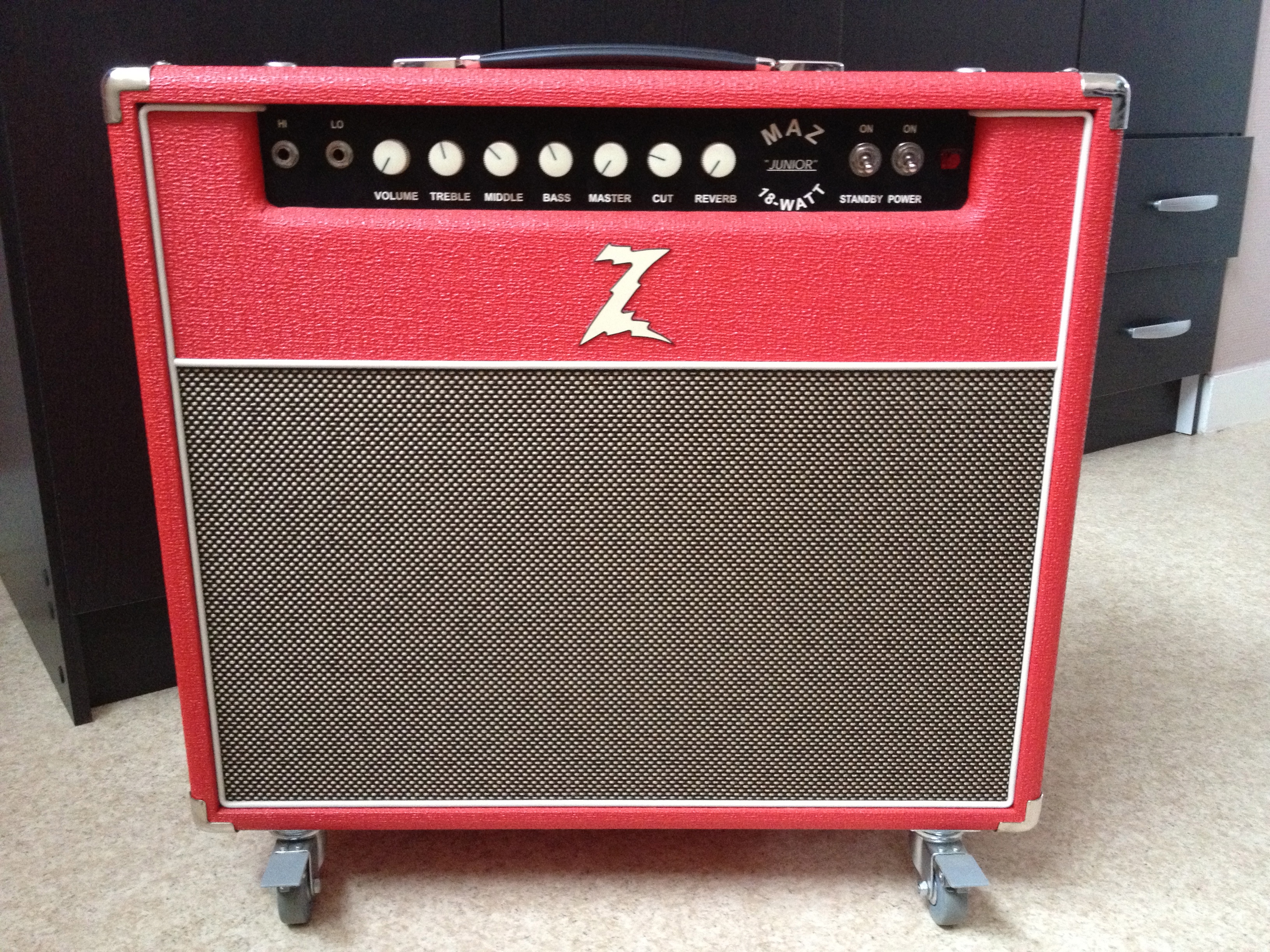
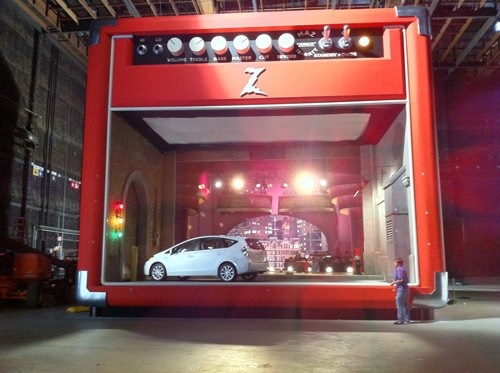
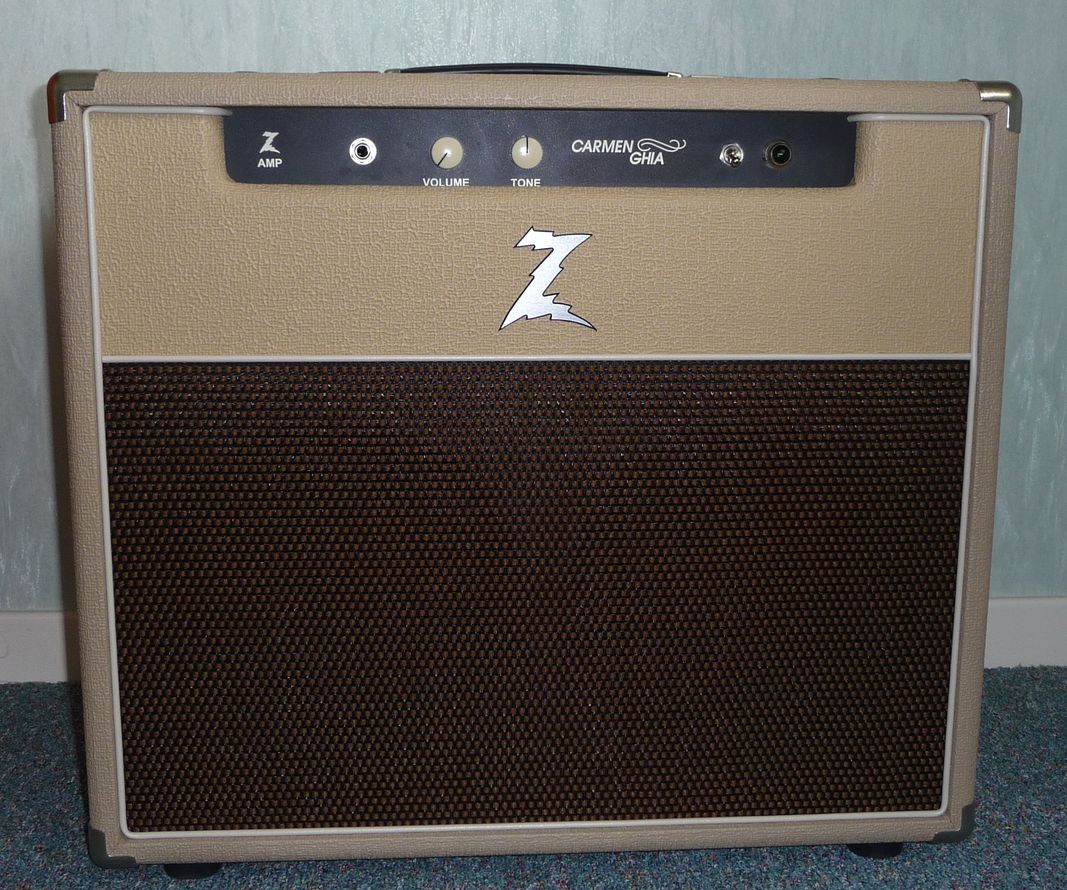
The past few nights a TV commercial for the Toyota Prius has aired, which prominently features a red Dr. Z amplifier. An old friend of mine ran into the “Doctor” several years ago at a Louisville Kentucky music store. He found the Doctor to be a warm and wonderful man, and my friend walked out of the store with a brand new Carmen Ghia amplifier.
For those of you unfamiliar, Mike Zaite, a.k.a. Dr. Z played drums in a Cleveland Ohio rock band. His father owned a TV repair shop. This was back in the days of Zenith and RCA televisions and radios that used tubes and were repaired instead of being discarded. So Dr. Z got his electronics educational start from his Dad.
He got his start in the music business by building PA’s for local bands. Zaite admits to “studying and tweaking the inner workings of his band mate’s amplifiers, when the were not around.
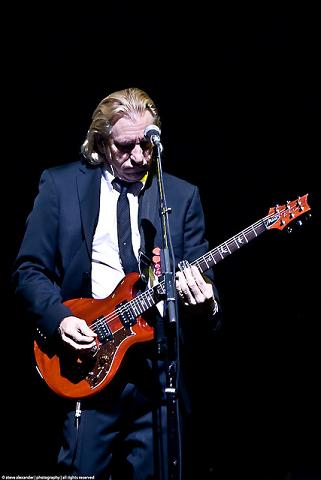
He eventually went off to Kent State University and got a degree in electronics. It was during those years he became acquainted with another electronics student, Joe Walsh. This relationship became very eventful in later years.
Zaite went on to a lucrative job as a medical electronic engineer for General Electric. But Zaite’s first love was tinkering with analog electronics, such as amplifiers and P.A.’s.
In 1992, Joe Walsh recalled the great guitar amplifiers that Zaite was building. Walsh borrowed one and took it apart in his hotel room. He was so impressed with the quality that he asked Zaite to build an amplifier for an upcoming tour with the Eagles. A year and a half later Walsh ordered a second amplifier from the Doctor. This amp caught the eye of editors at Guitar Player magazine. A feature article gave a positive review to Zaite’s SZR-65.
This was a large boost for Dr. Z amps. This amplifier was originally conceived as a head, but later was sold as a reverb combo amplifier.
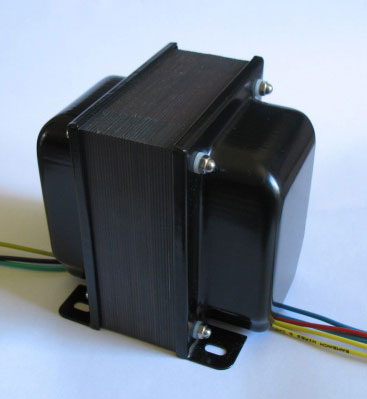
The SZR-65 is the only amplifier Zaite has built that has a cascading gain circuit. This was during an era when Marshall amplifiers ruled. Zaite used an ultralinear output transformer.
This gave the amplifier the smooth feel of triode tubes with the power of pentode tubes.
Zaite's first guitar amplifiers, were based on a Hammond organ reverb amplifier. He made modifications to the schematic, so he could build his own version.
His first commercially available amplifier was the 18-watt Carmen Ghia, which was powered by twin EL84 tubes, a 12AX7, and a 5751, both for the pre-amp section. The only two controls on the Carmen Ghia were for volume and tone.
This is the amp he based on the Hammond Reverb power amp. I assumed it was named for the VW sports car of the 1960’s, however it was named for his grandson, Carmen.
It was this amp catapulted on the fact that players had developed an interest in lower power amps that could be overdriven at low volumes.
Around 2001, Dr. Z amps became the favorite of Country-Rocker Brad Paisley. Zaite created several signature models for Paisley such as the Stang Ray,Prescription ES and the Z Wreck (which may have been based on Ken Fisher’s Trainwreck amp.) Paisley performs several Dr. Z amps at every show. Paisley currently endorses the Dr. Z DB4.
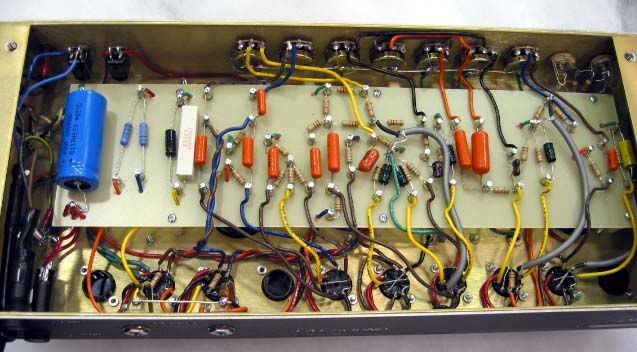
Check out those tidy leads
Zaite’s career in medical electronics has served him well. Manufacturers of medical devices fall under strict government guidelines. Therefore they are overbuilt, to prevent any harm to a patient.
Zaite follows these guidelines in his construction by using chromate converted aluminum for his amplifiers chassis. This improves the grounding of the amplifier, by raising the conductivity of the chassis. Some early Marshall amps used aluminum chassis and so did Ken Fisher’s Trainwreck amp as well as some other boutique amplifiers.
Dr. Z also uses ultralinear transformers and amp design. These give his amplifiers respond richly like a triode tube amp, but with the power of pentode tube amplifiers. This results in higher dynamics for the primary note and harmonics.
Dr. Z also uses specially designed coupling capacitors from Sprague. Because he purchases them in a very large batch, the company is possibly more concerned about consistency.
Zaite prefers Celestion speakers and most of the earlier models used Celestions.
However Dr. Z has created his own line of speakers. Some newer amps use Dr. Z speakers and other models come with Celestion speakers.
Zaite also offers the Z-Best speaker cabinet. This is a 2 – 12” ported specially designed cabinet that has an adjustable shelf behind the speakers and is based on the long throw ported Theile design.
Most of us are familiar with the fact that different style cabinets are just as important as tone controls. The adjustable shelf offers a variety of sounds to fit your style.
This closed-back cabinet comes with a variety of drivers, depending on your desired tone.
Dr. Z also offers a 2 – 12” open back cabinet and cabinets feature one, two or four 10” speakers.
The doctor also has developed a Lens for speakers on amps that have open-back cabinets. The Lens equates to the Tone Ring used on older Fender amps. Dr. Z’s Lens is adjustable, for desired sound projection.
Two other features that make “Z’s” stand apart are the Cut control. This control is tied into the output tubes and gives the player the ability to scoop frequencies and give the sound more or less brightness.
The other feature is what Zaite refers to as a conjunctive filter, which affects the impedance of the transformer allowing frequencies to be balanced, thus providing even amplitude across the spectrum.
If the players picking is even on each string, he or she will get the same volume on each string, making the sound more dynamic.
Dr. Z offers a variety of amplifiers, from the 5-watt Mini Z to the 60-watt SRZ-65. Most of his amps are in the 30-watt range, which he fells is loud enough for a small venue or when mic’d can blow away an arena.
He says his favorite model is the Route 66. This is his top seller. The 32-watt amp head delivers a sound loosely based on the Marshall JTM-45, although the tonal qualities are unique, due to the use of the EF-86 nine pin pentode tube.
This unusual tube is used on high end stereos for accurate transfer of signal, balance and headroom.
The MAZ-38 NR is a very recognizable amp that was made popular by Joe Walsh. It’s based on 4 EL-84’s, 3 12AX7 and a GZ-34 rectifier. This amp comes with the “cut” feature and provides the player with 38 watts of RMS power.
Dr. Z has some attenuators he can prescribe. The Z-Air brake is the top of the line. The Z-Brake Lite can be mounted inside any open back cabinet. If you prefer the Dr. Z-Air Brake can be used for closed back cabs or as a pedal board feature.
Getting back to the Dr. Z amp featured in the Toyota Prius ad. I’m not certain if there was an actual connection with Zaite’s company. I am told the director was a fan of Dr. Z amps and thought the amp was cool looking and fit into the aesthetic nature of the advertisement.
Watch the commercial carefully and you will see the Dr. Z in the back of the Prius is a MAZ 18 with 7 control knobs. As the commercial procedes, the MAZ 18 is now a warehoused sized mock-up of the amp with enough room for the Prius, a Sousaphone player and a party.




.jpg)

















.bmp)