Tuesday, February 9, 2010

KAPA Guitars


KAPA Guitars was founded in 1963 by a Dutch immigrant named Koob Veneman.


Mr. Veneman was the owner of Veneman's Music Emporium, a musical instrument store in Silver Spring Maryland.

During the early 1960’s Veneman made the decision to build his own unique line of guitars. This was the years of the British Invasion and the Guitar Boom and Mr. Veneman wanted his piece of the pie.

Hofner with Watkins Amplifier


Many of the guitars in stock at the Veneman store consisted of guitars that were imported from Germany and Italy.


The connections with these companies provided him with an excellent opportunity to purchase supplies from overseas manufacturers. His plan was to order guitar parts from European suppliers, assemble them in Edsmonston Maryland where the guitars bodies were created. I understand that since he was unable to obtain a Fender franchise, he decided to create his own solid body guitars.

The necks, pickups and electronics originally came from German manufacturer Hofner. The guitars generally were equipped with two slider switches to control on/off function of the pickups, which is typical of Hofner's design of the 1960’s. In the company's later years they made their own pickups, which looked similar to Hofner units.

The tuners were made by Schaller. Kapa made his own bridges and tremolo assemblies. Most KAPA guitars are equipped with the tremolo.
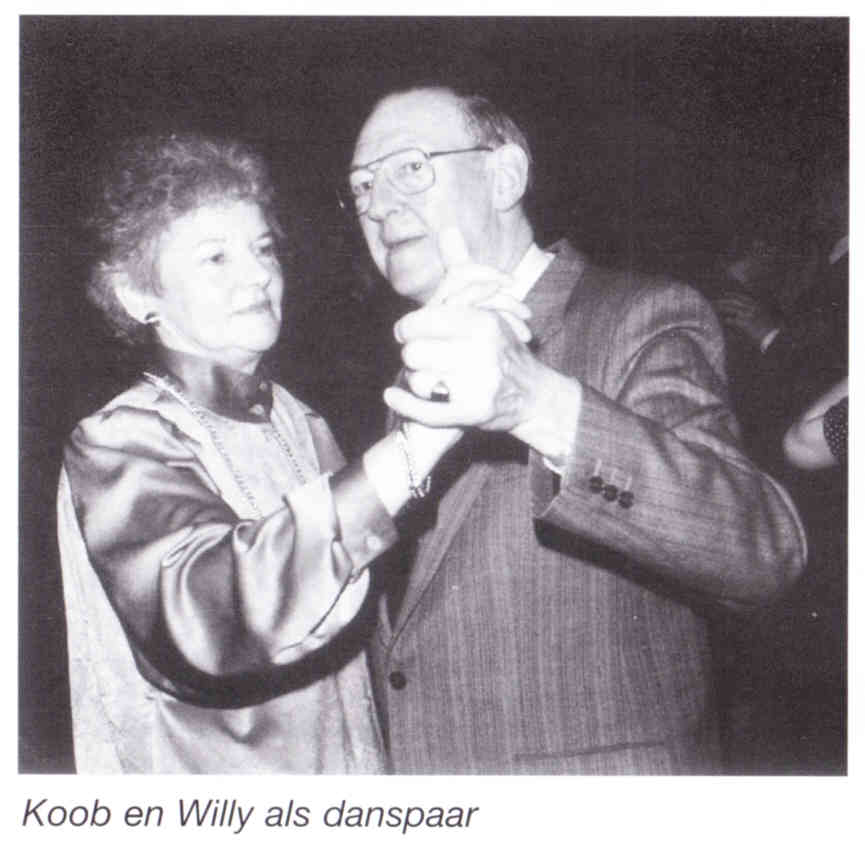

Veneman named the company after himself, wife and children by using an anagram of their first names. Of course his name is Koob, his son’s name, Albert, his daughters name, Patricia and his wife’s name Adeline. Later Koob’s brother joined the family business.


KAPA necks are ultra thin, which was sort of a ’60 thing. Guitarists wanted to play fast and for some odd reason, manufacturers equated this with skinny necks instead of low action. In fact, some Gibson ES-335’s of this era had thin necks.

The bodies also were thin in comparison to Fender and Gibson bodies.
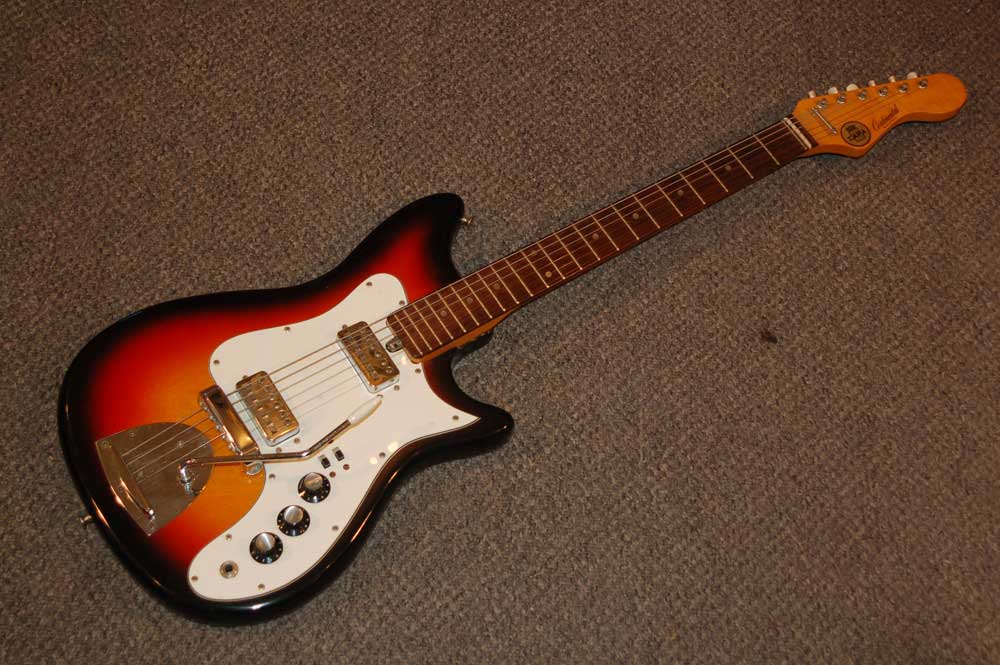
KAPA was able to sell it's instruments at a price well below the competitors.

It was rumored that the Fender Corporation theatened to file a lawsuit against Kapa in the 1960's.

I cannot seen to find anything to verify a suit. If anyone knows about this, email me.


It is also interesting that KAPA 12 string guitars came out around the same time that Fender released the Fender XII.


The cost of the KAPA was almost half of the Fender instrument.

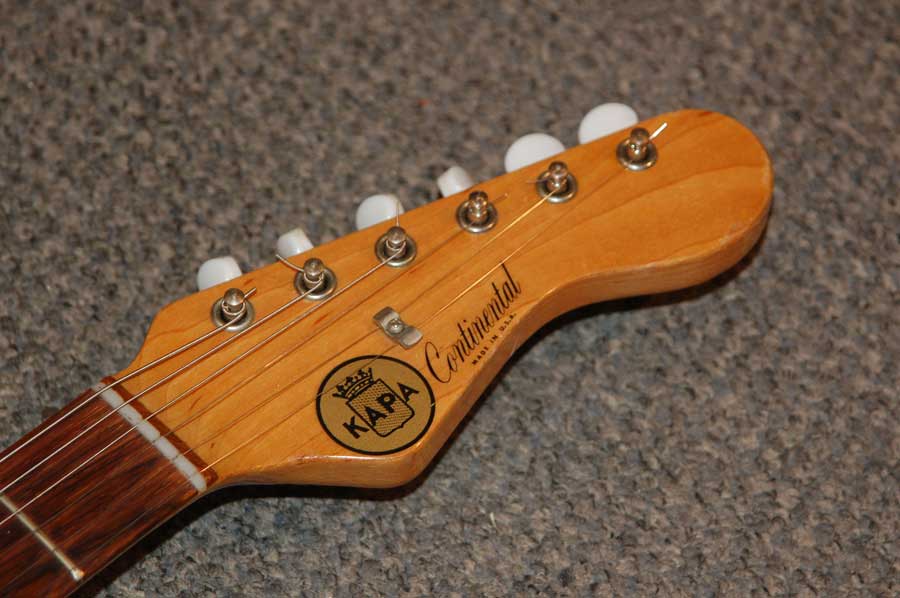
To the unfamiliar, one could mistake a KAPA for a Fender guitar, based on it's Jaguar and Stratocaster-like shapes and the shape of the headstock. The KAPA logo used script on the headstock was very similar to what we call the Fender Spaghetti script. However the KAPA logo had a circle with a crest in the middle that was similar to the Veneman family crest.


KAPA guitars were founded on some great principals set up by the Venemans. The instruments were well made, playable and affordable. Plus they were made in the USA.


The guitar boom eventually wound down. Competition was fierce. And Asian made instruments were getting better all the time.


During the companies final years some of the production was outsourced to Japan, no doubt due to the high cost of labor.

Kapa Series 500 and Kapa Challenger
Finally in 1970 KAPA ceased production and sold it's assets to Mosrite and Microfret Guitar Companies. Mosrite also outsourced the KAPA instruments production to Japan.

One of the earliest models produced by KAPA was called The Challenger which had a Strat-like body. In 1966 the name was changed to The Continental, which had a slightly different shape.

The Continental was probably KAPA's most popular model. The Challenger had two pickups. The Continental was available with one or two pickups. The Challenger was available in six and twelve string models. One unusual feature on KAPA twelve string guitars was the fact that many of them came with a tremolo bar.


The Cobra was a slightly smaller instrument with just one pickup. The Wildcat was another instrument that slightly resembled a Stratocaster and it had three pickups.


One of the more well known KAPA guitars was called The Minstrel.

This was a 12 string guitar that had a tear drop shaped body sort of resembling an electric lute.

These instruments were also being produced during the same time Vox was selling guitars and the Vox Teardrop was one of their most popular models.

KAPA also made a hollow body model called the 506. It resembled a Gibson ES-335. The headstock on this guitar was three-on-a-side. The KAPA script was engraved, instead of being placed as a decal.


The metal trapeze tailpiece was also engraved with the KAPA name and was similar to one Hofner used on their guitars. This guitar was built in Japan with German parts. There were other guitars in the KAPA 500 series, all were made in Japan.


KAPA guitars are still available through collectors and sellers. If set up properly they are nice and affordable players.

It is also wonderful that KAPA guitars were a product of the United States.

I have recently learned of the passing of Koob Veneman.  May God bless him and his family. He left his mark in the history as a luthier and enteprenuer.
©UniqueGuitar Publications (text only)


Saturday, February 6, 2010

Made In Japan - The Matsumoku Industrial Connection

Matsumoku Industrial was established around 1900 as a woodworking manufacturer. However the company is best known for the guitars and basses it built.


Shortly after WWII the Singer Corporation established a division known as Singer Sewing Machine Company Japan and contracted Matsumoku to build sewing machine cabinets and furniture. This opened up business with other companies looking for inexpensive wood procucts, such as cabinets, chairs etc.

The company then ventured into musical instrument production in the mid 1950’s and built guitars that typically classical versions, violins and other steel string instrument.


Due to competition, Matsumoku set out to build instruments of high quality, basing their designs on non domestic instruments from other companies of this era.


In the 1960 woodworking machines had greatly improved. The newer technology allowed enhanced production.

The world took note and Matsumoko was contracted to build guitars and guitar parts for other companies. This is known as jobbing.


Matsumoko either built or sold parts to Vox, Greco, Yamaha, Aria, Norlin/Gibson, Univox, Westbury and Washburn.


The large music conglomerate, St. Louis Music Company contracted with Matsumoku to build it’s line of Univox, Electra and Westbury brands.


Matsumoku also built it’s own guitars using the Westone brand.

The Matsumoku Company formed a relationship with the Arai Company of Japan. This company built mostly classical guitars. Their name was later westernized to Aria.

In the mid 1960’s the companies teamed up to produce instruments under the Guyatone brand. Aria’s expertise was in domestic production, exporting and sales, while Matsumoku’s primary concern was production.


In the early 1970’s Gibson made a bold move to move their production of Epiphone guitars to Japan. They could produce instruments based on Epiphone designs, but sell them at a much lower price due to cheaper labor costs.


Gibson hired Aria to do the job. In turn, Aria hired Matsumoku as a subcontractor. So Matsumoku essentially built most of the Epiphone line of higher quality instruments such as the Sheraton, Riviera, Casino, Emperor and Flying V.

Many of these instruments started out with bolt-on necks. Because of the tradition of U.S. made Epiphone guitars using set-in necks, by 1975 Matsumoku changed the specification and began producing set neck instruments.

In the late 1980’s Singer Sewing Machines Corporation was bankrupt. This caused Matsumoku became a liability. Gibson/Norlin moved it’s operations to Korea, due to cheaper production costs. These factors caused Matsumoku to cease production and went out of business.

'60's Univox
In the early 1960s the Unicord Corporation was manufacturing electronic transformers. This lead to the purchas of a Westbury New York company called the Amplifier Corporation of America.

Through this acquisition, the company started a line of Japanese produced guitar and bass amplifiers sold under the Univox brand.

Later on the company also sold guitars that were primarily copies of United States instruments. This lead to lawsuits. However, due to price point, the sales were brisk.

In 1975 the Gulf and Western Company, looking to diversify, purchased Univox. Guitar production remained with Matsumko. However the Westbury brand was made in Korea.

Univox was dealt a blow when the Matsumoku company had a large fire in their production plant.


Gulf and Western sold their interest to the Korg Corporation which ended Unicord/Univox. Westbury guitars were sold by a company in Westbury, New York called Music Industries Corporation. This was the demise of Univox.


Univox’s claim to fame was their “lawsuit” instruments. These were replicas of guitars made by Gibson, Rickenbacker, Dan Armstrong, Fender and Mosrite. Lawsuit guitars are a whole ‘nother story that is very complex.


I recall seeing and playing some of the lawsuit instruments in two different music stores back in the 1970’s.

Wert Music was located in Erlanger Kentucky. The had a Les Paul copy and a Gibson EDS-1275 (six string – twelve string double neck) copy in stock. Both guitars were inferior to the domestic Gibson models. The EDS -1275 was poorly set up with the strings at least a half an inch above the fretboard. Both models appeared to be authentic but for the name on the headstock and the bolt on neck plate.


Shortly after this a Music Store in southern Indiana had just opened and advertised a Fender Stratocaster-style guitar selling for $99.

I drove out to take a look at it. It was vastly inferior to any Fender product.

However there was also a Univox Hi-Flyer model that was an excellent copy for around $200.

Fender, Gibson and other United States manufacturers all have moved into Asia and Mexican markets for some of their production, which proves the saying, "If you can't beat 'em, join 'em."


Wednesday, February 3, 2010

Gibson Everly Brothers Guitar

In the 1960's Gibson Guitars was owned by CMI (Chicago Musical Instruments). During this era CMI/Gibson produced many guitars endorsed and possibly designed by artists of the day, such as Johnny Smith, Tal Farlow and Barney Kessel. Gibson had struck gold with Les Paul's design and endorsement, perhaps it may strike again.


The Everly Brothers started making hit records in the late 1950's with such songs as Bye Bye Love, Bird Dog and Wake Up Little Suzie.

At the time they were both playing Gibson J-200 models.
CMI/Gibson recognized their fame and built a distinctive guitar for the brothers.


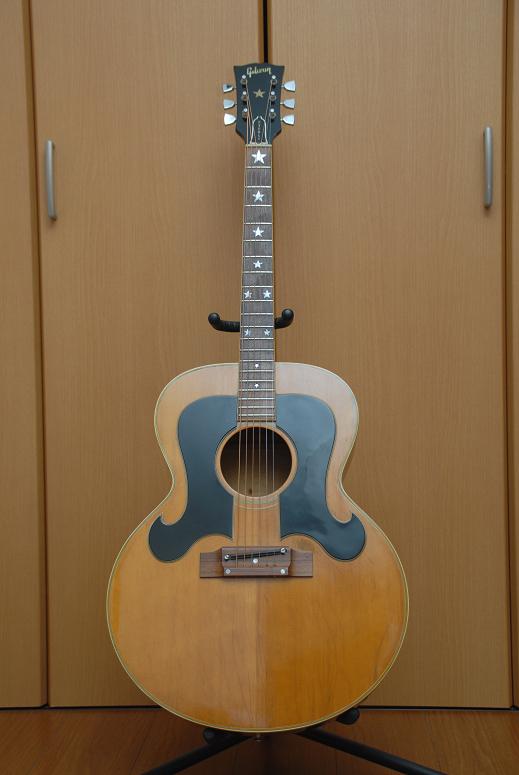
It was similar to Gibsons J-185, except the body was thinner and the twin tortoise shell pickguards covered a good portion of the guitars top. The fret makers on the rosewood fingerboard were pearl stars.


The J-200 was 17" at the lower bout, while the Everlys' guitar was only 16". The bridge was adjustable.

This is a characteristic that some people dislike, because they say it impacts the sound. The strings ran through the bridge instead of using bridge pins.


The guitars top was made of spruce. The back and sides were maple and the neck was mahogany. The finish was black during these years. It was designed to be a visually striking instrument. The headstock was also finished in black with a Gibson decal and a star decal.

The two ply truss rod cover was black with white trim with the inscription Everly.


As mentioned already, some guitar aficionados do not like the height adjustable bridge saddle.


Others are adverse to the large pickguards and their effect on the sound quality. Many collectors believe Gibson acoustic instruments produced in the 1960's were inferior to those built in the 1950's and earlier.

The guitar was manufactured from 1962 through 1979. It was reissued in 1986 under the name J-180. In 1992 it once again was designated The Everly Brothers Guitar until 1994 when the name went back to the J-180.


Phil and Don Everly were raised in a western Kentucky town called Brownie which was located in Muhlenberg County. Their father, Ike Everly, was a popular finger style guitarist.


In their home state of Kentucky the style is known as thumb picking. A fellow named Mose Rager has been called the first to play in this style. Mr. Rager also lived in Muhlenberg County.
Rager passed the style on to Merle Travis. Merle grew up in this same area.


One of Ike's friends and fellow guitarist was Merle Travis,  As a young man, Chet Atkins listened to recording of Travis and took the style a step further.


Currently Eddie Pennington, who hails from Princeton Kentucky learned the style from Mose Rager. Eddie is still playing guitar and holds a festival each year in Western Kentucky.

Ike Everly formed a family band with his wife and two sons. The family's repetoire was a mix of country western, Appalachian folk music and Gospel songs. They had their own radio show in Iowa. Ike Everly was fond of the Gibson J-200.


He taught his sons to play, in a style that has becme known as Travis picking and how to play guitar tuned to open chords. Don played some of the Brothers songs in open G tuning.

Many of the Everly Brothers greatest songs were written by the husband/wife team of Felice and Boudleaux Bryant. This couple was part of the Acuff-Rose organization. The official state song of Tennessee, Rocky Top Tennessee, was written by the Bryants.


Boudleaux decided their songs would sound great if sung by a duet. Columbia records main producer in the 1960's was Chet Atkins.


Chet gave the Everly Boys an opportunity to cut a record. Chet even played guitar on their recordings. The rest is history.


Although the standard Everly Brothers model is black with tortoise shell pickguard, the guitar was also produced with blond pickguards on a black body. I have seen models with a natural finish and black pickguards. Some were manufactured in a sunburst finish.


Even Elvis owned an Everlys' mode in a natural finish with a single tortoise shell pickguard and a naturally finished headstock. "Thank you, thank you very much"


Monday, February 1, 2010

More About Amp-In-Case Guitars

In the recent article about the Sears/Danelectro Amp-In-Case, I mentioned that Nat Daniels of Danelectro was not the first to produce a guitar that was sold with an amplifier built into the case.

That distinction goes to the National Guitar Company which was founded in the 1927 by John Dopyera and Paul Beauchamp.

The board of National Guitars included John Dopyera, the inventor of the resonator guitar, his brother Rudy, Paul Beauchamp and Adolph Rickenbacher.

Rickenbacher and Beauchamp were more interested in building electric guitars, while the Dopyeras' brought the outsiders into the company to fund it and boost sales. National Guitars had a patent on the single cone resonator metal guitar. So John Doperya invented a tri-cone model in a wooden body and called the new company Dobro. Some say this is a combination of Dopyera and Brothers, but most agree that Dobro is a Slovak word meaning Good.

Legal wrangling ensued between Dobro and National. In 1932 Dobro won the rights and took control of National Guitars and renamed the company National Dobro.

WWII halted production.


In 1942 Louis Dopyera joined forces with Victor Smith and Al Frost. The combined first initials of their first names were blended into the acronym VAL Company or VALCO.

Valco manufactured guitars and amplifiers but did not sell them under the Valco brand. They acted as a jobber and sold many of their products through other companies.

They did have two in house brand names. Their more expensive line of guitars and amps were sold under the brand name National. The less expensive models were sold under the Supro brand.

Sears and Roebuck catalog

Prior to teaming up with Danelectro in the 1960's, most of Sears guitar amplifiers were manufactured by Valco.

In the 1940's and 1950's Oahu was a popular brand for Hawaiian guitar players.


These amps and steel guitars were manufactured by Valco, as were Airline, Custom Kraft, Harmony amps, Kay guitars and lapsteels, Penncrest and a slue of others.

During my research for Silvertone amplifiers I ran across an excellent web page called Silvertone World were I discovered the Danelectro Company was not the first company to produced Silvertone's amp-in-case, amp/guitar.

In the 1940's Valco produced an amp-in-case model for Sears/Silvertone. The amp/case came with an Oahu lap steel guitar.

Valco also produced the same amp complete with a Supro brand Spanish style electric guitar.


Both amp/cases were tube amps. It is my opinion the Danelectro is a cleaner, better designed model.


The guitar fit diagonally in the Danelectro case. And the case was lined with felt.

Danelectro guitars were very light due to the hollow body construction.

The case was medium density fiberboard, so it was much lighter than the wooden Valco case.

The Valco produced Supro/Silvertone case was made of solid wood. A wooden plank was placed between the guitar and amplifier to keep the guitar from the glass tubes.


This Valco Guitar and Amp-In-Case appears to be twice as deep as the Danelecto model.


Additionally there was no chassis on the Valco model to cover the amplifier. The speaker was a Jensen 8" model. Despite the slightly larger speaker, the amplifier was not as loud as the Danelectro Amp-In-Case.


Both are very unique and were under appreciated during the time they were offered for sale. They are now sought after antiques.


Here is another model produced under the Airline Brand Name.


Three of the photos were from Silvertone World web page. Check their web site out. It is excellent.