Tuesday, February 28, 2012

Trainwreck Amplifiers - Ken Fischer

There are a handful of amplifier designers and builders that viewed the guitar and bass amplifier as a musical instrument. After all, the amplifier is the tone box and sound board for the electric guitar.


Leo Fender spent countless hours with Dick Dale, coming up with a guitar amplifier that would produce the sound that Dale needed.

Howard Dumble’s amplifiers are sought after, by those who can afford them, due to their tone-worthy sound.

Dr. Rick Jones, the president and chief designer of Acoustic Image, created lightweight amplifiers that are meant to make jazz guitarists and string basses get that smooth jazz sound.

And Ken Fischer created what might be considered the first boutique amplifier, the Trainwreck amplifier.

Trainwreck took its name from Fischer’s nickname. His passion was not just building amplifiers, but building and riding motorcycles. The reckless behavior of his style of biking gave him the nick name.


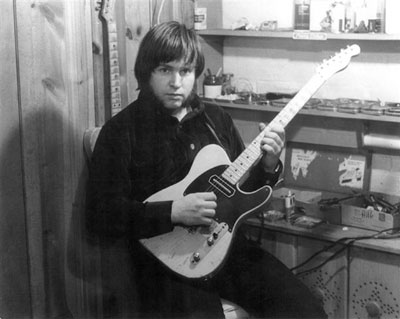
After working at the Marcus transformer company, Fischer became hooked on electronics. He did mandatory service in the Navy. For those of you that do not remember the war in Viet Nam mandated compulsory military service known as the draft.

Jess Oliver
Ken was fortunate enough to study electronics while in the armed service. After completing his tour of duty, he had a number of jobs before he signed on with the Ampeg Amplifier Company. He worked at Ampeg until the company was sold to new owners.


After a few other jobs, including motorcycle repair, Ken opened his amplifier repair and modification company.

Ken’s goal was to build an amplifier that would behave as a musical instrument. Instead of just amplifying the sound of the guitar, it would compliment and flavor the guitars tone and would do so without the aid of integrated circuits, as those used in stomp boxes and modeling amps.

In his words, “I want an amp to be fast and dynamic. I want to hear the note with multiple layers of harmonic complexity, giving a fat, euphonic, and lyrical tone .I like an amp to have an awesome clean sound, yet rock my world when I dig in. My goal is to make amps that make the soundtrack to people’s lives.”
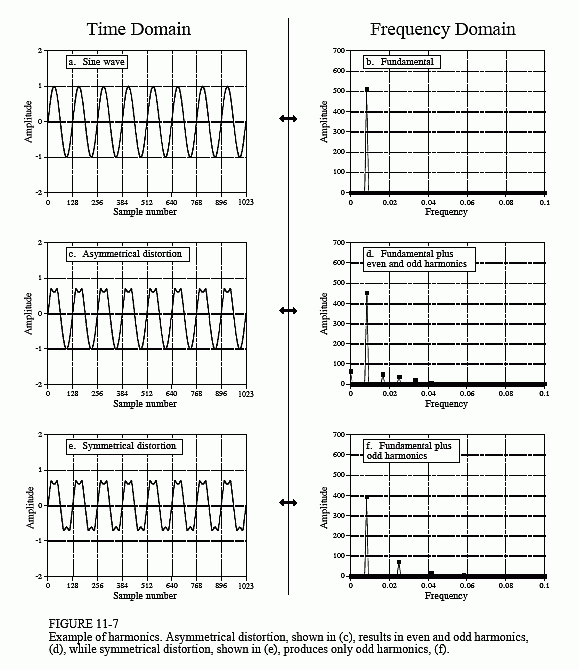
Fischer understood the concept of harmonics. A subject taught in most music theory courses. Each musical instrument has its own set of complex harmonic overtones that cause it to sound the way it sounds.

Companies that manufacture synthesizer alter the pattern of sound waves and harmonics, so that a synth can sound like a trumpet, violin or Hammond organ.

Through the use of the finest quality parts and experimentation Fischer came up with an amplifier that enhanced the guitars sound.


Trainwreck Liverpool

Trainwreck had its beginnings in 1981 in Colonia, New Jersey. Within a year later Fischer registered the Trainwreck name and was set up as a genuine business, complete with a tax ID. Word of mouth boosted his popularity.
While working at Ampeg, he developed a trouble shooting system that would pinpoint amplifier problems without taking the amplifier apart. Most repairs using this method could be done while the customer waited.
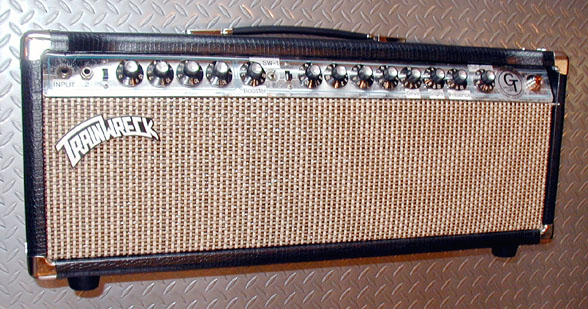
Trainwreck modded GT amp
Dean Farley and Aspen Pittman were launching Groove Tubes at the time and invited Fisher to be a dealer. Trainwreck Amp Repair became a “tube amp only” repair business as a result of this venture.

This same year a friend found some old Ampeg 2 X 12 cabinets. They did not have logos, so a friend designed the Trainwreck logo which went on to the cabs.


Another friend, Casper McCloud, persuaded Fisher to build a customized amplifier. McCloud was in the original production of Beatlemania and under contract to Atlantic records.


The organization had given him a Mesa Boogie amplifier, but McCloud was not happy with the tone. He preferred the sound of the Vox AC 30. Ken came up with his first amplifier for McCloud. It was a 15 watt model that used EL-84’s. The amp was housed in a gutted Fender amplifier.

A year later Ken went to work building a second amplifier for McCloud. This one produced 30 watts. McCloud’s friends loved the amp and wanted their own “Kenny” amp. Ken called this amp, The Liverpool 30. Although it is similar in ways to the Vox amplifier, Ken’s amp is his own unique design.
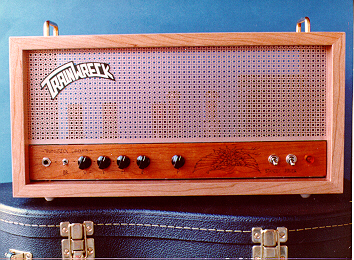
Fischer came up his vision of his ultimate amplifier. His first step was to eliminate the need for more than one channel.

Multi-channel amplifiers were in vogue at the time, but Ken felt that mixing circuits compromised the sound and response.

He wanted an amplifier that would immediately respond to pick attack and changes in touch. He eschewed any reverb and felt it a way to make up for amplifiers that sounded dry and flat. It goes without saying this would be a tube amplifier.
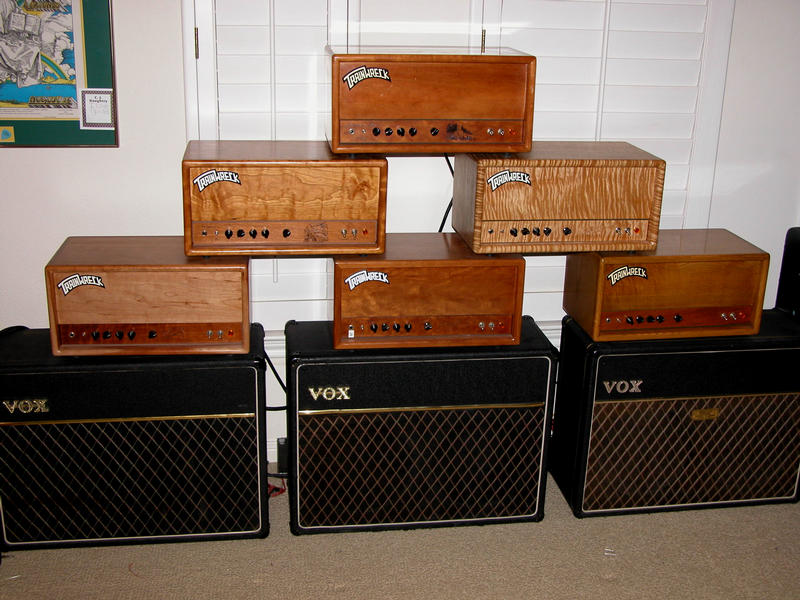
Ken’s sister-in-law came up with the hardwood design for the amplifier heads. This distinctive style set Trainwreck apart from other amps and is still being copied to this day.

Another customer had been playing through 100 watt Marshall Amplifiers. He complained that those amps were too loud and did not get the lead solo tones he was going after. The customer took a Marshall Head to Fischer for modification.

Ken cut the amp down to one channel and one input preamp. He also installed phase inverter circuitry. This mod really beefed up the gain and the harmonics.

Fischer later modded the rest of the customer’s Marshalls by converting them to use 6V6 output tubes and a variac to lower the voltage.

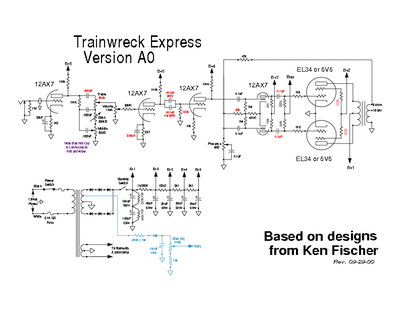
A year later, Fisher later changed this design to use EL-34 power tubes. This amp was named The Express.


One thing you need to know about Trainwreck amps; no two amps sound alike. Each amp was hand built and signed by Fischer inside the cabinet. Each new amp was sold with a signed owner’s manual.

Ken’s blueprint for his ultimate amplifier came down to simplicity. One channel provided better response. In his opinion multiple channels compromised the sound. He eschewed reverb and claimed that it was used as a cover up to improve the sound of amplifiers that sounded too dry.


Ken was equally adamant about not using effects loops. The amp’s sound was good enough. If the guitarist must use effects, they should come in front of the amp to not compromise the amps sound.

Ken went on to build a variety of amps. Each was housed in a hard-wood cabinet with the Trainwreck logo burned into the wood. Ken showed a disdain for what he referred to as “ugly black boxes” that housed most guitar amps.


It was in the year 1988 when Fischer contracted the flu. He never recovered from the particular strain of the virus.

His doctors diagnosed him with an acute form of chronic fatigue syndrome known as CFIDS or chronic fatigue immune dysfunction syndrome with a vestibular (balance) disorder. Outside of the USA this disease is known as M.E. or myalgic encephalomyelitis In July 1994 he was diagnosed with bleeding ulcers. His conditions worsened to the point were he could no longer work. He suffered with this condition for the rest of his life and was forced to quit working.

Ken’s most popular amplifier seems to be the Express, followed by the Liverpool and the Rocket. A music dealer called Ultra Sound Amp Sales stocks a few Trainwreck amplifiers.

If you are interested, have a rich uncle or get ready to take out a bank loan. Trainwreck amps range from $35,000 to $45,000 USD. Ultra Sound rents them for $300 a day or $1200 a week. When Fischer started selling his amps, the went for around $600. He could have never believed the price they command these days.

Komet Limited Edition
However, if you are interested there are some other options. Komet Amplifiers were designed by Ken Fisher, before his passing.


They are built in cooperation with Trainwreck Circuits© by Komet Amplification and incredibly well made. They sell in the $3600 to $4000 range.
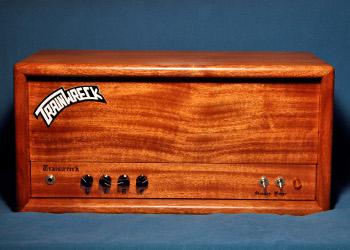
New Trainwreck
Trainwreck Circuits© is building The New Authorized Trainwreck amplifiers. This venture is lead by a man that wishes to remain anonymous and is referred to only by his initials, J.M. The Fischer family is behind this venture, not to make money, but to keep Ken’s dream alive. J.M. is building the amps in Ken’s original workshop.


Trainwreck Songwriter
When Fischer reached his 60th birthday, he built an amplifier for himself.  He used whatever spare parts were laying around his workshop and didn’t even bother to produce a schematic for the amplifier.


He wanted an amp that would sound great with his old SG PAF Gibson.

His choice of wood was beautiful and he dubbed this amp, The Songwriter.

Ken died about a year later on December 23, 2006.


Friday, January 27, 2012

Dr. Z Amplifiers

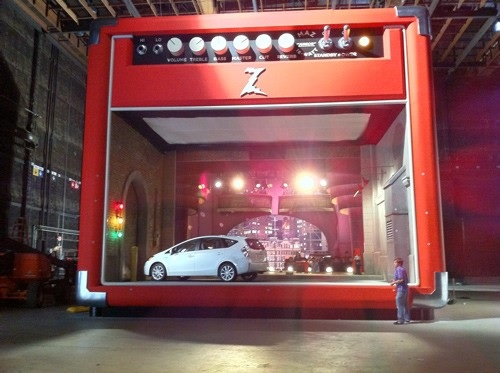
The past few nights a TV commercial for the Toyota Prius has aired, which prominently features a red Dr. Z amplifier. An old friend of mine ran into the “Doctor” several years ago at a Louisville Kentucky music store. He found the Doctor to be a warm and wonderful man, and my friend walked out of the store with a brand new Carmen Ghia amplifier.

Dr. Z aka Mike Zaite
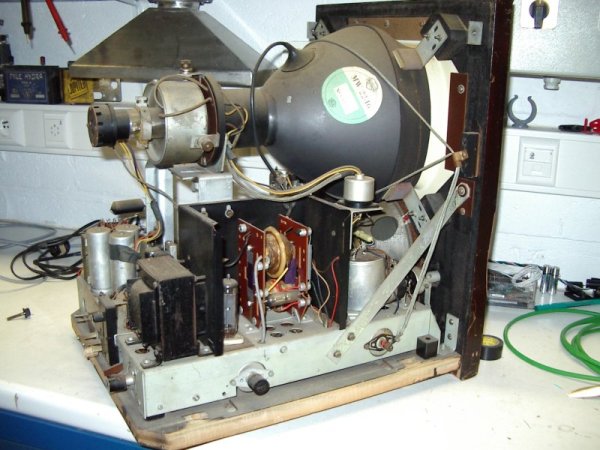
For those of you unfamiliar, Mike Zaite, a.k.a. Dr. Z played drums in a Cleveland Ohio rock band. His father owned a TV repair shop. This was back in the days of Zenith and RCA televisions and radios that used tubes and were repaired instead of being discarded. So Dr. Z got his electronics educational start from his Dad.

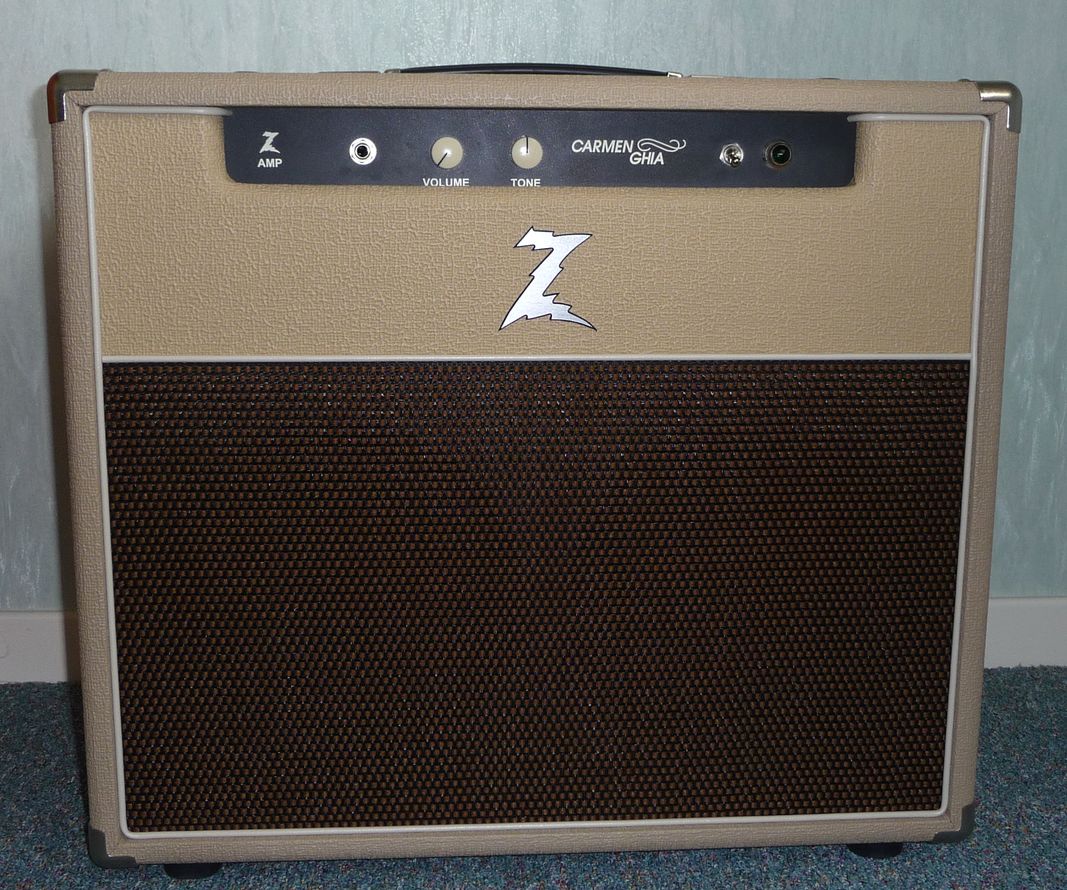
Dr. Z Carmen Ghia

He got his start in the music business by building PA’s for local bands. Zaite admits to “studying and tweaking the inner workings of his band mate’s amplifiers, when the were not around.


Kent State - Four Dead in Ohio

He eventually went off to Kent State University and got a degree in electronics. It was during those years he became acquainted with another electronics student, Joe Walsh. This relationship became very eventful in later years.


Mike Zaite 

Zaite went on to a lucrative job as a medical electronic engineer for General Electric. But Zaite’s first love was tinkering with analog electronics, such as amplifiers and P.A.’s.


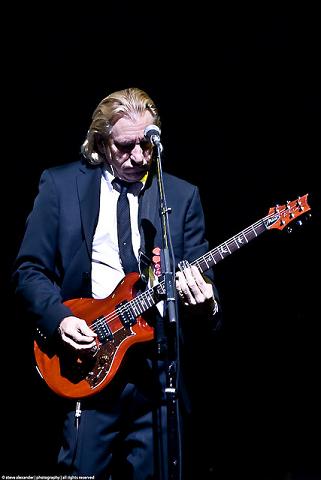
Joe Walsh
In 1992, Joe Walsh recalled the great guitar amplifiers that Zaite was building. Walsh borrowed one and took it apart in his hotel room. He was so impressed with the quality that he asked Zaite to build an amplifier for an upcoming tour with the Eagles. A year and a half later Walsh ordered a second amplifier from the Doctor. This amp caught the eye of editors at Guitar Player magazine. A feature article gave a positive review to Zaite’s SZR-65.


This was a large boost for Dr. Z amps. This amplifier was originally conceived as a head, but later was sold as a reverb combo amplifier.

Dr. Z SZR-65

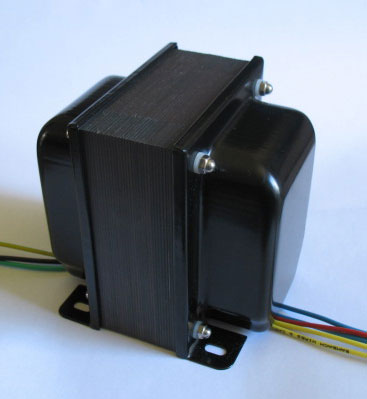
The SZR-65 is the only amplifier Zaite has built that has a cascading gain circuit. This was during an era when Marshall amplifiers ruled. Zaite used an ultralinear output transformer.


This gave the amplifier the smooth feel of triode tubes with the power of pentode tubes.

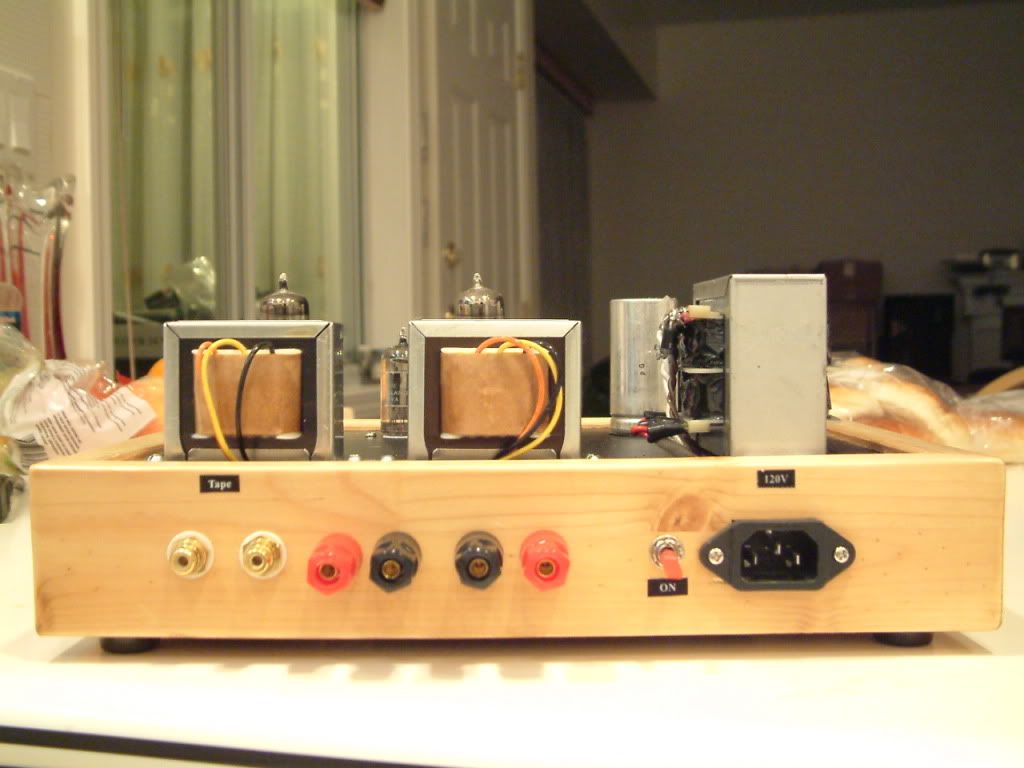
Hammond Organ Reverb Unit

Zaite's first guitar amplifiers, were based on a Hammond organ reverb amplifier. He made modifications to the schematic, so he could build his own version.

Dr. Z Carmen Ghia

His first commercially available amplifier was the 18-watt Carmen Ghia, which was powered by twin EL84 tubes, a 12AX7, and a 5751, both for the pre-amp section. The only two controls on the Carmen Ghia were for volume and tone.

This is the amp he based on the Hammond Reverb power amp. I assumed it was named for the VW sports car of the 1960’s, however it was named for his grandson, Carmen.

It was this amp catapulted on the fact that players had developed an interest in lower power amps that could be overdriven at low volumes.

Dr. Z DB4
Around 2001, Dr. Z amps became the favorite of Country-Rocker Brad Paisley. Zaite created several signature models for Paisley such as the Stang Ray, Prescription ES and the Z Wreck (which may have been based on Ken Fisher’s Trainwreck amp.) Paisley performs several Dr. Z amps at every show. Paisley currently endorses the Dr. Z DB4.

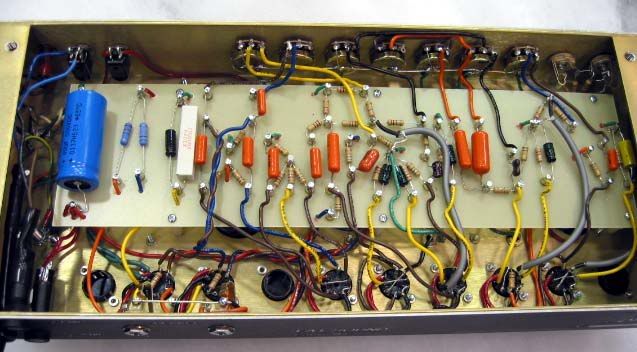
Check out those tidy leads
Zaite’s career in medical electronics has served him well. Manufacturers of medical devices fall under strict government guidelines. Therefore they are overbuilt, to prevent any harm to a patient.


Zaite follows these guidelines in his construction by using chromate converted aluminum for his amplifiers chassis. This improves the grounding of the amplifier, by raising the conductivity of the chassis. Some early Marshall amps used aluminum chassis and so did Ken Fisher’s Trainwreck amp as well as some other boutique amplifiers.

Dr. Z also uses ultralinear transformers and amp design. These give his amplifiers respond richly like a triode tube amp, but with the power of pentode tube amplifiers. This results in higher dynamics for the primary note and harmonics.

Dr. Z also uses specially designed coupling capacitors from Sprague. Because he purchases them in a very large batch, the company is possibly more concerned about consistency.


Zaite prefers Celestion speakers and most of the earlier models used Celestions.


However Dr. Z has created his own line of speakers. Some newer amps use Dr. Z speakers and other models come with Celestion speakers.


Zaite also offers the Z-Best speaker cabinet. This is a 2 – 12” ported specially designed cabinet that has an adjustable shelf behind the speakers and is based on the long throw ported Theile design.


Most of us are familiar with the fact that different style cabinets are just as important as tone controls. The adjustable shelf offers a variety of sounds to fit your style.

This closed-back cabinet comes with a variety of drivers, depending on your desired tone.

Dr. Z also offers a 2 – 12” open back cabinet and cabinets feature one, two or four 10” speakers.

The doctor also has developed a Lens for speakers on amps that have open-back cabinets. The Lens equates to the Tone Ring used on older Fender amps. Dr. Z’s Lens is adjustable, for desired sound projection.

Two other features that make “Z’s” stand apart are the Cut control. This control is tied into the output tubes and gives the player the ability to scoop frequencies and give the sound more or less brightness.

1930's Amp with a Conjunctive Filter

The other feature is what Zaite refers to as a conjunctive filter, which affects the impedance of the transformer allowing frequencies to be balanced, thus providing even amplitude across the spectrum.


If the players picking is even on each string, he or she will get the same volume on each string, making the sound more dynamic.

Dr. Z offers a variety of amplifiers, from the 5-watt Mini Z to the 60-watt SRZ-65. Most of his amps are in the 30-watt range, which he fells is loud enough for a small venue or when mic’d can blow away an arena.

He says his favorite model is the Route 66. This is his top seller. The 32-watt amp head delivers a sound loosely based on the Marshall JTM-45, although the tonal qualities are unique, due to the use of the EF-86 nine pin pentode tube.

This unusual tube is used on high end stereos for accurate transfer of signal, balance and headroom.

The MAZ-38 NR is a very recognizable amp that was made popular by Joe Walsh. It’s based on 4 EL-84’s, 3 12AX7 and a GZ-34 rectifier. This amp comes with the “cut” feature and provides the player with 38 watts of RMS power.

Dr. Z Brake Lite
Dr. Z has some attenuators he can prescribe. The Z-Air brake is the top of the line. The Z-Brake Lite can be mounted inside any open back cabinet. If you prefer the Dr. Z-Air Brake can be used for closed back cabs or as a pedal board feature.

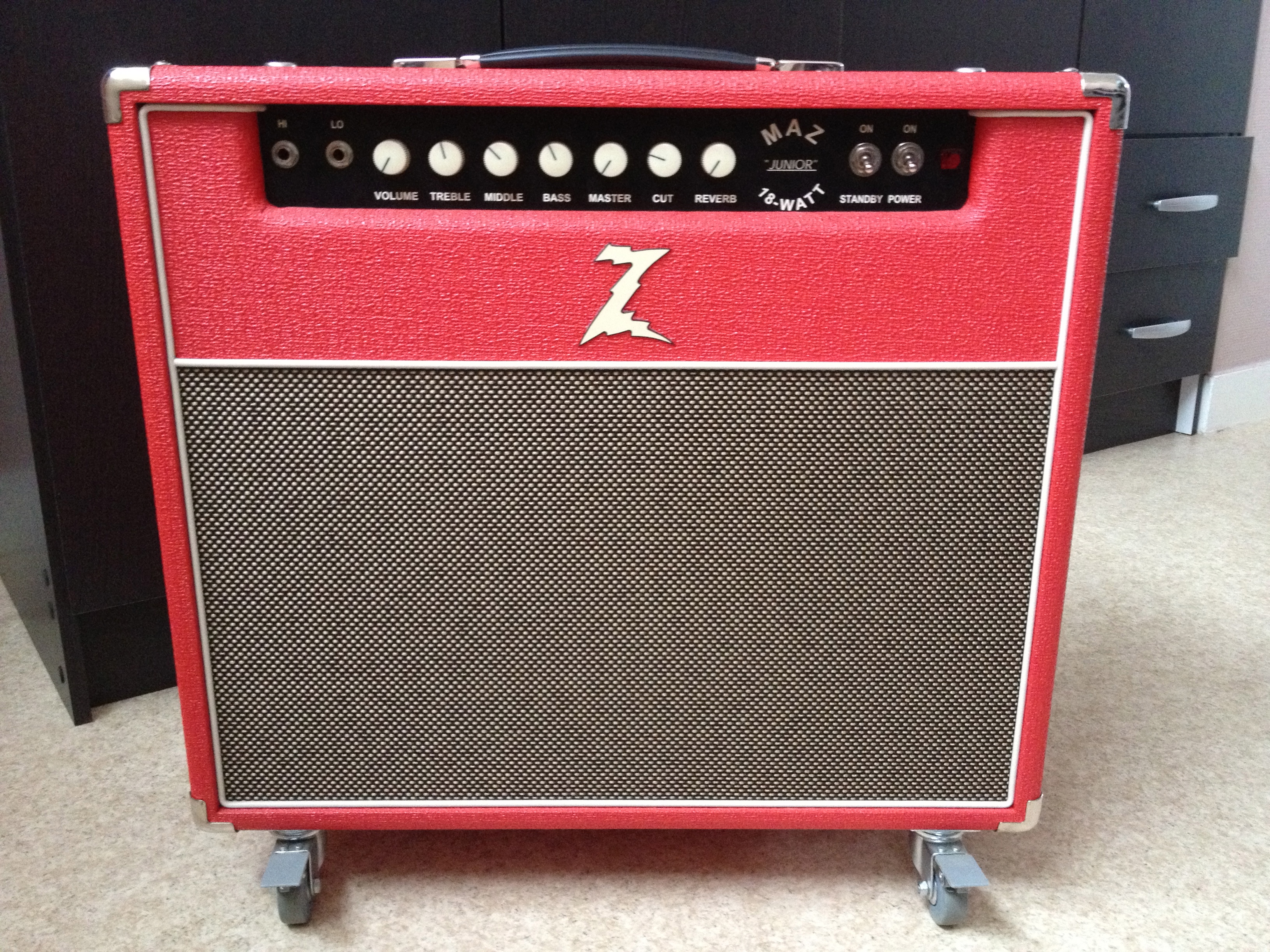
Getting back to the Dr. Z amp featured in the Toyota Prius ad. I’m not certain if there was an actual connection with Zaite’s company. I am told the director was a fan of Dr. Z amps and thought the amp was cool looking and fit into the aesthetic nature of the advertisement.

Dr. Z MAZ 18
Watch the commercial carefully and you will see the Dr. Z in the back of the Prius is a MAZ 18 with 7 control knobs. As the commercial procedes, the MAZ 18 is now a warehoused sized mock-up of the amp with enough room for the Prius,  a Sousaphone player and a party.


\

Sunday, December 11, 2011

Danny Gatton's Telecaster


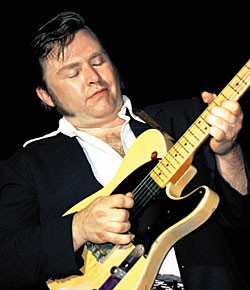
"The Humbler” is the nickname that Amos Garrett gave to Danny Gatton and that knickname stuck. To guitarists that watched him play, it made them want to sell their equipment or practice more.

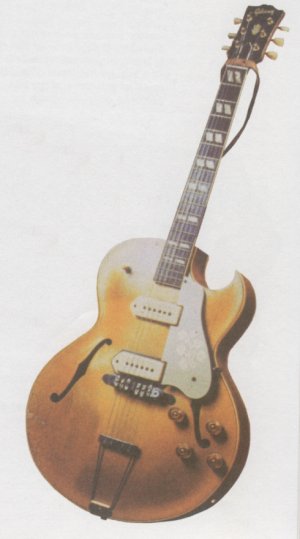
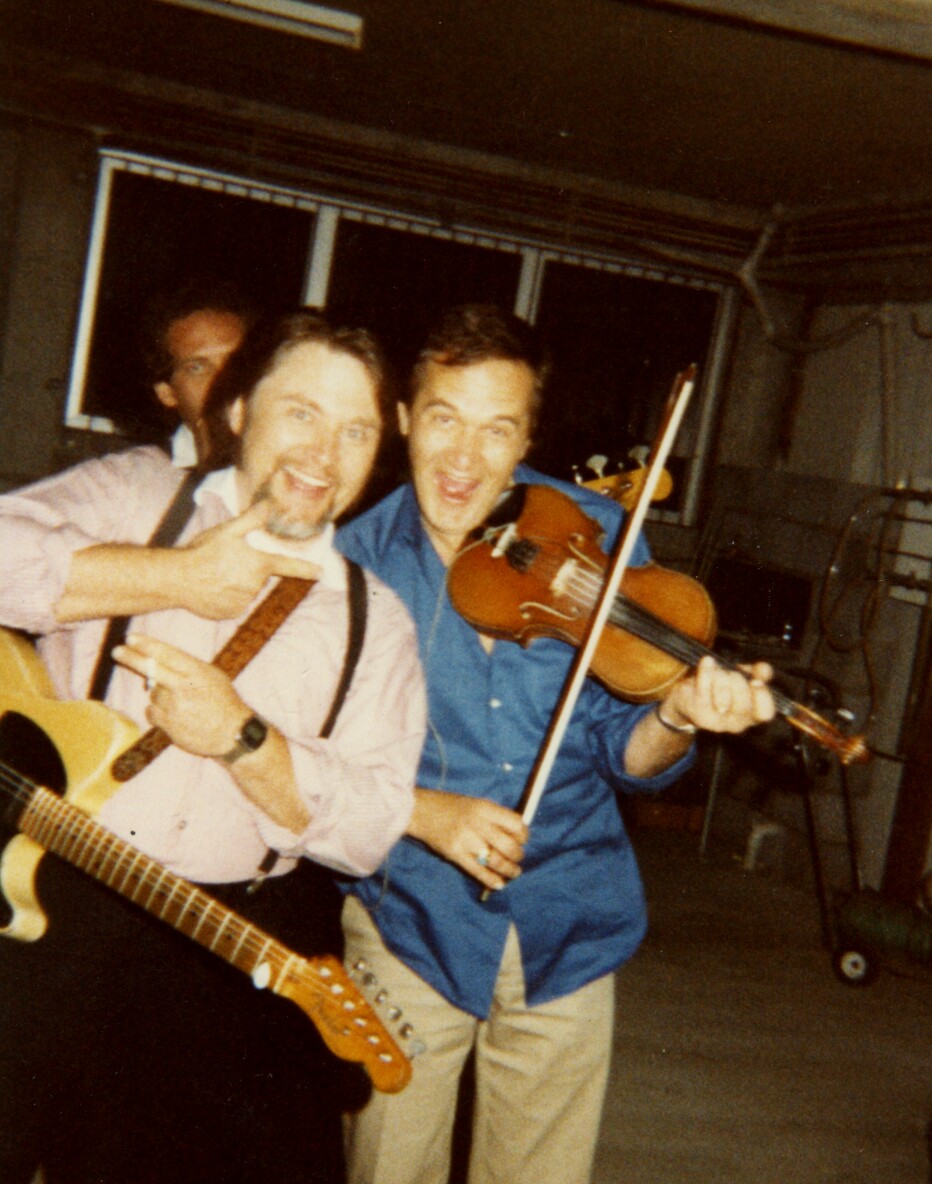
Gatton was a Telemaster that held the title of “World’s Greatest Unknown Guitarist.” He was an amazing player and ususally weilded a 1953 Telecaster that his father purchased new for him. Occasionally he played a Gibson ES-295, that also was new when he bought it.

Danny Gatton’s father played guitar. So a teen, Gatton began playing guitar. Some would call him a prodigy and I would have to agree. Gatton lived in Maryland and could usually be found playing music in clubs in the Washington D.C. area. He could go from Country Tele licks to Jazz to Blues to slide guitar during the same song.

He was in Roger Miller’s back-up band. He also jammed with reknown steel player, Buddy Emmons.


In the music business, Gatton was an unknown. To guitar afficienados and well known players, such as Les Paul, Clapton, Willie Nelson, Alvin Lee, Steve Earle, Chris Isaak and Jimmy Vaughn, Gatton was appreciated and envied. He appeared on-stage with some of these artists.

During Gatton’s career a rumor surfaced regarding the competition between Danny and Roy Buchanan.


Buchanan and Gatton were frequent jamming partners. Both were Tele-masters, both underappreciated by the public and unfortunately both met an untimely end.

Note the metal plate on the body

Early in his career Danny Gatton had his 1953 Fender Telecaster modified by adding two Joe Barden pick-ups and a device Gatton called, “The Magic Dingus.” The pickup switch on the Tele had been bent down and the original knob had been replaced with some sort of green monster-like toy.


The Magic Dingus was actually a controller that fit on the bottom section of the Teles body. Gatton had mounted a metal plate that ran from the end of the pickup and bridge mount to the far end of the body. On this he mounted the Dingus, which was actually a remote effects controller.


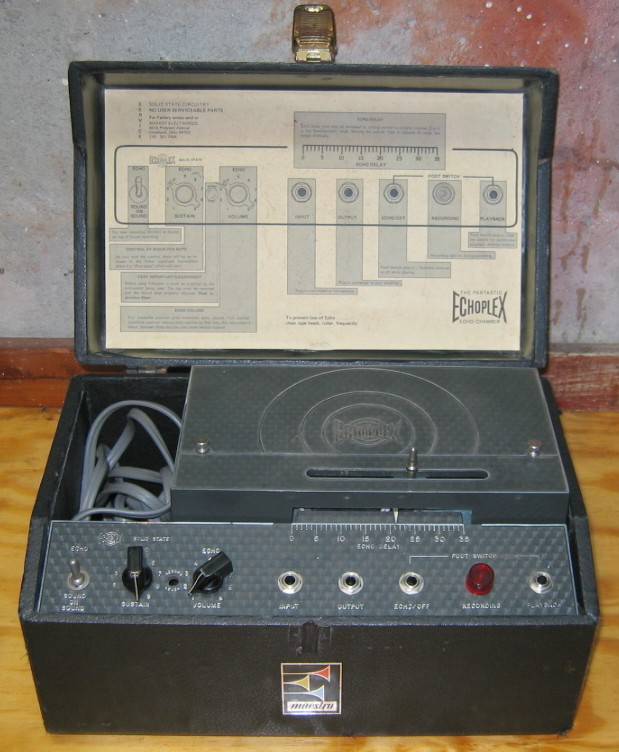
Gatton idolized Les Paul and originally used the Dingus on a 3 pickup Les Paul guitar to control reverb, tremolo, a phase shifter and an Echoplex. I’m going to guess the Magic Dingus was Gatton’s version of The Paulveriser.

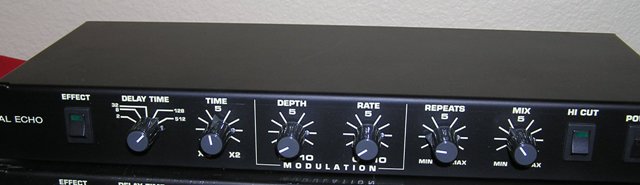
After he was criticised for relying to heavily on effects, Gatton removed the Magic Dingus, but not the mounting plate. After that the only effect Gatton relied on was an old Echoplex or a Chandler digital echo unit.


As far as amplifiers, Gatton was a Fender player. He used two ‘50’s Twin amps, a blackface Super Reverb and three modified Fender Vibrolux amps.

Gatton’s other passion, beside guitar, was restoring vintage automobiles. I recall reading that Gatton traded his 1953 Telecaster for a valuable old car that he wanted to restore. I’ve looked to see if I can find cooberating evidence, but I cannot find any and apparently Gatton’s widow and daughter have his old ’53 Tele, among the many guitars he left them.

Custom Shop Tele/Slide with Bottle

As I recall after the sale, Mike Stevens, one of Fender’s Custom Shop more well known designers, built Danny a new Telecaster that was based on his 1953 model.


The guitar, which was numbered DG00001, featured early-model Joe Barden pickups, a .05 capacitor so Gatton could create wah effects. Stevens had applied a beautiful butterscotch finish to the instrument. But Gatton’s brother redid the finish by applying Ditzler Sunshine yellow over a gold base to recreate the look of Gatton’s ES-295.

On October 4, 1994, Gatton went to his garage, where he restored his cars. He locked the door and shot himself with a gun. He left no explanation.