I first noticed Duesenberg Guitars almost 20 years ago when I was reading advertisements and reviews in a British Guitar magazine. They looked like very unique versions of American guitars, but they had marked differences.
Duesenberg guitars were a big hit at this years NAMM exhibit. In researching Duesenberg, I have discovered this German manufacturer has a most interesting history.
Dieter Gölsdorf
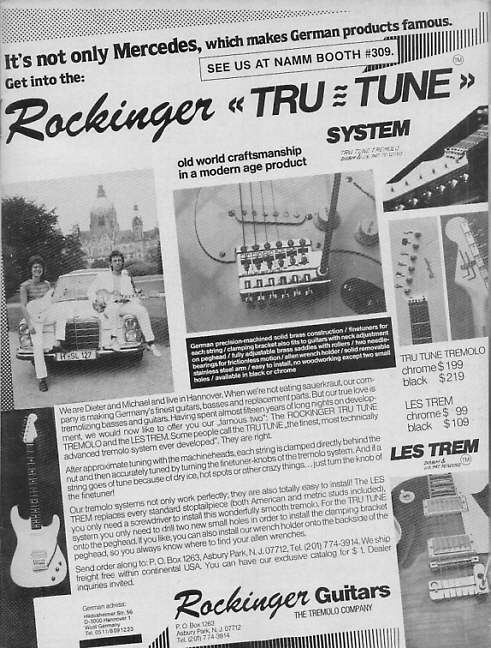
The company got its start in 1978 when founder Dieter Gölsdorf started the Rockinger Guitars Company. The goal was to sell guitar kits and guitar replacement parts at affordable prices. Within a few years he took note of suggestions by business partners and friends and created the Rockinger Tru Tune Tremolo system.
This vibrato unit was loosely based on Fender’s Stratocaster tremolo, but was in several ways a superior unit.
The Rockinger Tru Tremolo had a locking system that came as an add-on and the unit included its own special nut that kept the strings in tune. Additionally the unit featured conical bearings, adjustable bridge saddles and fine tuning knobs for each string.
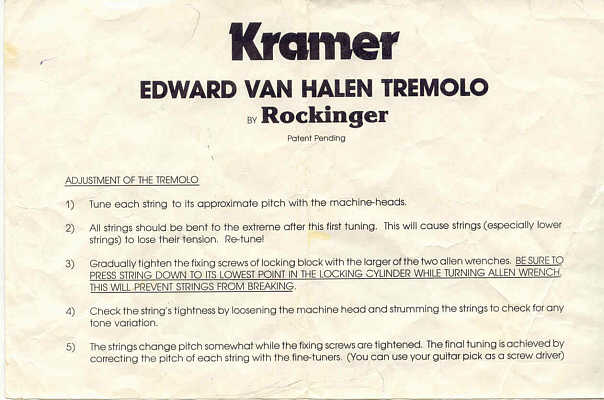
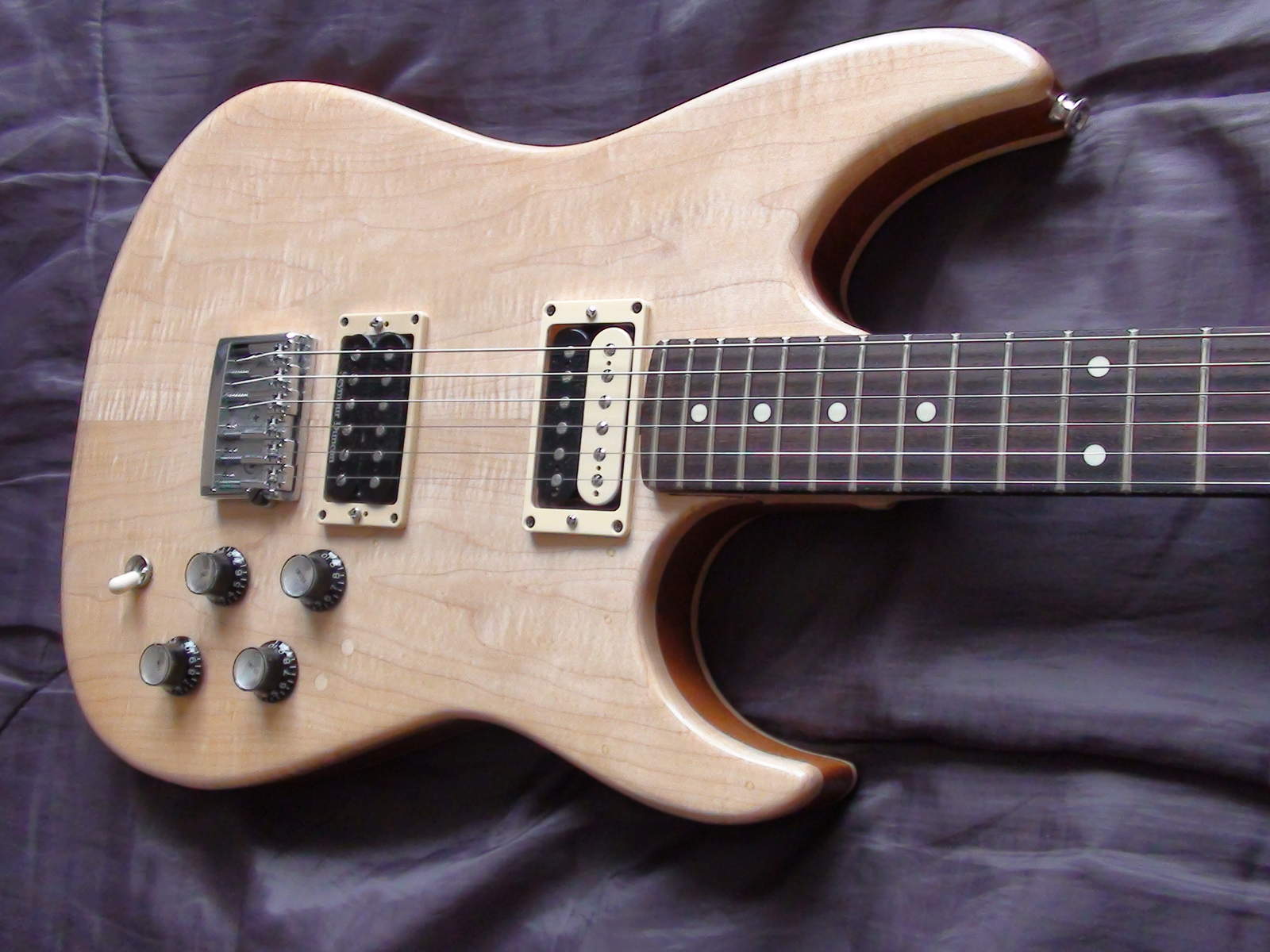
Kramer Guitars was the first company to add this to some of their models as standard equipment. It was featured on the Kramer Eddie Van Halen Pacer model and Kramer called it the Eddie Van Halen Tremolo.
It was not long after the Tru Tremolo's success that the Les Trem II was developed and marketed as an add on for Les Paul guitars.
By 1981 the Rockinger company expanded to the United States and set up Rockinger-USA in Asbury Park New Jersey. More updated tremolo systems were added and offered and the company set up production of P-90 style pickups. A year later Rockinger began exporting products to South Africa and New Zealand.
Rockinger Guitar
By 1983 Rockinger Guitars began making its own guitar bodies and necks.
1986 was when the Duesenberg name was first attached to a guitar. This guitar was called the Atze Rockinger Duesenberg. The name was derived from the 1920’s automobile brand that was built by Friedrich and August Duesenberg in Indianapolis Indiana. These luxury cars were high quality, high performance and very expensive automobiles. Duesenbergs were commonly nicknamed Doozy or Duesy, which eventually became an expression for a very good product.
In 1987 Gölsdorf established Formentera Guitars, which offered build-your-own-guitar kits that were sold directly to consumers.
However within a few years internal differences were occurring, so that by 1991 the direct-to-customer business ceased. That year the company was renamed Göldo Music. Their focus was on distribution and export of Germany produced instruments and part, and outsourcing components to dealers and wholesalers.
Within a few years Göldo Music had established what would become their most popular model; the Duesenberg Starplayer TV guitar.
Carl Carlton with his Duesenberg model
By 1995 the new Duesenberg Starplayer Retro line was introduced and marketed by signing up Keb Mo and Carl Carlton as artists.
Two years later the Diego high quality reproduction line was offered.
The year 2000 brought about a dramatic increase in sales, especially in the Japanese market.
Ron Wood with his Duesenberg
In 2002 the company inked a deal with Ron Wood by creating the Ron Wood Signature model Duesenberg guitar.
In 2003 DSP Guitar named Duesenberg as The Guitar of the Year in England.
That same year ZZ-Top's Billy Gibbons and Chris Whitley were new sponsoring artists.
Duesenberg, Fullerton CA
By 2004 Duesenberg started a new chapter by opening a United States branch in Fullerton California.
Duesenberg, Hannover, Germany
As sales grew, in 2011 Göldo Music moved to a larger facility on the outskirts of Hannover Germany where they are currently located.
Billy Gibbons with Duesebberg
Duesenbergs' design goal is to offer Art-Deco features on their guitars, especially the headstocks. The guitars are based on classic guitar shapes, with a twist on the colours and textures.
Many Duesenberg guitars come with a Bigsby style vibrato with a modified arm. Those without the vibrato usually have a tune-o-matic style bridge and a stop tailpiece. The exception is the solid body Duesenberg 49er which comes with a wrap-around tailpiece that has individual saddles.
Duesenberg utilizes some extremely unique colours and patterns on their guitars, such as transparent orange, surf green, pastel red, and glitter finishes that come in black, blue and silver. Other more extravagant finishes include mother-of-pearl, ice, blue and emerald pearl. More traditional offerings include gold, sunburst, fireburst and blonde.
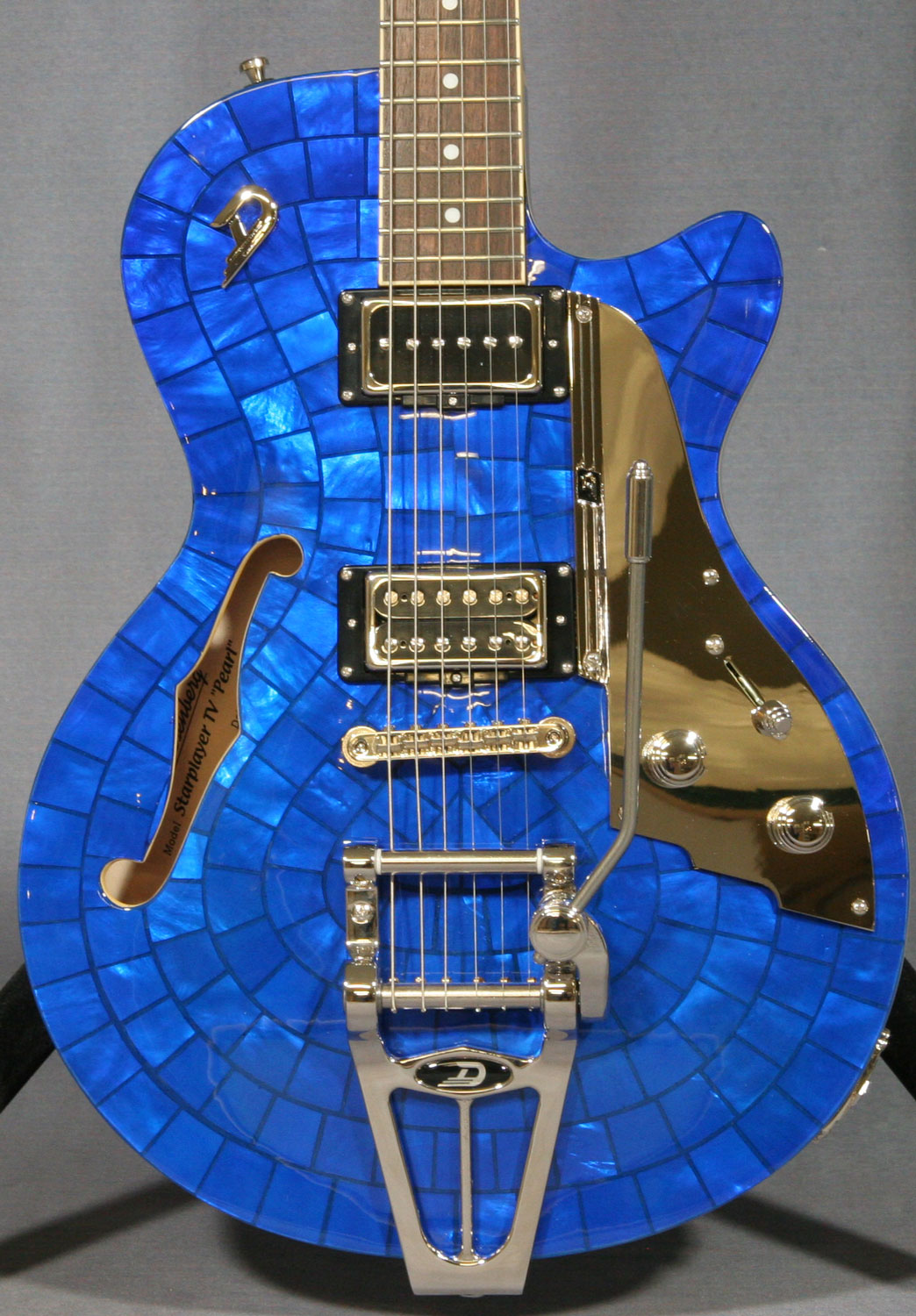
Some of Duesenbergs most unique designs are done in a mosaic tiled finish with a mirrored pickguard.
And some models come with images embossed on the top such as their Johnny Depp models.
The headstocks are equipped with Kluson tuners. In fact Göldo Music registered the Kluson name in 1989 for the European market.
The guitars tops, sides and backs are generally made of maple on Duesenberg guitars. However there are some guitar that use mahogany for the body and neck. The necks generally feature American hardrock maple. But once again some models feature mahogany necks.
Hollow body Imperial
Duesenberg offers semi-hollow, hollow and solid body instruments. Fret boards are usually made of Indian rosewood with dot inlay, unless the model calls for fancy inlay.
The company's woodworking is done in Korea, but all guitar assembly is finished in Germany.
The frets are installed in Germany and finished by a very interesting computerized system known as the Plek CNC fret dressing system. This computerized system was designed and developed in Berlin by Gerd Anke. It is a computer-controlled alternative to traditional methods of manual fret dressing, the Plek records the fret height in relation to the fretboard surface beneath each string with a mechanical finger (touch probe) guided by a computer-controlled arm.
A PLEK in action
It works by tuning the guitar to concert pitch during the process and then scanning the neck and fretboard. The data is displayed in graphic form on the Plek monitor. Graphs illustrate cross-sectional views and pertinent measurements for the frets under each of the string paths as well as individual fret curvature (radius).
This original fret path is indicated on screen in red and makes the fret-height anomalies quite evident.
Once all the anomalies are determined, the strings are loosened and the computer guides a mildly abrasive rubberized wheel over each fret to remove the determined amount of fret material. The fret height is achieved to an exact crown contour for each fret. It is remarkable to say the least.
Starplayer TV
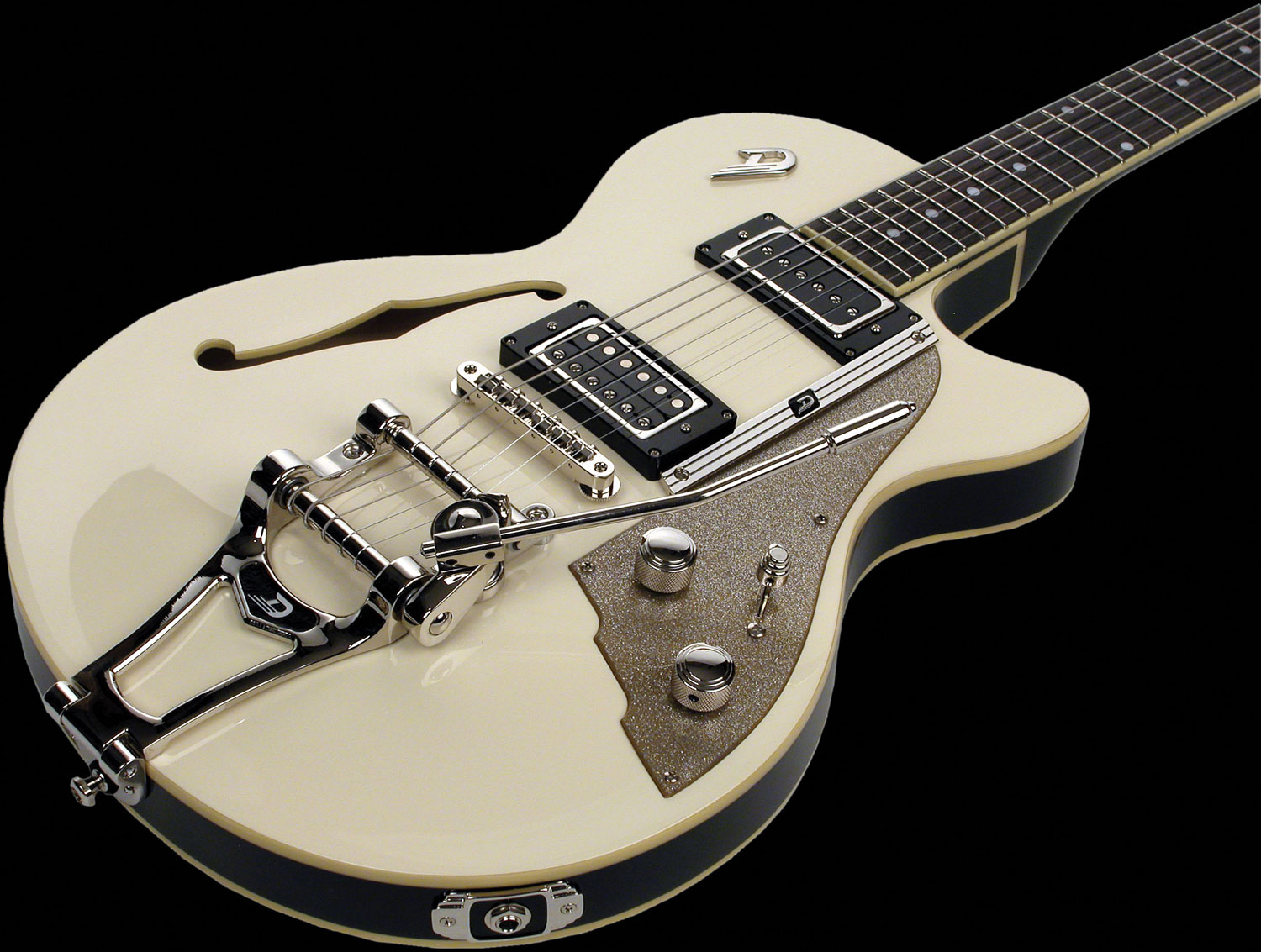
Duesenberg's best known model is the Starplayer TV, which is now known as simply the TV guitar. This is a semi-hollow guitar with one F-hole on the upper bout. It features a center sustain block a maple neck and an arched back and a laminated arched top. The TV is reminiscent of a Gibson Les Paul.
The standard version comes with twin pickups. The neck pickup is Göldo Musics version of a P90 which the company has named the Domino P90 pickup. The bridge features their version of a humbucker known as the Grand Vintage humbucker.
The TV guitars strings pass over a tune-o-matic style bridge and are attached to their Diamond Deluxe Tremola. These are exquisitve looking instruments. This model guitar is also available with a stop tailpiece.
TV Classic -Honey Finish
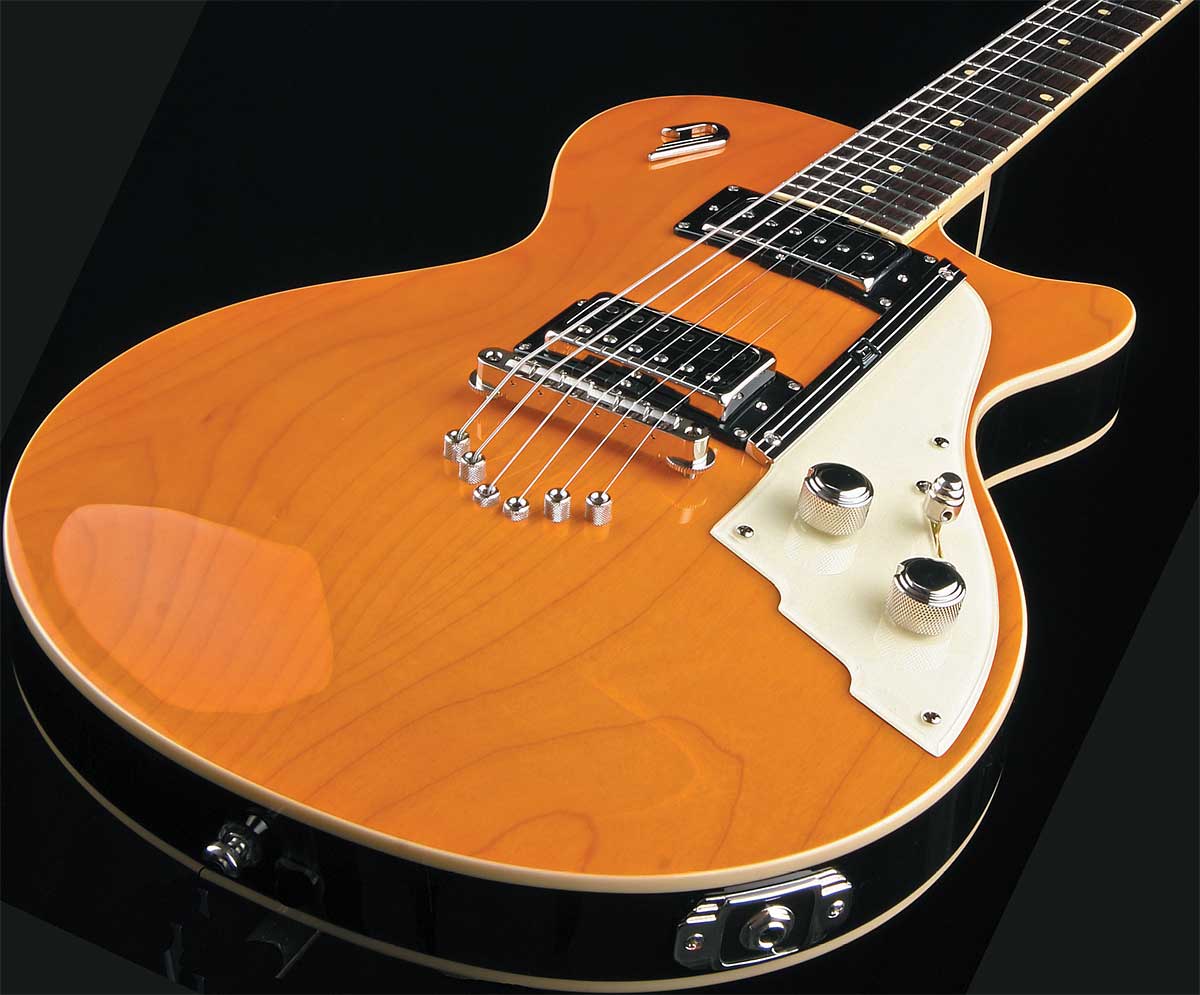
The TV model comes in a variety of finishes including the TV Classic which has a honey finish complete with ovular inlaid position markers and a 5 layer binding on the body.
TV Outlaw - Leather Finish
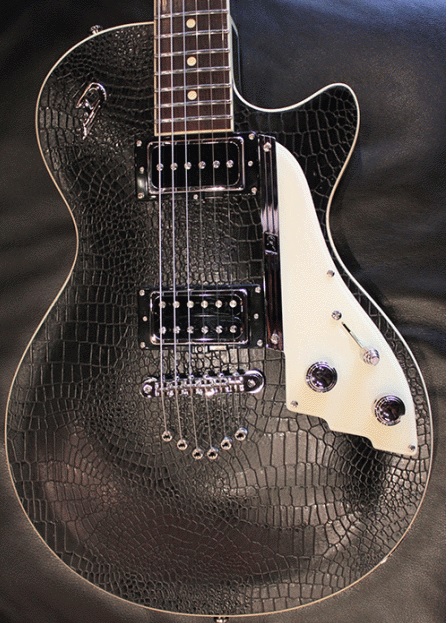
The TV Outlaw has leather covering on the body and headstock and a nickel plated pickguard.
TV Pearl
The TV Pearl features a mosaic pearl tile finish on the top of the body and headstock.
The TV Custom features gold-plated hardware and 3 D-Tron humbucking pickups.
Mike Campbel I and II
There are several artist models of the Duesenberg TV guitar including the Mike Campbell model, the Chris Whitley model that had a piezo pickup in the bridge and the Ron Wood model. The Ron Wood model was a limited run of only 100 guitars and is no longer offered by Duesenberg.
The Dave Stewart model is based on the Starplayer III with silver-plated hardware, custom inlays and an aluminum stop tailpiece. The graphic on the body was designed by Dave Stewart.
Starplayer III
The Starplayer III is made like the original version of the Starplayer guitar. It comes with similar hardware as the TV guitar, but the top is made of spruce and is flat. The back on this instrument is made of maple. It is available in black and champagne sparkle.
Fullerton TV
Duesenberg's Fullerton TV guitar combines the same features found on the TV guitar, but with a double cutaway. It also comes in a hollowbody version known as the Fullerton Hollow.
Duesenberg Imperial
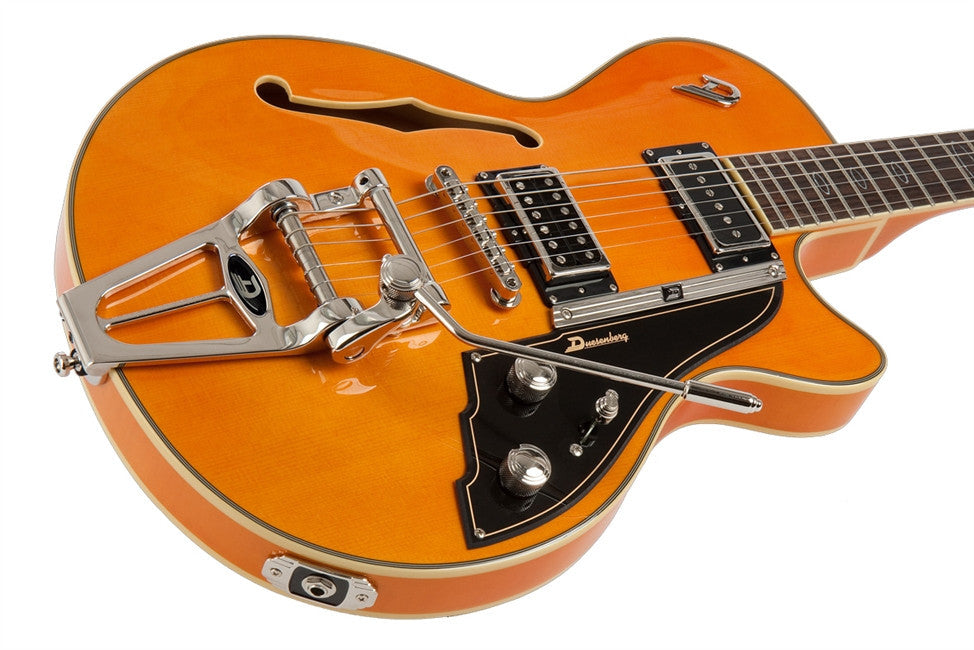
The Imperial guitar is a full sized hollowbody guitar available in red-burst, transparent orange and black (as a special order). This guitar comes with a clear pickguard and Saturn shaped inlays. Controls include volume, tone, mid shift and pickup selector switch.
Duesenberg CC (Carl Carlton)
The C.C. Is an arched top full sized semi hollow body guitar with a laminated spruce top and maple back. The guitar features block inlays on the fretboard.
The 440 is a semi-hollow guitar, with no tremolo. Like the Imperial, it features Saturn inlaid position maker. The back has a beautiful decorative inlay pattern that splits the book matched sides of the wood. The headstock has rosewood veneer on its surface.
52 Senior
The shape of the Duesenberg 52 Senior resembles a gold top Les Paul. It appears to be a solid body guitar, however its mahogany body has sound chambers.
The top is made of arched maple and topped with a single pickup in the neck position. This can be either a Domino P90 or another pickup that Duesenberg calls the Little Toaster.
Duesenberg 52 Senior
The strings are attached to a brass wrap-around tailpiece. The Duesenberg style pickguard features a single volume and tone control and a Strat-style slider switch that creates 3 differing sounds.
The Double Cat is a semi-hollow body guitar that is so named due to its double cutaways.
The body is alder wood which is topped with maple laminate. The neck on this guitar is set in style with an Indian rosewood fretboard. The fret markers are pearloid dot inlay style. The tuners are Duesenberg Z style models.
Double Cat with Multibender
The Double Cats strings can attach to either a Duesenberg Deluxe Tremola, or a Duesenberg dual palm pedal which the company calls a Multibender. The bridge is a Duesenberg steel saddle model that resembles a Gibson tune-o-matic bridge.
Double Cat 12
This model comes as a 12 string version with an aluminum stop tailpiece and is available in Fireburst or Black.
Starplayer Special
The Starplayer Special is single cutaway electric solidbody guitar with a bolt-on neck. The body on this guitar is alder and the neck is made of maple. The fretboard is Indian rosewood with pearloid dot position markers. The tuners are Duesenberg Z models and the guitar comes with an aluminum stop tail piece and steel saddle bridge.
This guitar is topped with Duesenbergs high output Crunchbucker pickup.
The Starplayer Special is available in a variety of colours that include sparkle finishes.
The Duesenberg 49er is a single cutaway, solidbody, dual pickup set neck electric guitar. The 49ers body is made of mahogany as is the neck. This guitar features a Domino P90 pickup in the bridge position and a Grand Vintage Humbucker in the neck position.
49er - String-through
One very unique feature on the 49er is the string-thru-body system that assists in giving this guitar sustain.
Once again the fretboard on the 49er is made of Indian rosewood topped with pearloid dot markers. The tuning keys are also unique with their art deco design.
49er with Outlaw finish
The 49er comes in Honey, Gold-Top, Blue-Pearloid and the Outlaw design, which features Leather on the guitars top and headstock
Dragster
Duesenberg’s Dragster is a electric solidbody guitar with just a single Domino P90 pickup in the bridge position. The body and neck are both made of mahogany. The fretboard is again Indian rosewood with pearloid dot position markers..
Double Cutaway Dragster
Although The Dragster it is a single coil pickup, there is a slider switch on the pickguard that provides a variety of tones.
Oil and Wax Finish
The bridge is a wrap-around style, but its unique design allows for individual string saddles. This model comes as a single cutaway or double cutaway with a variety of finishes or better yet as a double cutaway with bare wood and an oil and wax finish.
Starplayer Bass
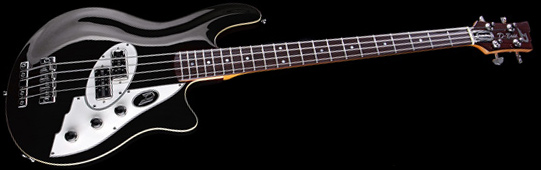
Duesenberg Guitars offer several fine bass models that include the Starplayer Bass. This is a short scale bass; 30.3” that has a single cutaway and twin Duesenberg Bass-Bucker pickups. It is a semi-hollow instrument with one F-hole and a center block. The top is laminated spruce and the back and sides are made of flamed maple. The neck is made of maple with an Indian rosewood fretboard. The tuners are Duesenberg Z models with an Art Deco design.
The strings go over a Starplayer bass bridge with adjustable saddles and are attached to a trapeze tailpiece. This bass is available in a variety of finishes which include the Mike Campbell version that is Ice Pearl mosaic and the Outlaw version with is decked out in black leather. Controls include an on/off switch, 2 volume potentiometers and 1 tone control.
Fullerton Bass
The Fullerton Bass appears to be a double cutaway version of the Starplayer Bass, however the Fullerton bass is a true hollow body instrument and the electronics are different. They include a single volume and tone control and a slider switch to activate the choice of the basses dual Bass-Bucker pickups.
Motown Bass
The Duesenberg Motown Bass is one of their long scale models. The Motown Bass is a single cutaway, semi-hollow, electric bass that features 3 Duesenberg DS Alnico blade single coil pickups. The arched top is made of laminated spruce and the back and sides are beautiful flame maple. The neck is maple. The fretboard is Indian rosewood with pearloid diamond position markers.
The headstock is topped with 4 Duesenberg Z tuners done in Art Deco design. It only comes in Fireburst.
Triton Bass
The Duesenberg Triton Bass is a solid body, long bolton neck electric model that features three Duesenberg Single-Twin Bass humbucking pickups. The body is made of American alder and the neck is made of maple.
This basses body has a unique shape. Pickups are controlled by a single volume and tone control and a five-way blade switch. The headstock is topped with four Duesenberg Z-Tuners that are featured with an Art Deco design.
The bridge/tailpiece is called The Block, which is a one-piece unit that is adjustable for height and length.
Duesenberg D Bass
The Duesenberg D Bass is more of a Fenderesque design. It is another long neck model that comes with a bolt-on maple neck that is topped with an Indian rosewood fretboard.
The body is made of contoured American alder wood. There are twin staggered pickups placed in the same manor as one would find on a Fender Precision Bass. The pickups are Duesenberg’s “Toaster” models. Once again the headstock is topped the Art Deco tuners.
This bass comes with a unique adjustable bridge/saddle and a separate tailpiece. It also can be ordered with a fretless neck.
Violin Bass
Duesenberg also offers a hollow body short scale violin bass that is similar to a Hofner 500/1 model.
Aside from the guitars that I have already described, Duesenbert offers several artist models which feature input from the artists, but are based on standard Duesenberg models.
Johnny Depp - Joe Walsh - Mike Campbell - Peter Stroud - Dave Stewart (bottom)
The exception is the Johnny Depp Model which has its own unique shape. The others include their Joe Walsh Model, two Mike Campbell Models, the Peter Stroud Dragster Model that comes with a dual palm pedal and the Dave Stewart Blackbird Model.
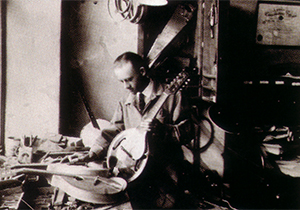
When we talk about luthiers that changed the guitar, as we know it today, while improving upon it only a handful of names come up. One of the most prominent men is Lloyd Loar. He was a master luthier that is probably best known for his modern mandolin designs, but he applied that skill to the guitar and made one of the Gibson Guitar Companies most famous guitars and paved the way that they manufactured guitars for years to come.
This was all done despite the fact that he only worked for Gibson for five years.
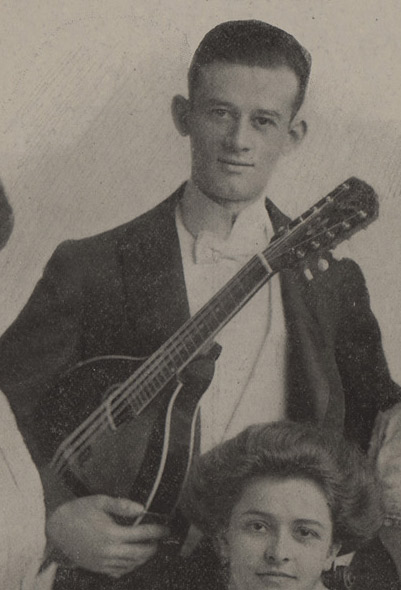
Loar had studied music while in high school and went on to attend the Oberlin Conservatory where he became proficient in mandolin, mandola, mandolin cello, violin, viola and piano performance.
In 1918 he worked as an entertainer for the troops during the war. While in Europe he studied at the Conservatory of Paris. Later he attended the American Conservatory of Music in Chicago. Due to illness while in the service, he was honorably discharged within a year.
Loar had invented the Virzi Tone Producer prior to working for Gibson. This device was a spruce disc suspended from the instruments top that acted as a second soundboard. Mario Maccaferri had a similar idea with his internal resonator on the guitar he designed for Selmer.
After the six months were up, Lloyd Loar continued to work for Gibson from 1919, a year after Orville Gibson left the company, to 1924.
During his tenure at Gibson he was referred to as "Master Loar" by those that worked with him.
Modern tap tuning
Loar spent a great deal of time and research to create this improvement for his stringed creations. He learned and spoke of Stradivari’s tuning process. Some hail this as his greatest achievement.
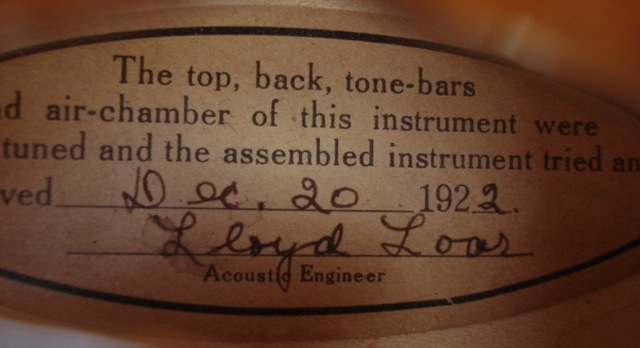
He would tune the wooden tops and back so the front of the instrument was a quarter tone higher than the backboard. Gibson still utilizes this principal as do many other luthiers of the day.
Due to his perfectionism regarding attuning the wood for each instrument the final result would be different for each mandolin, mandola or guitar that he made. This created a diverse and unique array of instruments.
After working at Gibson for almost five years Lloyd Loar envisioned electrified instruments and this led him to start his own company that allowed him to build electric guitars, electric violins and electric mandolins. He improved the arched the tops and backs to give them added strength as the bracing was very minimal on arched instruments.
From the Siminof mandolin site
As mentioned before the technique he employed is referred to as Stradivarius Arching. This allowed the sound waves emitted from the instrument greater movement and amplitude.
Lloyd Loars mandolins contained tone bars. Unlike violins, the mandolins utilized two movable bars, that could be placed differently to alter the tone and provide stability. He also understood that placement of the F-holes would affect the instruments sound.
Master F5
Most stringed instrument players are aware of his designs for the famous Master F5 mandolin, the Master A5 mandolin, the Master H5 mandola, and the Master K5 mandocello (which resembles an eight string archtop guitar), but Loar’s work also was applied to banjo design. His version featured a tubal tone chamber and spring loaded ball bearings. This design became the basis of Gibson’s most popular banjos, the Mastertone.
Loar signed L-5
It was Lloyd Loar who designed and built the original Gibson L-5 guitar. This was the first guitar to feature F-holes.
1924 Loar Gibson L-5
Loar designed it in the manner of a cello. He designed the body to be 16” wide at the lower bout and this size remained until 1934, long after Loar ended his relationship with Gibson.
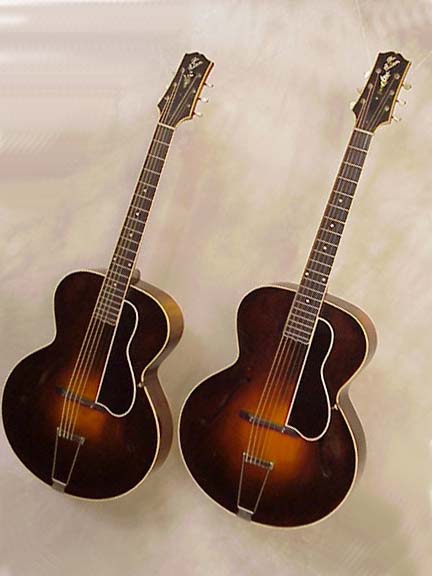
Two 1924 L-5 guitars
The L-5 remained Gibson’s top-of-the-line guitar for years, until the larger Super 400 was introduced. Prior to this Gibson’s best guitar was the Style O which had been designed by Orville Gibson and bore a resemblance to the style F mandolin as it has a scroll-like upper bout.
Skip Maggoria with Gibson electric harp guitar
As early as 1923 Lloyd Loar began experimenting on electrifying stringed instruments. Harp guitars were popular during these day. It was this year that Loar built a prototype electric Gibson harp guitar.
This instrument is one of a kind. It had ten bass string and the usual six guitar strings. The body is carved with a scroll pattern between the two necks.
Drawer on upper bout that housed the pickup (with closeup of the pickup)
The electric pickup is housed in a drawer that comes out of the upper side of the body and pickups up the sound from the guitars interior. This drawer also housed the cord that would attach to the amplifier. This harp guitar is the possession of Skip Maggoria, the owner of Skip's Music in Sacramento California. Skip states that when plugged into an amplifier the guitar is not loud, like today's instruments, but it gives a very mellow and beautiful sound.
In 1924 Loar attached a crude electrostatic pickup to a viola. This prompted him to begin work on other electrified instruments. Unfortunately the heads at Gibson do not feel this is the direction they want the company to go, so Loar resigned.
ViVi-Tone guitars
Loar formed a partnership with Lewis William, the Gibson investor and Walter Moon to start up the ViVi-Tone Guitar Company. The company produced acoustic archtop guitars and allowed Loar the freedom to pursue building electrified instruments, which in time were produced.
ViVi-Tone acoustic mandolin
The Vivitone guitar and his other Vivitone instruments were unique because Loar took his idea for the Virzi-Tone a step father.
Note the pickup "drawer"
The backs were recessed with a rigid laminated rim. The solid wood that stood away from the rim was actually a secondary soundboard that had an additional set of F-holes.
The object was for the player to hold the Vivitone guitar or mandolin away from his body in the manner of a classical guitarist to permit the back soundboard to vibrate. These guitars featured tone bars and backs and tops that were hand tuned. The F-holes were strategically placed for maximum sound projection and a secondary set of F-holes were carved into the guitars back.
Loar produced a Vivtone pear-shaped electric mandolin and an electric violin that had no back or sides. The electronic pick was house it a rectangular piece of wood that was parallel to the instruments body.
ViviTone solid electric Tenor guitar
One of Loar’s most radical creations was perhaps the first solidbody electric guitar. This instrument was essentially a guitar top that resembled an archtop guitar, only it did not have a back or sides.
1930's ViviTone Electric guitar
It had a solid wooded block across the back that housed the pickup and electronics
A strip of metal ran the length of the body and neck. All the sound came from the pickup beneath its bridge. The cord was different than modern ones. It featured two prongs and was covered in cloth wrapping.
Finally Loar created the first ever electric piano that utilized small sound bars that would chime when tapped by the piano keys. The bars had coil pickups. He called his electric piano the Vivitone Clavier.
This is the same principal that both Rhodes/Fender and Wurlitzer used when they designed their electric pianos decades later.