Sunday, March 12, 2017

Parker Guitars - Ken Parker

Ken Parker and Parker Fly


Ken Parker built his first archtop guitar in 1974. This was long before he rose to fame with his well known electric guitar; The Parker Fly.


Ken Parker

In regard to the origin of the Parker Fly, Parker, in his own words states, "Larry Fishman and I met in 1984 and began a playful but productive design partnership.


Larry Fishman
We shared techniques and technologies, and tried to envision some new tools for guitar players. Long story short, we founded Parker Guitars in 1991 in order to realize the Fly Guitar project. We created tools to build the guitars, and established our factory in Massachusetts, where we produced about 30,000 guitars and basses."

1993 Parker Fly Guitar


In doing so, Ken created a modern ultra-light guitar, and made use of some unusual materials. Official sales of the Parker Fly began around 1993.


1992 Parker Fly
The Parker Fly was made from a variety of woods, including poplar, basswood, and spruce. Once the unique shape of the body and neck were carved the instrument was coated with a composite of resin and carbon glass to reinforce the structure.

Parker Fly - custom marbled colour

The fretboard was also made of a composite material and the frets were made of stainless steel. The design process has given Parker Fly guitars the reputation of having the “fastest neck in the business”.

Due to their durability, these materials will pretty much last for the lifetime of the owner.

The electronics used in the instruments were very unique as well. The guitar used either coil split humbucking pickups or single coil pickups. Both had active circuitry. The Fly also had a piezo pickup for acoustic sounds.

Original Parker backside


The structure of the neck was unique since it used multiple finger joints for stability.


Parker Vibrato
The guitars vibrato was unique as well. Instead of using wound springs, The Fly utilizes a shaped flat steel spring that returns the guitar to pitch. It could be set for bend down down mode, balanced mode (full floating), or fixed mode.

Adjustment Wheel

The tension is controlled by a balance wheel. (The guitars manual cautions not to set it too tight as this could cause the spring to break). The vibrato was engineered in a way to bring the strings back to pitch. Sperzel locking tuners aided in maintaining the instruments pitch and eliminated the need for string trees.


Ken Parker and Larry Fisher set up their business and manufacturing facility in Wilmington, Massachusetts.

2002 Parker Fly Bass
In October 2002, Parker began offering the Fly Bass guitar in both 4 and 5 string versions. These basses were well received for their ease of use. They came with both magnetic and piezo pickup and the player could blend the two sounds together. The basses were also manufactured in the Massachusetts factory.

In 2003 Ken Parker sold his stake in the company to the U.S. Music Corporation.


2003 Redesigned Parker Mojo Flame
As he states, "In 2003, U.S. Music purchased Parker Guitars, and moved the production facilities to the greater Chicago area. Since that time, all of the new models produced by Parker Guitars, including any acoustic or semi hollow instruments, have been designed solely by Parker Guitars' design engineers. I have had no involvement with any of these new design projects.

Creating the Parker Fly, Nightfly, and the Fly Bass was a labor of love. I had a lot of fun designing them and then devising and building the production tooling to make them. These instruments have worn well,  and now the product line has been expanded by the new owners."

U.S. Music Corporation Home Page


The U.S. Music Corporation is a distributor of multiple products, including Parker guitars. This organization manufactured the guitars from their Illinois based factory. They developed the line and changed up a few things.


2003 Parker Fly Classic

U.S. Music took a different approach to Parker Guitars. Some Parker guitars were no longer made with the original composite finish, but were now made of wooden bodies. To be fair, by 2001, Ken Parker had offered some models with wooden bodies.

Also some of the new models appeared to be Parker guitars that had morphed with other popular guitar designs.

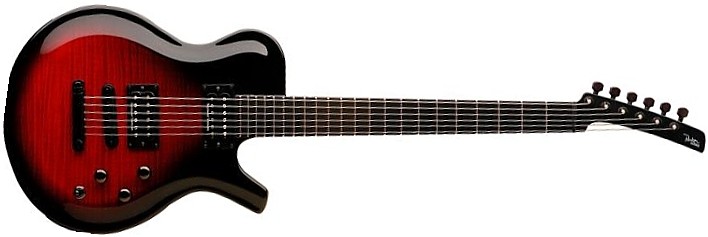
For instance, the Single Cutaway Fly Mojo may have been a wonderful guitar, but the Les Paul influence is obvious.

Parker Single Cutawy Fly Mojo Flame
This was a single cutaway guitar with twin Seymour Duncan humbucking pickups. The body and neck were made of mahogany and were joined by using Ken Parker’s multi-finger neck joint. This guitar featured a tune-o-matic style bridge and a stop tail piece. The neck was topped with an ebony fretboard that had no position markers and the unique Parker 6 on-a-side headstock.

Tuners were still made by Sperzel.

Fly Mojo Flame
The Fly Mojo Flame did have the body shape of a Parker Fly guitar. The literature suggests it was made of mahogany with a “unique AAA flame maple skin over a solid mahogany body allowing the sound of mahogany to fully resonate through.” I cannot determine if this means the body had a maple veneer or a maple photo-flame finish.

This guitar came with a mahogany neck topped with the Parker headstock and included one Duncan Jazz and one Duncan JB humbucking pickup. Once again the fretboard was ebony with no position markers.

The Fly Mojo Flame also had the Parker Fly vibrato, sans the adjustment wheel. U.S. Music eliminated the vibrato adjustment wheel on all models that they produced.

2006 Fly Mojo


The Fly Mojo was similar in all aspects of the previous guitar, but the body was made of natural unstained mahogany.

U.S. Music continued to build The Parker Fly guitar, but changes were made from the original design to correspond with their vision of this instrument.


2005 Parker Fly Classic
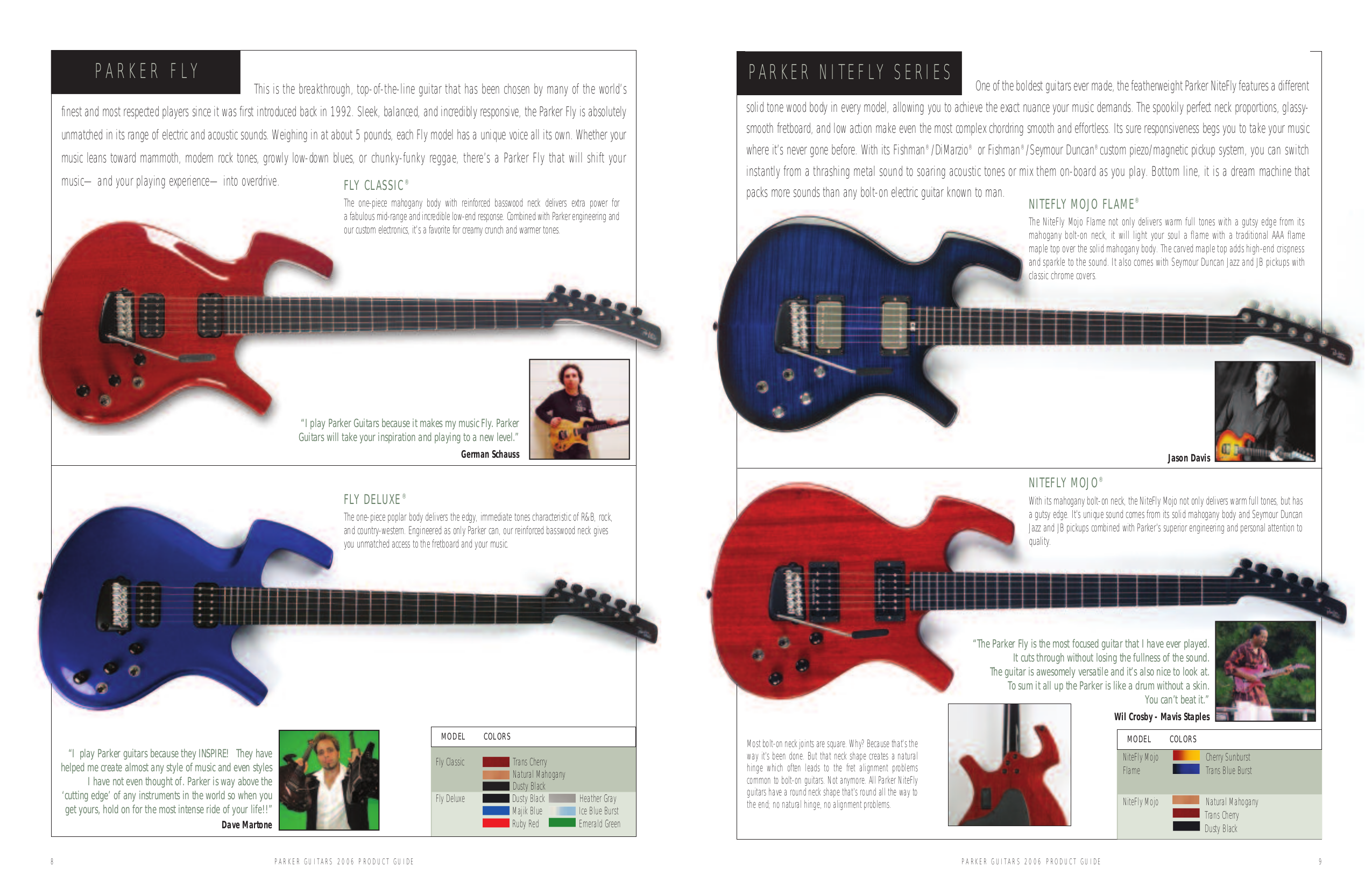
The body was now made of mahogany with a basswood neck. The Fly Classic weighed in at 5 pounds and had the features of the original Fly, except for the choice of body wood and composite finish.

The U.S. Music Parker Fly came with two Seymour Duncan humbucking pickups and included the Parker vibrato. The guitar was available with three colour options.

2005 Parker Fly Deluxe Ice Blue Burst

The Fly Deluxe was a similar instrument that apparently was voiced differently than the original. It came in different six different colour schemes.


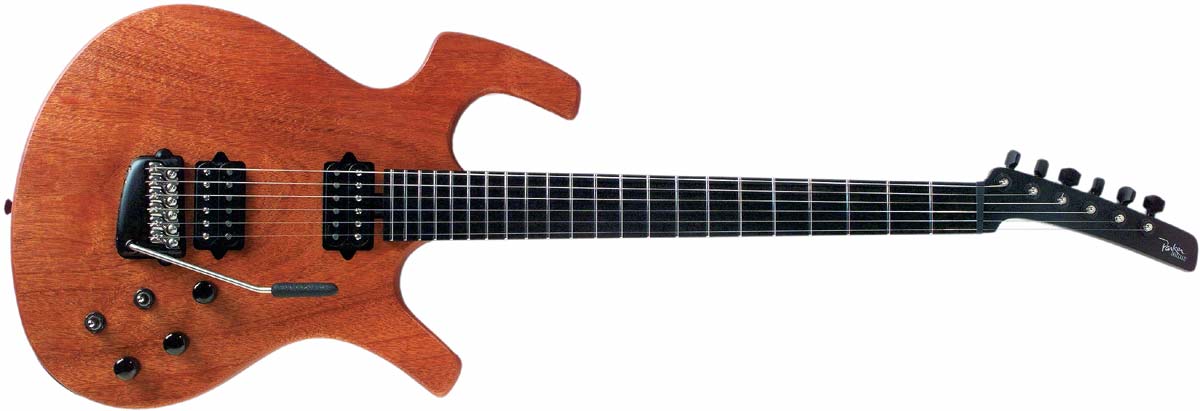
The Parker Nitefly Series included two guitars with features in the same shape as the original Parker Fly model. However these both had solid mahogany bodies and bolt on mahogany necks.

NiteFly Mojo Flame
The NiteFly Mojo Flame guitar had the same style neck, with a plain ebony fretboard, topped with the Parker style headstock. The thing that stood out on this guitar was the two humbucking pickups that were topped with chrome covers. One pickup was a Seymour Duncan Jazz pickup and the other was a Seymour Duncan JB pickup. This guitar featured the Parker vibrato. The mahogany body came with what the literature called, “a flame with a traditional AAA flame maple top over the solid mahogany body.”This guitar was offered in cherry sunburst or transparent blue-burst.

NiteFly Mojo


The NiteFly Mojo guitar had the same accouterments however the pickups lacked the chrome covers and there was not a flame veneer topping the mahogany body. It was bare wood and available in a natural finish, a transparent cherry finish, or a dusky black finish.


Southern NiteFly
The Parker Southern NiteFly was Parker’s answer to the Fender Telecaster. The body on this guitar was made of swamp ash and the bolt on neck was maple. The guitar even had black plastic pickguard. The neck pickup was a single coil with a chrome cover that could have been right off of a Tele. The Powerbridge™, looked like the rectangular chrome plate on a Telecaster. It contained a second single coil, slanted pickup and the adjustable bridge saddles contained the Fishman™ piezo elements. There was no vibrato on this model.

What set this apart from a Telecaster was the Parker Fly body, and the Parker headstock. The chrome control plate featured a third knob for the piezo volume. Above it was a second toggle switch to activate the piezo pickup. It was available with blonde, butterscotch, or transparent red finish options.

There were other variants that U.S. Music came up with for their Parker guitars.

NiteFly M


The Parker Nite Fly was one of the models designed by Ken Parker in the late 1990’s. The U.S. Music version of this guitar, called the NiteFly M, had a solid mahogany body and was topped with two humbucking pickups. The bolt-on neck was also made of mahogany. This instrument was offered with a natural oil and wax finish or a similar finish in black. It had the Parker vibrato.


NiteFly Alder
The Nite Fly Alder was Parker’s version of the Fender Stratocaster. This time the body was, of course, made of alder wood, while the neck was maple topped with an ebony fretboard. The pickup layout was similar to that on a strat, but the bridge pickup was a Seymour Duncan humbucking model. The controls were the same as those on a Stratocaster; a master volume, and two tone controls. It too came with the Parker vibrato. It was offered in cream white, Indigo blue,and cherry red.


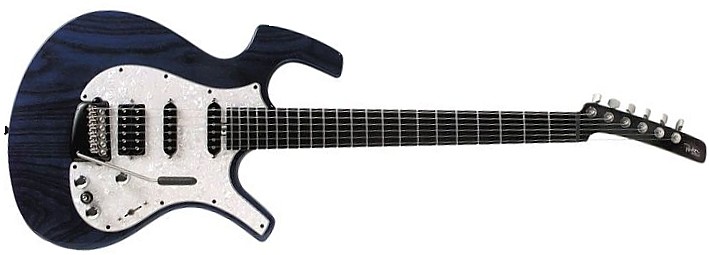
NiteFly SA


The NiteFly SA was based on the original Parker model. It had the typical Parker shape, but was topped with a white plastic pickguard that contained the electronics, including two single coil pickups and a humbucking pickup in the bridge position. A slider switch acted as a pickup selector. The guitars body was made of swamp ash and the neck was maple. It came complete with the Parker vibrato and was available in transparent red or blue.


Parker PM and Parker P Series
The Parker PM Series and P Series were similar to all of the previous versions, but are noted by the company as having significant upgrades.

U.S. Music Parker guitars included in its line up a series four solid body Parker Fly basses, in addition to their hollow-body PAB 40.

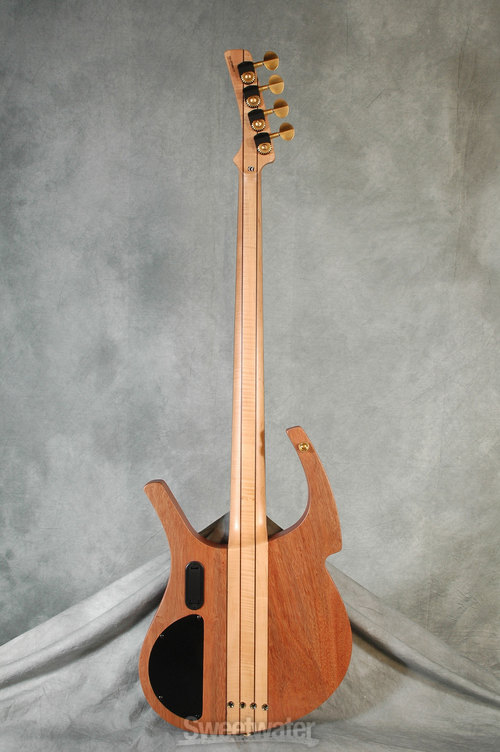
PB61SP


The PB61SP featured neck-thru construction of a spalted maple top and mahogany neck with an ebony fretboard and a spalted maple headstock veneer. The tuners and adjustable bridge/saddle were gold-plated. The body was in the Parker Fly Bass shape. This bass, like all Parker basses, featured twin EMG 35CS active bass pickups.


PB51TR


The PB51TR (Transparent Red) was very similar, except the body and neck were made of mahogany and it was finished in transparent red. The tuners and adjustable tailpiece were in a black gun metal finish.


PB41


The PB41 series offered the same great features, such as EMG pickups, however the body was made of Sitka spruce with a Urethan finish, and the bolt-on the neck was maple. It was available in Silverburst, Black Matte, and Gold Matte. The hardware was also done in a black finish. These basses were available in four or five string models.


In 2006 the company added a line of acoustic-electric and jazz guitars under the Parker brand name. These were manufactured off-shore by Washburn guitars.  At that time U.S, Music owned the US distribution rights to the Washburn brand as well.

Bronze Fly


These acoustic models included the 24 fret Bronze Fly, which was a solid body guitar in the shape of the Parker Fly. It had no magnetic pickup, only a Fishman piezo pickup in the Parker style bridge, however there was no vibrato. Ken Parker had offered this guitar when he owned the company under the name The Fly Concert.


Nylon Fly


The Nylon Fly was a similar guitar. This model came with the Fishman piezo placed under a handcrafted ebony bridge.  Both models were topped with gold-plated Sperzel locking tuner. During the years Ken owned the company this guitar was called The Spanish Fly.


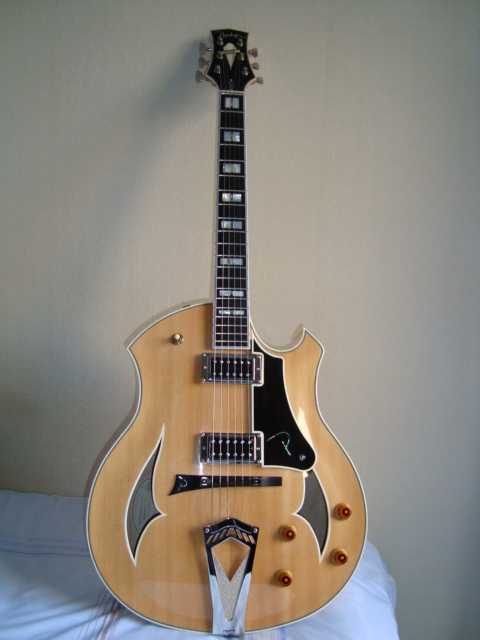
The PJ14N and PJ12 SB were true archtop hollow-body guitars. Both of these guitars had the most unusual body designs as well as unique f-holes.


PJ14N
The body of the PJ14N was made of natural spruce and the guitar featured a single Egnater floating Humbucker pickup with pickguard mounted controls and a 5-ply Rock Maple neck with Gold Grover Titan Tuners. The inlaid trapeze tailpiece appears to be made of ebony and the headstock was highly inlaid. This jazz box had only one sound hole. The bound ebony fretboard was inlaid with mother-of-pearl block fret markers. This guitar came with a 3-on-a-side headstock and it was simply awesome!


PJ12SB


The PJ12 SB (sunburst) featured two Egnater Humbucker pickups mounted on the guitars body with individual volume and tone controls, a stunning brass tailpiece, and a 5-ply Rock Maple neck with Gold Grover Titan Tuners. This guitar featured a bound ebony fretboard with block position markers. The 3-on-a-side headstock had a large split-diamond inlay and above it the Parker logo all in mother-of-pearl. The PJ12 was the same guitar with a natural finish.


Parker Event Series
Another development in 2006 was the introduction of a line of acoustic-electric guitars under the Parker brand.  These models all had ovular sound holes. The guitars were actually made by the Washburn guitar company under the Parker logo and were given the designation of Parker Event Series guitars. These included three wide bodied models and five thinner body instruments. All had the same unique Parker body shape as the Jazz series. The line up included three non-electric acoustic models.

Parker P8E

The P8E guitar was designed with a solid cedar top, with a flamed maple back and sides. The unbound fretboard was made of ebony and had small dot inlaid position markers on the boards bass side The electronics were designed by Larry Fishman and included a piezo unit in the bridge and a Fishman magnetic pickup just under the neck. The master volume control is on the guitars top and on the upper side bout are the controls for treble, bass, and pickup balance.


Parker P9E


The P9E was very similar, except for the choice of wood. For this guitar, the top was solid cedar, but the back and sides were made of Indian rosewood The neck was made of mahogany.


Parker P10E


The P10E came with all the features of the P9E, however the neck had an ivoroid fretboard with dark dot position markers. The bridge was made of this same material.


Parker P6E Event Series
The Parker P6E models featured a thinner body than the aforementioned instruments. This guitar was available in various styles.

This guitar had a solid Sitka spruce top with single ply binding. The accouterments were similar to th aforementioned mode,  with biggest difference being the depth of the body.

The other difference was the necks which were made of 5-ply mahogany and maple. The body on the P6E models were made with mahogany back and sides. Once again the fretboard Is made of ebony with microdot inlays, The electronics were designed by Larry Fisher. These guitars were available in white, black, and transparent red.

Parker P7EQS


The P7EQS had the same accouterments, but had a fancy quilted sapele top.


Parker Intrique Series acoustic


The Parker Intrigue Series, were acoustic guitar, with no electronic features. The unique body shape on these instruments was much different as there is no cutaway section.


Parker Intrique Series acoustic
The PA28 came with a solid cedar top and solid Indian rosewood back and sides. The neck was 5 ply mahogany/maple topped with gold-plated Grover Stay-Tite open back tuners. These instrument had a zero fret to help with intonation.

Also it 2006 Parker also came out with a unique acoustic bass guitar to match up with their Event Series guitars.


Parker PAB 40
The PAB 40 bass guitar featured the same shape as the Event Series guitars. It included nine feedback suppressing slots routed into the bodies upper bout. The piezo and electronics were the customized Fishman Matrix Bass system and installed on the upper side. The bound body was made of American black walnut and included a thumb rest. The ebony fretboard had only dot inlays at the 12th fret. The 2 on a side headstock was topped with gold-plated tuners. The pin bridge was uniquely designed of ebony wood.


JAM Industries 
In 2009, the brand was acquired by JAM Industries of Montreal, Quebec, Canada. Production remained in Illinois. JAM is a multi-national distributor of musical instruments, pro audio and lighting and consumer electronic.

This company has acquired many smaller distribution companies and owns the distribution rights to quite a few well know brands including Digitech, Washburn, Marshall, Hagstrom, Randall, Oscar Schmidt, and Korg.

2010 Parker Maxxfly
In 2010 the MaxxFly model was introduced. This model was based on the Fly guitar, but featured a refined headstock which allowed it to be hung on a wall guitar hanger. The top horn was reshaped to be more traditional and ergonomic.

Standardized pickup cavities were set up to aid in manufacturing. The frets were reduced from 24 to 22, and the body became slightly thicker and heavier.

In 2015 the JAM Corporation announced that Parker's US production had ceased and a search for a new off-shore facility was underway.

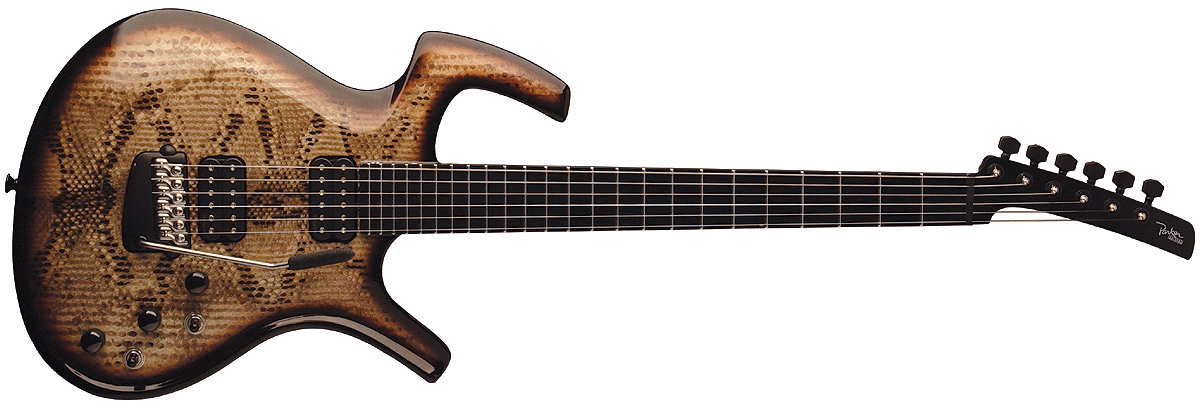
Fly Mojo Snakeskin


Parker did create several special edition models after the 2015 announcement including the Fly Mojo Snakeskin model, the Koa Fly Mojo model, and the Four Season Fly Mojo guitar, which was offered in differing finishes corresponding to the seasons.


Parker Guitars  US Music page
The Parker Fly brand was being manufactured until November of 2016 when the factory in Buffalo Grove, Illinois was shut down. The U.S. Music website states, “The Parker Guitar line-up is currently being updated for re-release in 2017.


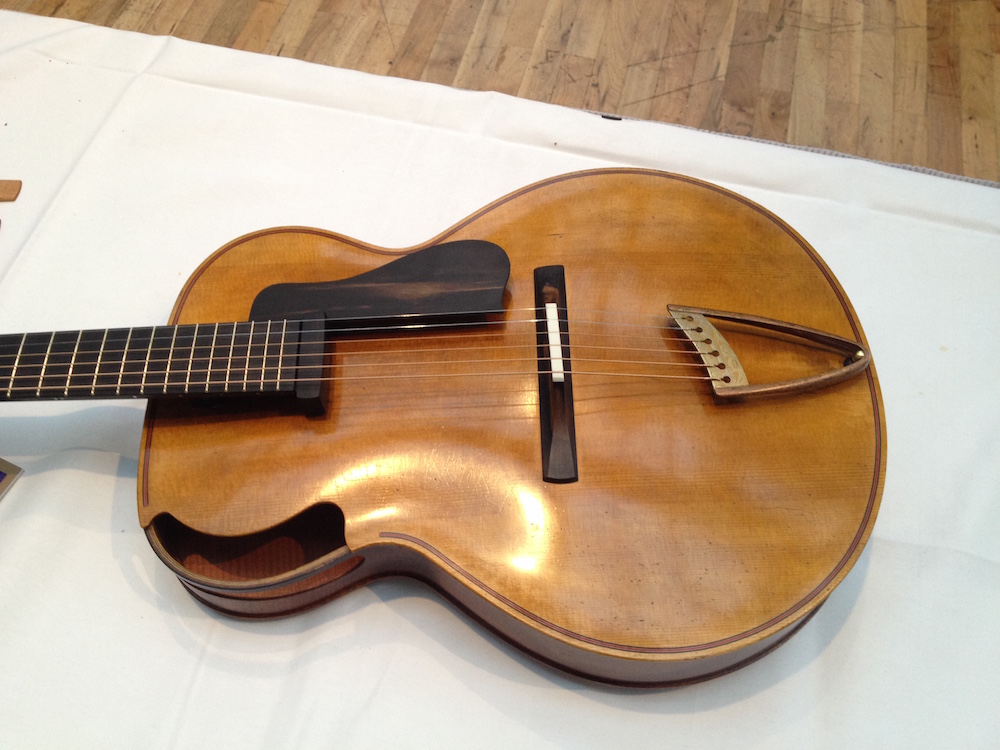
Ken in 2013 Holding his archtop


So what is Ken Parker doing these days? He has returned to his first love, which is building archtop guitars. He started doing this in the 1970’s, long before he became preoccupied with the Parker Fly guitar. During these years he was able to strike up a friendship and get advice from Jimmy D’Aquisto.


1991 model
much different Parker
Ken says on his webpage that he has been busy creating and selling his own archtop guitars. And these are very unique instruments, like no other guitars on the market. Each guitar is handmade and though they share the same outline, each is a one-of-a-kind piece. Ken has experimented with different woods that exhibit different tonal variations.

After selling his stake in Parker Fly Guitars in 2003, Ken began experimenting with the archtop guitar neck attachment. He felt that one of the pitfalls of the archtop acoustic was the bridge.

Parker Archtop "Grace"
On most models this involves a bridge with a saddle that is adjusted by means of some knurled knobs to raise and lower the action of the strings. He feels the bridge is such an important element in transferring the string vibrations to the guitars body and the standard method needed to be improved upon.

The bridges on his instruments need no adjusting.

Parker archtop neck and post
To solve this, Ken has created a unique adjustable and removable neck. The neck sets above the guitars body on a post made of carbon fiber.

This allows the player to not only adjust the neck, but to play in upper registers without being impeded by the instruments body or neck heel, as there is no neck heel. Another advantage to the removable neck is that the instrument can be dismantled and placed in travel size containers for safe travel on airlines. Parker can even build an instrument available with a variety of differing necks for the same body, such as a 25.5” scale or a 30” baritone scale, even six or seven string necks that would fit the same body.

Parker neck, bridge, fretboard

Parker’s fretboard design involves an altered conical parabolic curve that is based on the players preference for string gauge and action. He suggests using 12 gauge string sets for his instrument, preferably made of phosphor bronze material, since he uses Fishman Rare Earth SA220 humbucking pickups on his instruments.


Fishman Rare Earth pickup
top and side view
These pickups attach to the pickguard and are snug up against the distal end of the neck. All the wiring is concealed under the pickguard, including the 1/8” output jack. He prefers these pickups to piezo versions as he feels they deliver a more realistic sound.


Parker Archtop headstock & tuners
The headstock on Parker's archtop guitars is similar to the minimalist six-on-a-side type that he used on the Fly guitars. He has chosen Gotoh Stealth tuners to top his instruments. These are the smallest tuners on the market. He covers the back of the tuners with a plate so the machines are not visible.

Ken Parker archtop guitars have a base price of $30,000.

Click on the links under the pictures for the sources. Click on the links in the text for further information.
© UniqueGuitar Publications (text only)


.

Friday, March 3, 2017

The Fender Musicmaster and Duo-Sonic

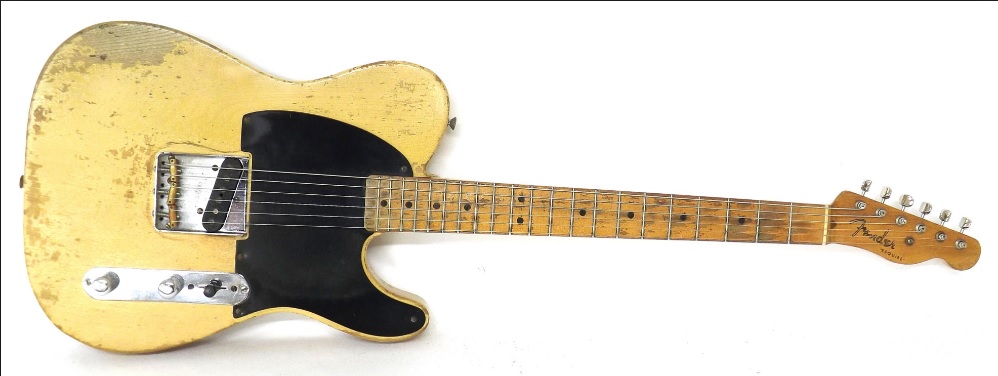
1951 Fender Esquire
Fender introduced their solid body electric guitar, the Esquire, as early as 1950. This "Spanish-style" electric guitar was made in the style of Leo Fender’s lap steel guitars, with a single slanted pickup placed right next to the bridge and saddles.

'50 Broadcaster
In the fall of that year Fender added an additional pickup and called that guitar the Broadcaster, which didn’t last long as Gretsch had trademarked that name for their drum sets. So the word "Broadcaster" was cut off of subsequent headstock decals.

1951 Fender Telecaster
By the summer of 1951 the guitar was renamed the Telecaster.


1954 Fender Stratocaster

Moving forward to 1954, Fender introduced the Stratocaster. The introduction of this guitar coincided with the year Elvis Presley became popular, which caused an increased interest in the guitar.


By 1956 Leo Fender thought it might be a good idea to introduce a student model to the Fender line up, which would have a shorter scale for small hands and also had a reduced price point.

1956 Fender Musicmaster and Duo-Sonic Guitars
The 3/4 sized Fender Musicmaster and Duo-Sonic guitar guitars were both offered in the spring of 1956. Both guitars featured a 22 1/2” scale bolt on, soft V style maple neck with a maple fret board. The tuning machines came with less costly plastic buttons instead of metal ones found on the strat and tele. The guitars double cutaway slab body was made of either an ash or alder and featured shorter horns than those on a Stratocaster. Both instruments came with a single volume and tone control.

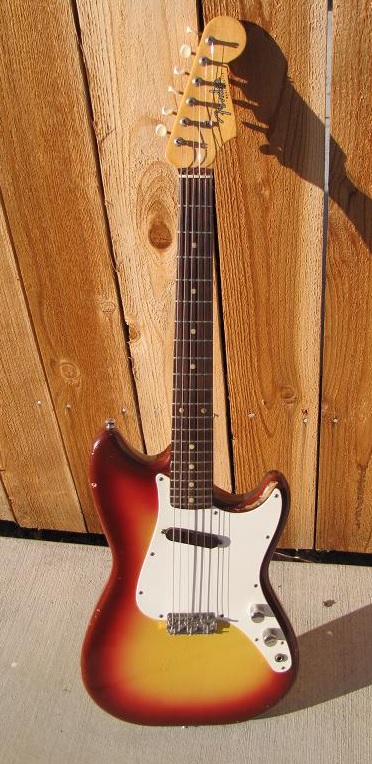
1956 Fender Musicmaster


The Musicmaster featured just one single-coil slanted pickup in the neck position.


'56 Duo-Sonic


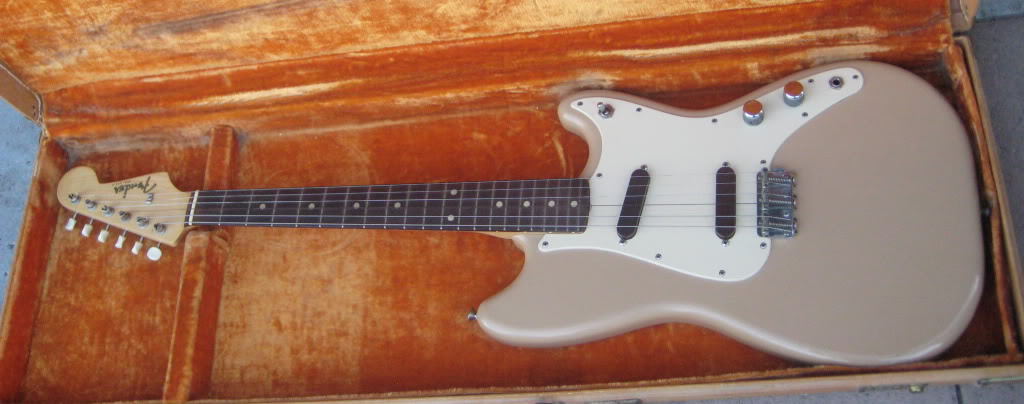
The Duo-Sonic added an additional pickup, without a slant, in the bridge position and a 3-way selector switch on the lower horn. The middle position on the Duo-Sonic placed the single coil pickups in series, thus acting like a humbucking pickup.


Bridge for 1956 Duo-Sonic


Both guitars had adjustable bridges which had 3 sections, much like the older Telecaster bridges, with each section doing duty for two strings. This bridge was fastened directly to the body and it came with a bridge cover, which generally was taken off the guitar.


1956 Duo-Sonic

The initial models of each instrument came with an anodized aluminum pickguard done in a gold colour. This provided shielding. The serial number was stamped on the chrome neck plate.

The original run of these guitars came in only one color that Fender called Desert Sand. The suggested retail price at the time for the Duo-Sonic was $149.50.

1959 Musicmaster


This model went unchanged until later in 1959 when a rosewood slab fret board was added to the maple neck. Within a year Fender changed this to the veneer style rosewood fret board. The anodized aluminum pickguard was changed to a plastic one with shielding under the potentiometers.


1959 Musicmaster


1959 was also the year that the Musicmaster and Duo-Sonic came in Sunburst which replaced Desert Sand.


1963 Musicmaster


In 1963 the sunburst finish was discontinued and the guitars were available in white with brown plastic pick guards.


1966 Fender Duo-Sonic II


Big changes occurred in late 1964 when the Duo-Sonic and Musicmaster were redesigned. That year the guitars were renamed the Duo-Sonic II and the Musicmaster II.


1964 Fender Duo-Sonic II
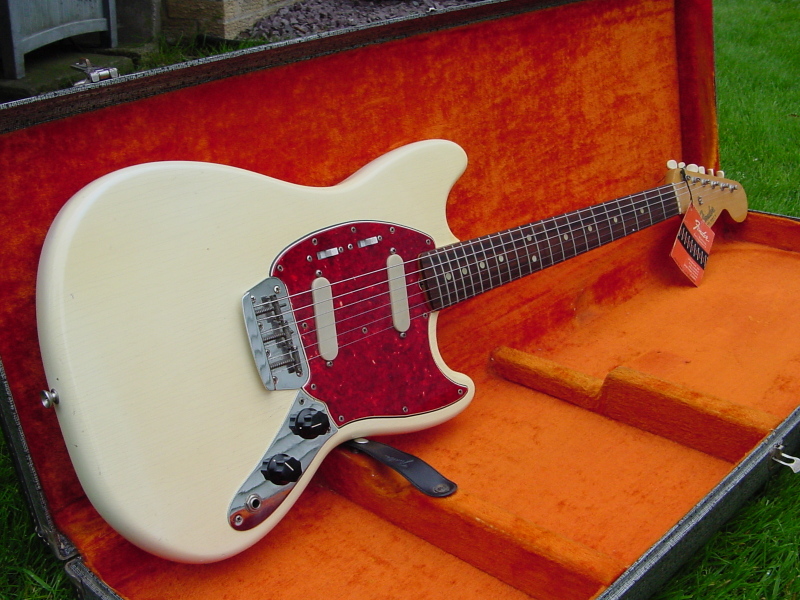
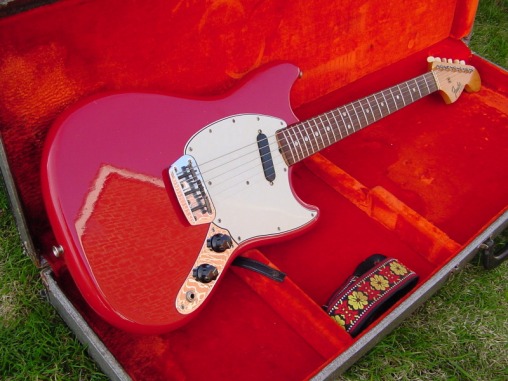
Fender had released the Mustang in that same year and this guitar featured a larger offset body. The headstock on the Mustang was larger. These features were added to the Duro-Sonic, which became essentially a Mustang without the vibrato. The 3-way switch was also gone, and replaced with two 3 position slider switches, similar to those on the Mustang.

1965 Fender Duo-sonic II
Both pickups were slanted and available with black or white covers. The pickguard was now a 3 ply style and offered in white or red pearloid material. Just like the Mustang, the volume and tone controls and the jack were mounted on a separate metal plate.

1964 Musicmaster II

Similar treatment was done to the Musicmaster, but it had no slider switches.

The bridge/saddle on both guitars were redesigned to have a raised lip on the end to attach the strings. The neck was still available with the 22 1/2” scale, but the guitars were also offered the same 24” scale neck found on the Mustang.


1964 Musicmaster II and Duo-Sonic II

Both guitars were available in Dakota red, white, or Daphne blue finishes.

The Duo-Sonic II lasted until 1969, when Fender determined that the popularity of Mustang sales did not warrant maintaining the “hard-tailed” Duo-Sonic.


1971 Musicmaster


However the single pickup Musicmaster was still kept in the line up.  However the designation Musicmaster II was dropped in favor of just Musicmaster. The Musicmaster was offered by Fender through 1982.


'93 Duo-Sonic

In 1993 Fender decided to reissue the Duo-Sonic. This time it was made in Mexico. The scale was still short, however this time it was 22.7” instead the of 22.5’ length. The neck was now back to maple with a maple fretboard. The twin slider switches were replaced with the 3-way toggle selector on the guitars upper horn. The bridge still had the raised lip. These models were available in black, Torino red and Arctic white. These guitar remained in the line up through 1997. The pickguard was made of one piece of plastic, with no chrome control panel.


1998 Squier Affinity Duo-Sonic
In 1998 the Duo-Sonic was produced as a Chinese made Squier Affinity model. The biggest changes on this version was the the pickups, which looked more like strat pickups with the pole pieces showing. The two knobs were plastic strat-style versions instead of Mustang or Tele style knobs. This guitar was dropped from the line up in 1999.


2008 Squier Classic Vibe Duo Sonic
In 2008 the Duo-Sonic resurfaced under the company’s Squier brand as part of their Classic Vibe series. This time the guitar attempted to be a recreation of the 1956 version, including the Desert Sand finish, the gold anodized pickguard and the maple neck/maple fret board.

There were a few changes. The body was made of basswood and the neck was a 24” scale with a C-shape. The frets were updated to medium jumbo ones and the bridge pickup was moved 3/4’s of an inch further from the bridge compared to the original. This model was discontinued in 2011.

2016 Fender Duo-Sonics


In 2016 Fender offered two updated versions of the Duo-Sonic under the Fender brand name. Both guitars came with 24” scale necks.


2016 MN


The Duo-Sonic MN featured 2 single coil pickups with a slanted neck pickup and a bridge pickup that was parallel to the bridge/saddle. This guitar appears to be fairly close to the original model, but for the scale and the six-section adjustable bridge with the strings going through the body and anchored in the back of the guitar.


2016 HS


The other model was the Duo-Sonic HS, which featured a single coil slanted pickup in the neck position and a humbucking pickup in the bridge position that featured coil tapping. The bodies are made of alder wood, while the necks are maple and offered with either a maple or rosewood fretboard. Both instruments are manufactured in Mexico and remain in the Fender line up at present.


Bronco Set

A close cousin to the Musicmaster and Duo-Sonic was the Fender Bronco. This was another student guitar that was initially sold as a student package along with the Fender Bronco amp, which was actually a very nice Fender silverface Vibro-Champ amplifier. The only difference in the amplifiers was the colour of the logo. This amplifier came with red lettering that stated Bronco, instead of blue lettering stating Vibro-Champ.


1967 Fender Bronco
The Bronco guitar was introduced in 1967. The guitars body was the same as the Mustang and Duo-Sonic of that era. The C-shaped neck had a scale of 24” and included a large headstock, similar to the one on the Mustang.

The fretboard was of the Fender laminated rosewood variety with dot position markers. Like the Musicmaster, the Fender Bronco has only one pickup, but it was placed In the bridge position. This was a slanted single coil pickup with no exposed pole pieces.

1967 Fender Bronco amplifier
The 3 ply pickguard was was white or black plastic and included a section for the volume and tone controls and jack. The Bronco came with an unusual vibrato system that Fender never used on any other guitars.

The Bronco stayed in the Fender line up until 1981. It was then replaced by the Fender Bullet 1.

1981 Fender Bullet 1
The Fender Bullet 1 was another unique Fender instrument marketed to students or players looking for a low cost Fender guitar.

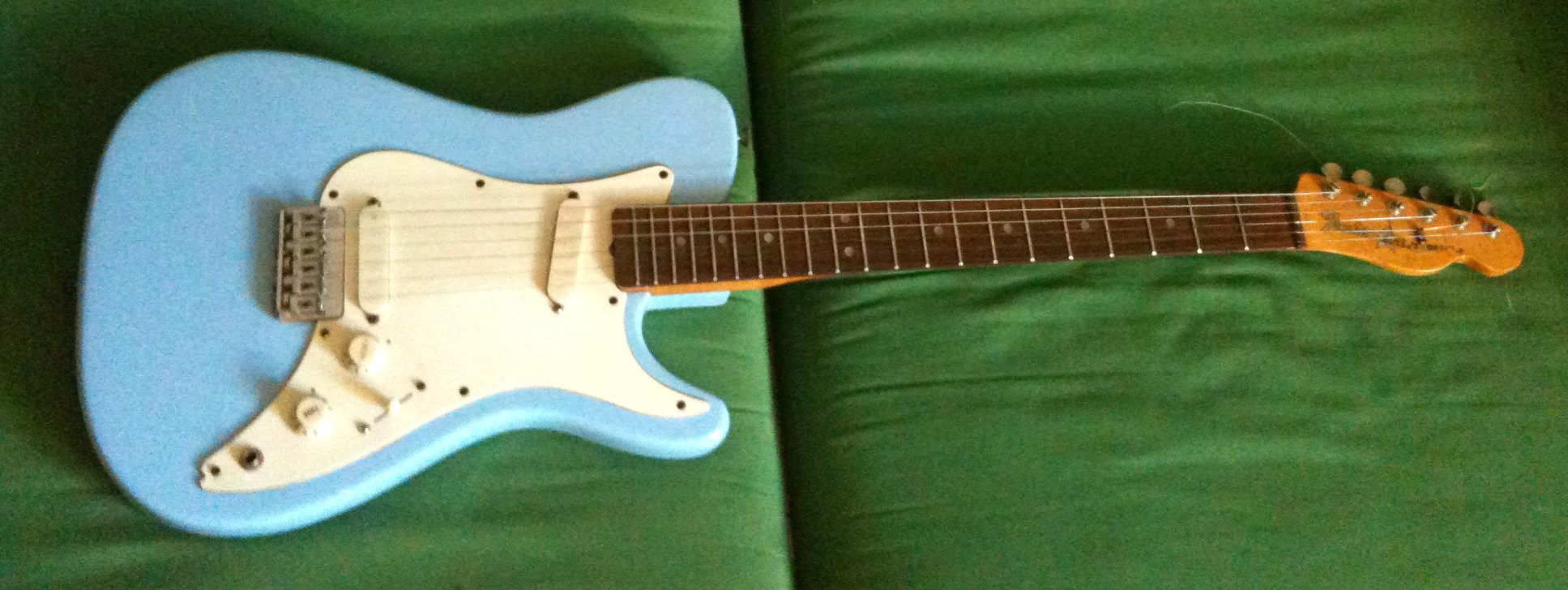
This first version of the Bullet included an anodized pickguard with controls for tone and volume.. The distal end of the metal pickguard had a lip that held the six adjustable bridge saddles.

The guitars body had a shape more like a Telecaster than a Mustang. The twin single coil pickups were done in the same manner as the original Duo-Sonic; the neck pickup slanted downward and the bridge pickup was parallel to the bridge saddles. The bolt-on maple neck was topped with a laminated rosewood fretboard and a Telecaster style headstock. The 3 position blade switch was very similar to the one used on early Stratocasters.

'81 Bullet Deluxe


Later models, known as the Fender Bullet Deluxe, were produced with a plastic pickguard and a metal plate that housed the bridge/saddle unit. By 1982 the Bullet was redesigned and this version bore no similarity to the Duo-Sonic.

Fender Swinger


One other very interesting Fender student guitar worth mentioning;The Fender Swinger.


Babe Simoni
Vigiliio “Babe” Simoni was hired at Fender when he was a 16 year old kid. He rose up the ranks and became the product manager. Simoni stayed on with Fender after CBS purchased the company.

Swinger body routed for Bass V pickups

The new bosses gave him instructions to find something profitable to do with leftover parts. Simoni was not a designer, but he was skilled in shaping bodies, necks and routing.

He came up with two very unique guitars and one of them was the Fender Swinger, which was fashioned from leftover Musicmaster, short-scale necks, and Fender Bass V bodies.

Fender Swinger
Babe had workers saw a curve section into the bottom end of the body and then the sawed off a portion of the upper horn. He also had them cut the end of the headstock on the the 22 1/2” Musicmaster necks into a sharp point.

These guitars  utilized left over 1969 pick guards that had been cut out to allow space for the metal control panel. This guitar came with a single slanted neck pickup. The 3 section bridge/saddles were the same ones used on Musicmasters and Duo-Sonics that were made during the 1964-1969 era.

1969 Fender Swinger
Swinger bodies were offered in various colours, including Olympic White, Daphne Blue, Dakota Red, Black, Lake Placid Blue, and Candy Apple Red.

Logos on the Headstock


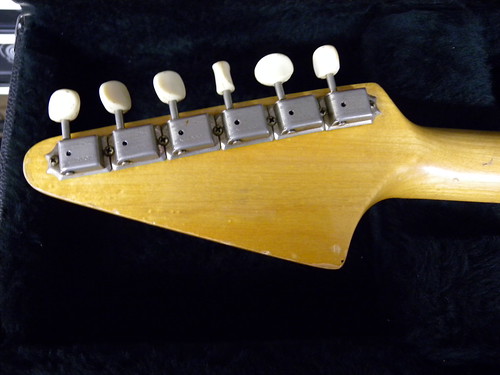
The tuning keys had white plastic buttons and the Fender logo decal (in black font) was put on the headstock. On some models to the right of this was “Swinger” in a similar black script. Most models deleted the guitars name.


Back of the Swinger body


Though the Swinger was an inexpensive 3/4 sized guitar at the time it was offered to the public, its scarcity has made this guitar very collectible and commanding thousands in today’s vintage market. 


Another variant of the Duo-Sonic and Musicmaster guitar was the Fender Musicmaster bass guitar.

1966 Fender Mustang Bass
Fender had launched the Mustang guitar in 1964. Two years later Fender produced the Mustang Bass. This was a short scale bass with a 30" neck, split single coil pickups, somewhat like the ones on a Precision Bass, but with rounded corners, and a body just like the one on the Fender Mustang guitar.

This bass came with a plastic pickguard and a metal control section similar to the one on the Mustang guitar. The bridge/saddle section consisted of a chrome plate with a raised lip at its end and 4 adjustable saddles.


1971 Musicmaster Bass
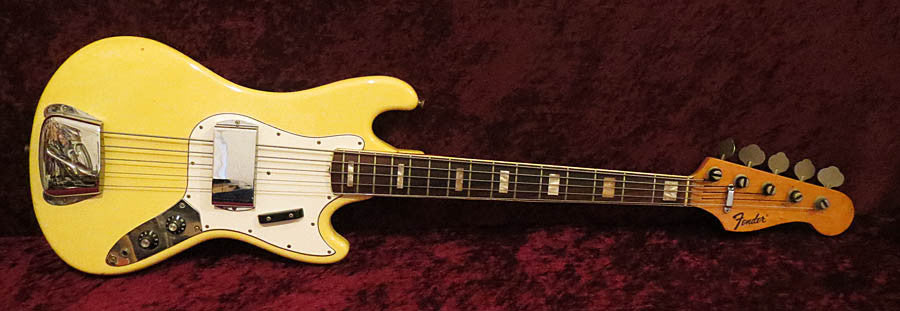
In 1971 Fender introduced a budget version of this bass and called it the Musicmaster bass. The body was similar. This instrument was made of surplus parts of other guitars.

The controls and pickup were mounted on the plastic pickguard, which was much smaller than the one on the Mustang bass. The bridge/saddle was different from the Mustang bass.


The strings attached to the lip of a chrome plate and passed over two adjustable sections, much like the saddles found on a Telecaster.

1972 Musicmaster Bass


This bass had one single coil pickup with a cover that did not expose the pole pieces. If you removed it, then you would find six pole pieces, as it was actually a Stratocaster pickup. This led to a common criticism that the Musicmaster bass sounded thinner than other bass guitars.


1971 Fender Musicmaster Bass

Most Musicmaster bass guitars came with a white or black pickguard, while some had a pearl design. The 30” scale maple neck was capped with a rosewood fretboard. The headstock was smaller than the Mustang bass. The tuning keys were triangular.

Original models came in black, red, or white. Later models were available in other Fender finish options.

The Fender Musicmaster bass was in the line up until 1981. It was reintroduced as the Squier Musicmaster bass in 1997.

1997 Squier Musicmaster Bass
There were several differences in this model, aside from being made off shore.  This version had four exposed pole pieces. The bridge was still mounted on a screw in chrome plate, but it had four adjustable saddles instead of just two.

The control knobs on the Fender Musicmaster bass were made of plastic, while the Squier version had metallic knobs.

Squier Bronco Bass


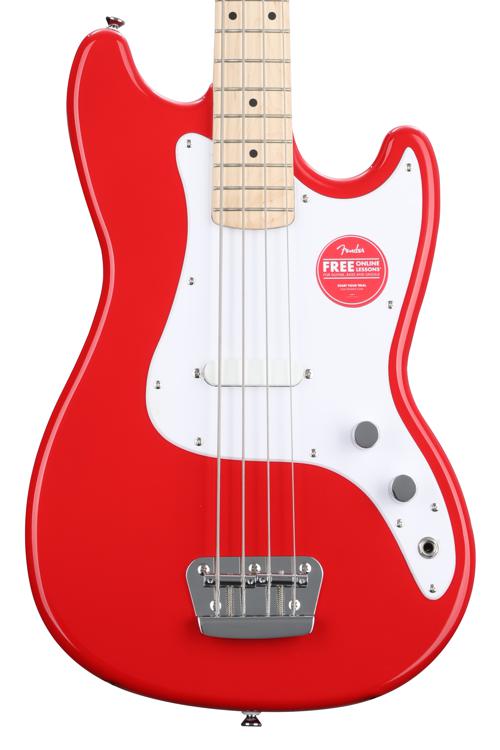
The Squier Musicmaster bass was produced for less than a year, when Fender introduced the Squier Bronco bass. This was a simlar bass, but utilized a covered pickup that had 4 pole pieces. The bridge/saddle reverted back to the two section type.


2002 Fender Mustang Bass MIJ

The Fender or Squier Musicmaster bass never resurfaced. The Fender Mustang bass was reissued in 2002. It remains in the Fender line up.


Squier Bronco
The Squier Bronco Bass is now part of the Squier Affinity series.

Unfortunately, the vintage Fender Musicmaster bass, though no longer available, is one of the least collectible Fender instruments.

The links under the pictures will take you to their source. The links in the text will take you to more interesting information.
©UniqueGuitar Publications (text only)