Sunday, June 9, 2019

Best Beginner Acoustic Guitars

1950's Harmony
Patrician
I started learning to play guitar when I was 13 years old. At that time, there were not a lot of choices. My Dad took me to Will's Pawn shop and bought a $20 Harmony Patrician archtop.

Today there are folks that would be impressed that I owned that old Harmony archtop, since it is now considered a vintage instrument. However like most Harmony guitars of that era those guitars have huge necks which are generally bowed. That was the problem with my guitar. The strings were at least an inch off the neck at the 12th fret. However I was able to learn the basic position chords on it.

These days beginners have so many better options to find guitars, that are much easier to play, and have a better sound. Some of this is due to due to computerized machinery that is able to consistently produce more exacting intonation, and turn out guitars that do not differ too much, one from another. Also guitar manufacturers face a lot of competition to turn out a quality product.

Because most musical instruments are now made outside of the USA, the construction labor is reduced, therefore the prices are more affordable for beginners, and their parents.

Richie Rich
Unless you are Richie Rich, I would not suggest starting out on a brand new Martin D-18, or a high end Taylor. You or your child might find you are not suited for playing guitar.

So here are a few beginner guitars that I would recommend. Please note, I would never any guitar that does not have a solid wood top.

Solid Spruce Top
The ones I am recommending all have a solid wood sounding board. If you are researching in a music store or on line, the description will mention if the wood is solid, be it the top, neck or any part of the instruments body. If it does not solid wood; it is laminate.

Spruce wood tops are usually associated with a warm tone, while mahogany tops sound a little brighter. The guitars top is one of the most important parts of the guitar, since that is what the strings cause to vibrate, producing the sound.

The back and sides are important as well, as these work as the to project the sound.  On the guitars I am suggesting, the back and sides are generally made of laminated wood. Though not ideal, but it does reduce the price of the guitar, and has far less effect on the sound as does the soundboard.

I’ve kept these in a budget of $300 to $500 range. If you find one that sells for less, make sure it has a solid wood top. Most of these guitars I am suggesting I have played at one time or another. So let's get started.

Baby Taylor - Spruce Top
The Baby Taylor guitar comes with a solid spruce or mahogany top, and is made by Taylor Guitars. Both model have solid wood tops. These are small sized guitars, so they are nice for children, or anyone with small hands. The back, sides, and neck are made of layered Sapele wood, which comes from Africa. It has become a popular wood for guitars since it is plentiful.


Baby Taylor
Mahogany Top

The neck on the Baby Taylors are bolted onto the body by a couple of screws that are mounted on the fretboard and covered under fret markers. These guitar come with a sturdy gig bag, and they retail for $350.00. Martin guitars offer a similar instrument called The Little Martin LX. I cannot recommend it as it is made of high pressure laminate material.


Taylor Big Baby
The Taylor Big Baby comes with a solid Sitka spruce top. The back, sides, and the neck are made of Sapele wood. This guitar is a larger version of the Baby Taylor, It is a 15/16th size guitar with a 25 1/2" scale, so it is actually a normal sized guitar, with just basic features. The body is larger than the Baby model, therefore the sound is larger.


The back on this model, and on the Baby Taylor has a slight arch, which eliminates the need for back bracing.  Like the smaller model, this guitar comes guitar comes with a bolt on neck.  It also has pickguard. The Big Baby Taylor comes with a gig bag, and retails for $450.00

Taylor 3/4 size GS Mini with
 a  Mahogany, Spruce, Koa top
The Taylor GS Mini comes with a Sitka spruce, Koa, or a mahogany top and though it is a 3/4 size guitar, it has a bigger body than the Baby Taylor, The neck on the GS Mini is one inch longer than the Baby Taylor with a 23 1/2" scale. The back, sides, and neck are made of Sapele wood.  The neck on this guitar has a heel, and it is bolted from the interior of the body, so it is easily adjustable.

Taylor GS Mini ES-Go PIckup System
The body on this guitar has the added feature of binding. Although it is not an electric guitar, for an extra cost, you can buy the Taylor ES-Go pickup system that easily turns this instrument into and acoustic electric model. The Taylor GS Mini comes with a gig bag and retails for $499.00

All Taylor guitars in this price range are made in El Cajon, Mexico.

Seagull S6 Original 
The Seagull S6 Guitar This guitar is normal sized. It has a solid cedar top, that is pressure tested at the factory. The grain of the wood is cut to give a compound curve and produces a superior tone. The back, and sides are made of three layers of cherry wood, which are laminated so the grain of the mid layer is reversed from the inner and outer layers.

The neck is made of Silverleaf Maple and has a 24 5/8" scale.

Seagull Tapered Headstock


The headstock on Seagull guitars are tapered so the strings have a straight pull, which is helpful in maintaining and keeping intonation. The headstock is angled at a 45 degree angle.


Seagull S6 - Natural Cherry
Back and Sides
The Seagull S6 guitar comes with a natural finish on the back and sides, or the stained finished (shown above). It retails for around $420.00, but I have seen used models for more than $100 less.

If I was starting all over again, this is the guitar I would want. Seagull guitars are made in Canada, in the Provence of La Patrie, in Quebec and they are well made instruments.

The company is owned by Robert Godin, who builds guitars under a number of different brand names. The wood for Seagull guitars is harvested in Canada, and it is aged at the factory. The case or gig bag are sold separately.

Ovation Elite Celebrity CE44-1
The Ovation Elite Celebrity CE44-1 acoustic-electric is a normal sized This guitar is made in China. The top is solid spruce and instead of a large sound hole, it has multiple small sound holes with a decorative overlay. It comes with a built-in OP-4BT preamp which controls volume and EQ, and has Ovation's unique piezo pickup system in the instruments bridge.


It also has a built-in tuner. This guitar is made in China, and retails for $470.00. The case or gig bag is sold separately

Saga Musical Instrument
Company Brands


Saga Musical Instruments is a distribution company and has been in business for more that 40 years. They started by offering instrument kits, which they still sell, but currently sell completed instruments that are made in China.


Blueridge Guitars
Their current line up includes a brand called Blueridge Guitars. Many of these guitars are replicas of Martin guitar, right down to the scalloped bracing. The company makes some high end, and expensive instruments that are totally solid wood.  Some professional musicians are using these.  However for a beginner or amateur player, I would recommend a lower price point guitar.

Blueridge instruments are well constructed.

Blueridge BR-63


The Blueridge BR-63  is a replica of a vintage 000 Martin guitar. It has a solid Sitka spruce top. The back and sides are mahogany. Much like the 000 Martin style, body is slightly smaller, but this is a normal size guitar. You would need to purchase a case or a gig bag. It retails for around $450.00


Blueridge BR-40
The Blueridge BR-40 is a replica of a Martin D-18, but it has a fancy headstock. The guitar has a solid Sitka spruce top, and the back and sides are mahogany and it is a full sized guitar. You would need a case or a gig-bag. It retails for $650 to $700, but you can find a used one for less than $500.

The Takamine Guitar Company is a Japanese firm that started in 1959, and took it's name because the original companies facility was at the base of Japan's Mount Takamine. This business makes some very nice guitars.

In fact their guitars are so nice that are so nice many well known artists use them on stage. Their parametric piezo pickup system is very similar to Ovation's system.  Takamine offers their G series of guitars that are made in China.

Takamine
GX18CENS


Takamine GX18CENS 3/4 Size Travel Acoustic-Electric Guitar is a 3/4 sized guitar. This guitar has a solid spruce top. This is a very well made instrument that has some aspects found on more expensive guitars. The back and sides are mahogany laminate.The case or gig bag is sold separately. It sells for $400.00.


Takamine GD30CE

The Takamine G Series GD30CE is a full sized acoustic electric guitar. It has a solid spruce top, and laminate mahogany back and sides. The guitar includes a TP-4TD preamp, with EQ and a built in tuner connected to the bridge saddle piezo unit.  It is available with a gloss natural or black finish and retails for $460.00 to $480.00. Once again the case or gig bag is sold separately.


Currently all Epiphone guitars are now all made in Qingdoa China. In the past they were manufactured in Japan, and Korea. However in 2004 Gibson invested in the Chinese factory.  Some of the companies moderately priced models are good. These are all are replicas of Gibson guitars, which sell for thousands of dollars more.

Epiphone DR-400MCE
The Epiphone Masterbilt DR-400MCE retails at $400.00, and is probably the best instrument in it's class. This acoutic-electric guitar not only has a solid Sitka spruce, but the back and sides are made of solid mahogany.

This guitar has Epiphone's Esonic2 HD pickup system which combines a piezo unit mounted in the bridge saddle, and a magnetic pickup at the end of the fretboard.  The controls are thumb wheels on the upper side of the sound hole. The neck is nicely dovetailed to the body. It retails for $400.00 The case or gig bag is sold separately.


Epiphone Hummingbird Pro
The Epiphone Hummingbird Performer Pro model, is no longer being manufactured, but new and used models are still available. This model features a solid spruce top, with laminate back and sides. It includes a Shadow undersaddle nano flex pickup with a 2 band EQ control, and phase filter. This comes in a cutaway, or non-cutaway version, and tobacco burst or cherry burst finishes and sells for around $370.00. Case or gig bag is extra.

 Epiphone currently offer the Hummingbird Artist with a price range from $200 to $225. The "Artist" has a laminated top, and a plain black pickguard. The Pro model has the decorative pickguard with hummingbirds embossed on it. I advise to go with the Pro model.

Epiphone Dove Pro
The Epiphone Dove Pro model is Epiphone's take on the Gibson Dove guitar. The Dove Pro is a gorgeous instrument and features a solid spruce top. The decorative image of a dove is found on the pickguard, and dove wings are inlaid in the guitars mustache bridge. The back and sides are laminated maple. The fret marker are parallel style. This guitar has a Fishman Sonitone undersaddle pickup with soundhole controls and preamp. It comes with a violin-burst finish, however there are LTD, or limited editions with an Ebony or Alpine white finish. The guitar retails at $370.00, and case or gig bag are sold separately.

Yamaha FG800

At a lower price of only $200.00, the Yamaha FG800 is a normal sized guitar that comes with a bound solid spruce top and is a very good bargain.  The back and sides are made of nato wood, which is a Asian hardwood from the Mora tree. There is nothing fancy about this guitar. This guitar is available with a Sand-burst or a natural finish.


The Yamaha corporation of Japan has been building guitars since the 1940's. Many popular artists including John Denver and Paul Simon have used Yamaha guitars. In the early 1970's the Yamaha FG150 was a popular guitar due to its affordability.  The FG800 seems to be an updated version. A case or gig bag is sold separately.

Cordoba CM3
I have concentrated on guitars with steel strings, as they are more popular than their nylon string cousins. The same rules would apply to a nylon string instrument. Find one with a solid top. Better yet find one with solid back and sides, such as the Cordoba CM3 which sells for $200. If the description of the guitar says cedar top, mahogany back and sides, it is made of laminated wood. Classical guitars have wider necks, usually no position markers, and are meant for playing with your fingers instead or strumming the guitar with a pick.

Finally, if you can find these guitars, or any acoustic guitar in the used market, at a lower price, I would buy it, as long as the top is made of solid wood, and the action is acceptable. You can always use lighter gauge strings on a guitar, or have a music store adjust the action. If you have any suggestions, please respond to me,

Click on the link under the pictures for sources. Click on the links in the text for further information.
©UniqueGuitar Publications (text only)


Sunday, June 2, 2019

Leon Redbone - August 26, 1949 to May 30, 2019 - His Guitars and Instruments

Leon Redbone
Leon Redbone was an enigma, and one of the most eccentric entertainers we will ever have the pleasure to have seen and heard. He had a trove of old songs that consisted of jazz, blues, and Tin Pan Alley classic songs which he sang in his own distinctive basso voice, while accompanying himself on a variety of vintage guitars.

Redbone was reticent to discuss his origins, and never explained the provenance of his stage name.

Leon Redbone or Dickran Golabian?
According to a Toronto Star report in the 1980s, he was once known as Dickran Gobalian, and he came to Canada from Cyprus in the mid-1960s where he changed his name via the Ontario Change of Name Act.


According to research published in 2019 by the Toronto Star, Redbone said:

 “Very little of my life goes into my music. I’ve never considered myself the proper focus of attention. I’m just a vehicle…not so much for the particular kind of music I prefer, music from an earlier time, as for a mood that music conveys. I don’t rehearse. There’s nothing studied in what I do, I operate on a completely haphazard level…I never know what the next song is going to be. One idea suggests another. "

Further research confirms he was indeed born with the name Dickran Gobalian. His Armenian parents were living in Jerusalem, when in 1948 the family moved to Nicosia, Cyprus. This is where Gobalian was born in 1949. In 1961 the family moved to London, and in 1965 they moved to Toronto Canada.

Early photo and article
about Leon Redbone
While living in Toronto he began performing and honing his act on stage, in nightclubs, and at many folk festivals .

Redbone's concerts made use of performance, comedy, and skilled instrumentals. Recurrent gags involved the influence of alcohol and claiming to have written works originating well before he was born.

1972 - Bob Dylan with Leon Redbone
Mariposa Folk Festival
Somehow Bob Dylan discovered Redbone. In fact at the Mariposa Folk Festival in 1972, Dylan was so impressed by Redbone's performance that he mentioned it in a Rolling Stone interview, leading that magazine to do a feature article on Redbone a year before he had a recording contract.

That article says Dylan described Redbone's performances as being "so authentic you can hear the scratch noises on an old 78 rpm record (in his live performances).

The Mariposa festival was held on an island and the only way to get there is by the ferry. Dylan hired a boat and took his entire family to the festival, along with Gordon Lightfoot, just to meet Leon

Redbone was not just a singer/guitarist. Throughout his career Leon Redbone acted in films and on television, and lent his distinctive voice to commercials, films and cartoons.

He appeared on The Tonight Show with Johnny Carson as a frequent guest. He also appeared on Saturday Night Live, and numerous times on Prairie Home Companion.

Leon Redbone on Between the Lions
He sang songs on Seasame Street, and Between the Lions.  He recorded the theme song for the TV show Mr. Belevedere, he was involved with the TV series Harry and the Hendersons. One of Redbone's songs was featured in the 1978 film The Fix.

He also sang Baby, It's Cold Outside, with Zooey Deschanel on the closing credits of the film Elf. Redbone also provided his voice to the character, Leon the Elf, for that same film. His repertoire includes 18 albums.

1973 - Leon Redbone and Dan Levinson

Redbone was a self taught guitarist. Although he played with some bands, he seldom rehearsed, and never followed set lists. He frequently worked with clarinetist Dan Levinson.

In 2017 Mr. Levinson recalled;

  “I toured with Redbone for 12 years. We used to listen to early Crosby while we were on the road. [Redbone's] taste in music was more eclectic than that of anyone I've ever known -- it included Emmett Miller, Blind Blake, Paganini, Caruso, Gene Austin, John McCormack, Moran and Mack, Cliff Edwards (who was known as Ukulele Ike aka Jiminy Cricket), Jelly Roll Morton, Ted Lewis, Mustafa the Castrato, the Hungarian singer Imre Laszlo, Jimmie Rodgers ('the Singing Brakeman'), Mongolian throat singers, W. C. Fields, Laurel and Hardy... and early Bing Crosby.” 

Leon Redbone in a 1977 concert
Redbone’s act was built around the character he created who usually dressed in attire reminiscent of the Vaudeville era, performing in a Panama hat with a black band and dark sunglasses, often while sitting at attention on a stool, with a white coat and trousers with a black string tie. He always wore dark sunglasses. He had a mustache, and a “soul patch” under his lower lip.

Leon Redbone in his farewell concert
He came on stage with a walking stick. His shoes were covered with spats. On stage a small coffee table was set up next to his stool or chair. On the table was a small lamp, and a glass of whiskey. He would drape his cane over the microphone stand and begin playing and singing a song.

Leon Redbone claimed he moved to Canada to get away from the Philadelphia incident. He retired from performing in 2015 due to health issues.
New Hope, Pennsylvania

Leon Redbone actually did live in a quaint Pennsylvania town called New Hope, where he led a fairly normal life.  He passed away at a hospice in this town from complications of dementia.

Redbone leaves behind his wife, two daughters, and three grandchildren.

His publicist Jim Della Croce put out a statement saying that Leon Redbone was 127 years old at the time of his passing, and went on to state:

“He departed our world with his guitar, his trusty companion Rover and a simple tip of his hat,” his family said in a statement. “He’s interested to see what Blind Blake, Emmett and Jelly Roll have been up to in his absence, and has plans for a rousing singalong number with Sári Barabás. An eternity of pouring through texts in the Library of Ashurbanipal will be a welcome repose, perhaps followed by a shot or two of whiskey with Lee Morse, and some long overdue discussions with his favorite Uncle, Suppiluliuma I of the Hittites. To his fans, friends and loving family who have already been missing him so in this realm he says, ‘Oh behave yourselves. Thank you… and good evening everybody.'”

Leon Redbone with his Gibson CF-100
Leon Redbone performed with a variety of vintage guitars. Most notably he used 1950's Gibson CF-100. This instrument could be mistaken for the J-160e that the Beatles were known to use, but it was a much different instrument. It had a Florentine cutaway and was X-braced.

Thys model also came in an electric version (which is why I use the comparison), but Redbone's guitar was the non-electric version, although he used some sort of internal pickup.

Redbone's  1926 Gibson L-3


When Leon realized his health was declining, he auctioned off some of his collection of instruments. These included a 1926 Gibson L-3 with a beautiful 3 tone cherry-burst finish,


Redbone's 1930 Martin OM-18


Also in the auction was a 1930 Martin OM-18 that can be seen in a SNL appearance.


Redbone's 1925 Gibson Banjo


He also owned a 1925 Gibson 5 string banjo, that had been converted to a 4 string tenor banjo.


Lloyd Loar Gibson A-4 mandolin


Redbone owned a 1922 Gibson A-4 Lloyd Loar era mandolin that was finished in red-burst.


1932 National Triolian Tenor Guitar


Other instruments included a 1932 National Triolian Tenor guitar.


1930's Martin R-18 Archtop


Redbone owned a 1930's Martin R-18 archtop that had a natural finish.


Octave Bass Harmonica


Redbone owned a Huang Octave Bass Harmonica that was included in the auction.


Leon Redbone with a Martin 0-17


Leon also owned and played a few Martin guitars, including a turn of the century model 0-17 that he used early in his career.


Redbone with a 1940's Martin 0-15


Later on he played a 1940's Martin 0-15 with a mahogany top, sides, and back.


Redbone's Harmony Sovereign


Very early in his career he played a mid 1960's Harmony Soveriegn flat top guitar.  That was one of the best guitars that Harmony ever made. It was included in the auction.


National Resonator on the Tonight Show


In 1992 he appeared on The Johnny Carson show with a 1931 National Resonator guitar.


Leon Russell - His Walking Stick


Leon Redbone was one of a kind. He gave the old songs new life. We are not likely to see another entertainer like him.


Click on the links under the pictures for sources. Click on the links in the text for further information and videos.
©UniqueGuitar Publications (text only)


This is a documentary about Leon Redbone


Saturday, June 1, 2019

Murph Guitars

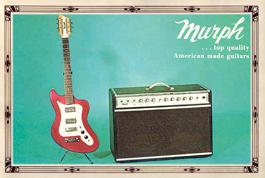
Murph 12 string Squire Guitar and Amplifier
The 1960’s were boom years for the guitar. Guitar manufacturers, music stores and even pawn shops all enjoyed a time of plenty all because of  “Baby Boomers” who, after seeing British Invasion bands, wanted to become rock stars or at the very least impress the ladies, as well as their friends.

Aside from the large manufacturers such as Fender, Gibson, Gretsch and Rickenbacker, many medium and smaller manufacturers, such as Mosrite, Carvin, Harvey Thomas and Hollman-Woodell of Wisconsin saw there was profit to be made and went into the guitar business in hopes of getting a slice of that financial pie.

One such small guitar manufacturer was Pat Murphy who created and manufactured Murph Guitars of San Fernando California starting in 1965.

Pat Murphy Pulsebeat Guitars
Pat was a Detroit Michigan native and had served as a Naval Air Force mechanic and pilot. He had been stationed in the Philippines during WWII. After leaving the service he started seeking employment with several companies trying to find the best paying jobs to take care of his growing family. Like many others of that era he traveled to California for the prospect of work.


By the early 1960’s Pat and his wife had five children and all the kids were quite talented.

The kids acted in television shows, commercials, and plays in the Los Angeles area. The eldest sons learned to play guitar.  The boys teacher knew of Pat’s skill as a craftsman and suggested that he try his hand at building electric guitars.

Murphy Family Band

Around this time his sons had put together a band with their two sisters and a collection of friends. Now this was the era when The Osmonds, The Cowsills and The Jackson Five were very popular.  Well known guitar companies were providing instruments for gratis to these acts just so their guitars and amplifiers would get exposure.


From www.murphguitars.com
Pat took up the suggestion of the boy's teacher to begin manufacturing gutiars and in 1965 he leased a 1200 square foot building. He named the company Murphy Music Industries. 


The leased building was modified to include an office, a woodworking shop, a sanding area and paint booth and an assembly and shipping room.

An engineer named Rick Geiger was hired to run the facility.

Pat and Rick set off to purchase equipment.  Much of the machinery was acquired at auctions, while some of the other necessary machinery, such as a pickup coil winder was purchased outright.

All the wood materials for the bodies came from a nearby lumber company, while the more specialized lumber and parts such as bridges, fret boards, tailpieces and vibratos came from a German distributor. The guitar cases were manufactured by the Victoria Luggage Company, which was located nearby in Los Angeles.

Unfortunately before production began there was a rift that developed between Pat Murphy and Rick Geiger causing Geiger to resign.

From www.murphguitars.com
Pat Murphy had wanted his guitar brand to be called York Guitars, but another instrument maker was already using that name, so Pat decided to call his guitars Murph guitars.

By the end of 1965 the company had begun making not just guitars, but had contracted with another company to build amplifiers under the Murph logo.

In the spring of 1966 the company went to the Chicago NAMM convention to seek out distributors and music stores to sell their products.

By then Murph guitars had come up with an acoustic guitar, a semi-hollow-body guitar, a heart-shaped guitar and a build-your-own- guitar kit. They even had a portable 6 volt guitar amplifier.

Murph built Silvertone
An agreement emerged from this show with the Sears Company to have Murph guitars market their instruments under the Silvertone brand name. The first order was small, only 25 guitars, but there were hopes that larger orders would follow.

Can you tell the difference?

Like many small companies Murphy Musical Instruments biggest problem was its tight budget. Other problems were to follow. Soon after the NAMM convention the company received a legal notice from Fender Guitars alleging possible patent infringement. Apparently the guitar giant thought that Murph guitar's Squire model looked too much like the Jazzmaster/Jaguar body.

Murph Squire
Both guitars had an offset body style and an accentuated upper bout horn. However the Murph guitar featured a slimmer body shape. The Murph Squire guitar came with either one or two single coil pickups that looked more like P-90's than the larger Fender's Jazzmaster pickups. And while the Murph instrument did feature a long vibrato arm, the unit was not as nearly elaborately engineered as the one on that came on either the Jaguar or the Jazzmaster. The Murph Squire guitar, like the Fender guitars did come with a bridge cover.

Finally, the Murph guitar headstock featured three-on-a-side Kluson tuners. Unfortunately when it comes to lawsuits, the company with the deepest pockets usually wins. Pat Murphy was in no financial shape to contest this notice.

Ironically in 1982, long after the demise of Murph Guitars, the Fender Corporation began offering "Squier" guitars as an Asian-built alternative to the much higher priced USA made products.

Murph Squire MK-2
The Murph Squire was an exceptional guitar for its day. It was a much superior instrument to many of the student grade guitars coming from some of the well known manufacturers and a much better guitar than the Asian products that flooded the market in the 1960's.

Squire Bass


The solid body Murph Squire guitars were available as six or 12 string and bass models.

Murph 12 String Squire
The 12 string Squire came with a Rickenbacker-style tuning key arrangement; that is three-on-a-side Kluson tuners facing outward and three-on-a-side tuners facing downward. The pickups used on this model were excellent. The maple neck is said to be thin and quite playable.

The Murph Squire guitar came with either one or two single coil pickups. The pickup switch was a slider model. It was available as a hard tail model or with a vibrato tailpiece.

Aside from the standard Squire model, Murph Guitars made some other very unique guitars, which included a semi-solid Squire model that came with two F-holes.

Murph Gemini


This was the Murph Gemini, a double cutaway semi-hollow body guitar, that more or less resembled a Gibson ES-335, however the cutaway horns were shapped slightly different. The Gemini was available as a six string, a 12 string or a bass.


Murph Westerner


The Murph Westerner resembled the Squire and was unique since its body was upholstered in Naugahyde. What happened was when a Murph Squires paint job was found to have flaws or defects, instead of trashing the body, it was covered with a glittery Naugahyde fabric and then dubbed a "Westerner". Pat Murphy grew up during the Depression era when nothing was wasted.


Murph Satellite


The Murph Satellite guitar is said to be created a result of the legal notice from Fender. Pat Murphy's wife is credited with the design of this heart-shaped semi-hollow body guitar. The Satellite was sold as a six or 12 string model as well as a bass guitar.


From www.murphguitars.com
Aside from the extremely unique body shape, the joint between the neck and the headstock features a triangular section on the instruments front and back side that pairs the wood. Due to the unique body shape, this instrument would not fit in the Hamilton guitar stands of the day, so it came with its own unusual stand that notified the world, this was a Murph. This is the rarest Murph guitar and very few were made.

Murph Baby Satellite
Murph guitars also built the Baby Satellite guitar. The Baby Satellite was a 3/4 sized version of the Satellite, and was intended to sell as a toy. However it was a functioning small single pickup guitar. It came with its own case and the plan was to sell it with a battery powered amplifier for $99.00 USD.

Capitol Records asked Murphy Musical Instruments to build 10,000 of these guitars, however Pat Murphy could not put together enough capital to fulfill this order or even continue to build this guitar. Interestingly that same year Vox introduced a similar instrument called The Vox Mando Guitar that sold for over twice as much.

Murph Tempo I & II
The Tempo I or Tempo II was Murph's do-it-yourself electric guitar kit. This kit included an unfinished body, neck with headstock and parts were supplied with all the necessary instructions. The Tempo I was the one pickup model and the Tempo II, you guessed already, was the twin pickup version. The headstock was not branded so the builder could put their own brand name on it or leave it blank.


Continental IV
Very few Murph Continental IV guitars were ever made. This was a Les Paul shaped guitar with a single pickup. The guitar included an archtop guitar-type bridge saddle that sat unsecured on the guitars body. The string were attached to a trapeze tailpiece. This guitar was only available in white.


Murph Califone 12 string
In 1965, the Rheem corporation, which primarily is known for heating, air conditioning and water heating products, saw the potential of money to be made in the musical instrument business. The company had inquired of a Japanese firm if they could build tape recorders and record players.


When they discovered this to be a viable plan Rheem purchased a company which manufactured record players and audio-visual equipment for use in schools including small public address systems. This company was called Califone. Rheem noted that these public address equipment could potentially useful, if modified to be used as guitar amplifiers. After production of guitar amplifiers began the company struck a deal with the Japanese firm to build combo organs under the Rheem brand name.

All this is leading up to a deal that Rheem struck with Murphy Musical Instruments to build guitars using the Califone brand name. This line was to include six string, twelve string and bass guitars. All of them used the Squire body design, but the headstocks were slightly different and the pickups were usually slanted. Unfortunately after about 25 prototypes were made, Rheem/Califone called the deal off.

Murph Silvertone 12 string


Sears negotiated with Murph to build guitars. However after 25 or so guitars were produced Sears called this deal off.


Murph bass amplifier

As stated Murph Guitars also produced a line of amplifiers. The amps were all combo units that were manufactured by an electronics company in Phoenix, Arizona. The chasis had the Murph name embossed on it’s front. Murph offered 10 different versions of their amplifiers. The first models were tube amplifiers, but they were shortly updated to solid-state amplifiers. This was in the early days of transistors and unfortunately the company building the amps used inexpensive transistors that were prone to fail.

Murph Guitars 1965-1967
By 1967 the pressures of running a musical instrument business became too much and Murphy filed bankruptcy in the spring of that year. However for two wonderful years he was a building of quality American made guitars. Mr. Pat Murphy passed away in 2009 but left behind a legacy of few great guitars and a lot of wonderful memories.

For further reading on Murphy Musical Industries check out Dan from Sydney Austrailia's wonderful tribute webpage -  www.murphguitars.com