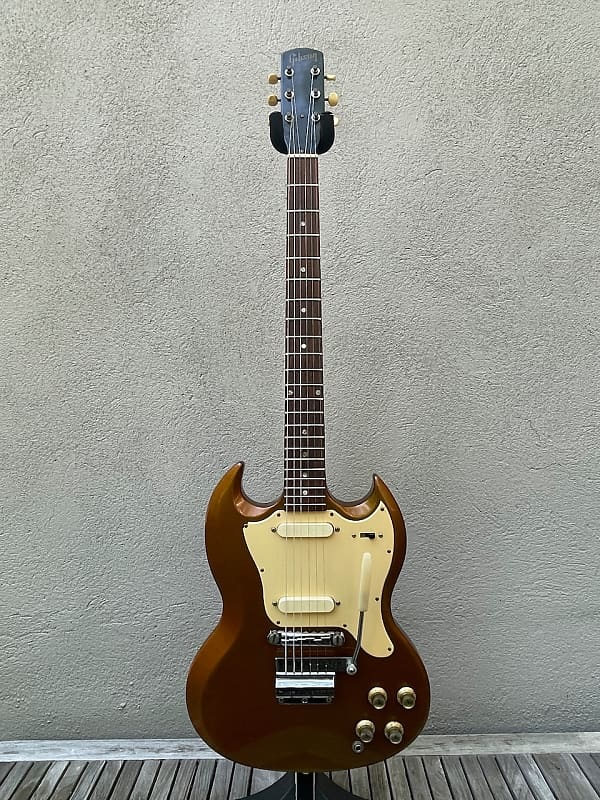
Saturday, August 14, 2021

ZZ Top's Bass Player Dusty Hill Passes Away July 27th, 2021


Dusty Hill

Joseph Michael Hill, who was know as Dusty Hill since he was a child, passed away on Tuesday, July 27, at his home. The cause of death was undetermined. 


Joseph Michael
"Dusty" Hill
 
There are a few things we can surmise. In 2000, Hill was diagnosed with hepatitis C and ZZ Top canceled their European tour. Hill resumed work in 2002. Then in 2014, Hill fell on his tour bus and injured his hip, requiring surgery. Part of that tour was canceled. Most recently on July 23, 2021, Hill left  the groups current tour due to problems with his hip. The band performed without him at the Village Commons in New Lenox, Illinois, with the band's guitar tech, Elwood Francis, filling in on the bass guitar. 

A Very Young Dusty Hill

Dusty Hill was born in Dallas, Texas, on May 19, 1949. He and his older brother, Rocky Hill (also a musician), were raised in the Lakewood neighborhood of East Dallas. The boys attended Woodrow Wilson High School where Dusty learned to play the cello. Hill grew up listening to blues music, which, was uncommon in white families of that era. Dusty recalled shocking the parents of his childhood friends when he brought over records by Muddy Waters or Son House to their houses for his friends to enjoy. 

Dusty At A Very Young Age
Dusty began singing for money with his brother Rocky at the young age of 8. Brother Rocky Hill, played guitar and formed a band with a friend who was a drummer and they recruited young Dusty to  sing with that band.  He eventually learned to play bass guitar at the age of 13. 

Unlike many bass players,  he never learned to play guitar first he took straight away to the bass. When interviewed Hill said, "I kind of learned how to play on stage and whatnot, and embarrassment is a great motivator. If you don't play well, standing up there with lights on it really stands out, so it behooves you to get your shit up pretty quick."  

Dusty did not enjoy school, and states he had poor grades; "Part of the problem was that by the time I was 13 I was already playing in local bars and making money, so school kinda' got in the way of that and I resented it.” 
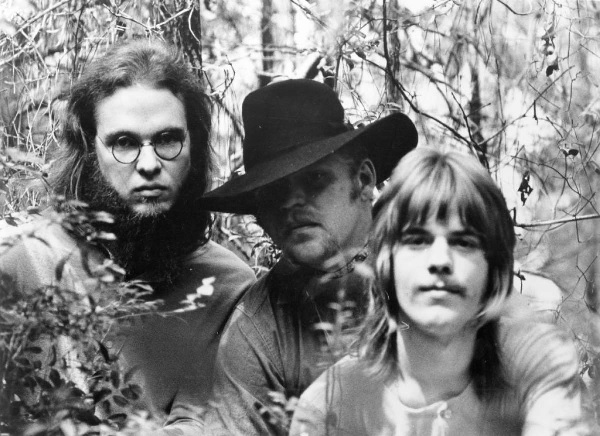
Billy Gibbons, Dusty Hill
and Frank Beard
After leaving school, Hill, his brother Rocky, and future fellow ZZ Top drummer Frank Beard played in some local Dallas bands known as the Warlocks, the Cellar Dwellers, and finally settled on the name  American Blues.  From 1966 to 1968, American Blues played the Dallas-Fort Worth-Houston circuit. 


Hill and Beard in
 The Fake Zombies
 
In 1969, Hill was hired by a promoter to be a member of a fake version of the British band The Zombies along with Frank Beard. Hill recalled, "Being a musician in Texas had its own set of risks ... and at that time we had long, blue hair – in the 60s in Texas. I got probably less shit about having blue hair than about having long hair, because I believe they thought I was crazy." 

It was around 1968 when American Blues relocated from Dallas to Houston. At this time, Rocky wanted to focus on "straight blues", while Dusty wanted the band to rock more so Rocky left the group.  Dusty and Beard went on to Houston. 

Salt Lick - ZZ Top's first single

It was there that they joined guitarist-vocalist Billy Gibbons of the Houston psychedelic band called  Moving Sidewalks. The group the changed the name to  ZZ Top, just after they released their first single "Salt Lick", in 1969. With Gibbons as the main lyricist and arranger, Dust played bass and keyboards and sang lead on a few songs. In 1971 the band’s manager Bill Ham and engineer Robin Hood Brians helped to create ZZ Top's First Album  in 1971. 

This album exhibited the band's humor, with "barrelhouse" rhythms, distorted guitars, double entendres, and innuendo. The music and songs reflected ZZ Top's blues influences. Following their debut album, the band released Rio Grande Mud in 1972, which produced their first charting single, "Francine". Two years later, in 1973 they released the album, Tres Hombres. 

Early Promo Picture
of ZZ Topp 
By then ZZ Top perfected its heavy blues style and amplified its Texas roots. The boogie rock single "La Grange" brought the band their first hit, with it just missing the Billboard Top 40. 

In 1975 Dusty Hill sang lead vocal on "Tush", the band's first Top 20 hit and one of its most popular songs. Then on the 1976 album Tejas Hill took the vocal lead on "Pan Am Highway Blues", "Avalon Hideaway" and "Ten Dollar Man", and sang as a duet with Billy Gibbons on "It’s Only Love”. 

That same year, after almost seven years of touring and a string of successful albums, ZZ Top went on hiatus for three years while Beard dealt with his addiction problems. 

Dusty Hill 

Remarkably Dusty Hill spent the period working at The Dallas Fort Worth Airport, saying he wanted to "feel normal" and "ground himself" after years spent performing. He was rarely recognized, but if he was recognized by fans who asked him “Are you Dusty Hill?” He responded by saying "No! Do you think I’d be working here?" 

Cheap Sunglasses
Regrouping in 1979, when the group returned with the album Degüello, Gibbons and Hill revealed their new image of matching massive beards and sunglasses. Their hit singles from this period, "Cheap Sunglasses" and "Pearl Necklace", showed a more modern sound. 


ZZ Top in Back To The Future

Dusty Hill made some on-screen appearances include Back to the Future Part III, and Mother Goose Rock 'n' Rhyme. 

Back in December of 1984, Hill accidentally shot himself in the abdomen when his derringer fell from his boot and discharged. 

Hill said, "To this day, I don't know how I could do it. But I didn't really feel anything at the time. All I knew was that I had to get myself to a hospital straight away, so I got in the car and drove there. It was only when I arrived at the hospital that the seriousness of what I'd done hit me, and I went into shock.". He made a full recovery. 


In the July 20, 2009 appeared in an episode of WWE Raw and in  Deadwood. 


Dusty in 'King Of The Hill'

Dusty Hill appeared as a cartoon version of himself in the 11th-season episode of King of the Hill called "Hank Gets Dusted". In the episode which Hank Hill is said to be Dusty's cousin. 

Hill also made an appearance on The Drew Carey Show as himself auditioning for a spot in Drew's band, but was rejected because of his attachment to his trademark beard which he referred to as a 'Texas Goatee'. 

2004 Rock And Roll Hall Of Fame 

Dusty Hill was inducted into the Rock and Roll Hall of Fame as a member of ZZ Top in 2004. 

Then on July 27tth 2021 Dusty Hill’s death was announced. 


As a spokesman for the band Billy Gibbons confirmed that ZZ Top would continue with Francis, per Hill's wishes. According to Gibbons, "Dusty (recently) emphatically grabbed my arm and said, 'Give Elwood the bottom end, and take it to the Top.' He meant it, amigo. He really did." 

Dusty's Final Show

Gibbons and Beard  memorialized their friend by saying, "We are saddened by the news today that our compadre, Dusty Hill, has passed away in his sleep at home in Houston, Texas. We, along with legions of ZZ Top fans around the world, will miss your steadfast presence, your good nature, and enduring commitment to providing that monumental bottom to the ‘Top.’ We will forever be connected to that ‘Blues Shuffle in C.’ You will be missed greatly, amigo."

Texas Governor Greg Abbott wrote on Twitter: "Today we lost a great friend and a remarkable Texan."  Several rock musicians and contemporaries paid condolences through social media, including Paul Stanley, Ozzy Osbourne, John Fogerty, Flea, Zakk Wylde, Tony Iommi, David Coverdale, Scorpions and the Allman Brothers Band. 
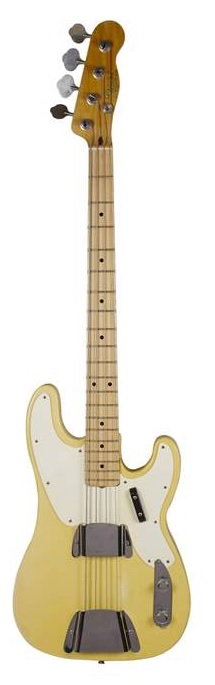
1971 Telecaster 
Bass
Throughout most of his career Dusty Hill preferred to use a Fender Telecaster bass guitar, or a custom made bass in the style of the Telecaster bass.  

The Fender Telecaster bass was introduced by Fender in 1968 and was essentially a rebranding of the original 1951 Fender Precision Bass guitar. This guitar was highly influenced by Fender's Telecaster. It had one single coil open pickup in the center of its body with four pole pieces. This was covered with a chromed metal palm rest. The two piece adjustable bridge was similar to a Telecaster bridge. The strings were routed to the metal grommets on the instruments back.  

The bridge was also covered with a metal palm rest. Unlike the modern Precision Bass this instruments body had no contours. 

The neck was originally made of maple, with a 'skunk' stripe and was topped with a headstock that resembled the Telecaster headstock, and it had four paddle style tuning machines.  The instruments control panel was mounted on a chrome metal plate similar to what was found on a Telecaster guitar, but there was only a volume and tone control.  


1968 Fender Telecaster Bass
In 1968 Fender reissued this same instrument as the Telecaster Bass. The headstock had a "Fender Telecaster" decal mounted on it, with an additional smaller decal that said "Bass".  Like the original 1951 P-Bass, this instrument came with a large pickguard that covered both cutaway horns.  

The differences were this reissue had a maple capped neck with no 'skunk' stripe on the back and not all instruments came with the paddle style tuners.  

1974 Fender Telecaster Bass

The Telecaster Bass was discontinued in 1979, only to be reissued under the Squier brand in 2007, which had some updated features.  From pictures it appears that Dusty Hill had played later model Precision Basses early in his career before settling on the Telecaster Bass.  

Both Billy Gibbons and Dusty Hill discovered Bolin Guitars and have been using these custom built instruments a good portion of their career.  

Founded in 1978,by John Bolin, Bolin Guitars, LLC has built some of the most innovative guitars in rock and roll history. A list of their satisfied customers include; Billy F. Gibbons, Jimmy Page, Steve Miller, Dusty Hill, Lou Reed, Doc Watson, Albert King, Bo Diddley, Joe Perry, and Keith Richards & Ronnie Wood of the Rolling Stones.  


Bolin’s big break came in 1985, when John acted on a friend’s suggestion to build a guitar for Billy Gibbons of ZZ Top, who were playing in Boise Idaho. After intense homework and hours in the shop, John managed to build a not only a guitar, but also a matching bass. In two weeks, the shop turned out a hot-rod influenced design covered in a metal-flake candy apple red paint job. 


ZZ Top with Bolin Instruments
In a risky move, the night of show John snuck back stage and introduced himself to Billy, who lowered his sunglasses and said, “Get your best and meet me in the green room in ten.” As Billy played through both the bass a guitar, 2 minutes turned in to 20 and within 24 hours Billy and John had stuck their first deal. 

This is the moment that began the working relationship between Bolin Guitars and ZZ Top and has helped Bolin Guitars create exceptional instruments. 

Dusty With His
Bolin Bass

With input from other craftsmen and the artists who play them, today, they have collaborated on over 200 of the most creative and innovative guitars in rock & roll. Most of the bass guitars that Dusty has played through his career were custom made models built by Bolin guitars. You may note some of these only have a volume control which allows Dustys' bass to have more punch. 


Fender Custom Shop Basses

Fender has also created some custom made bass guitars for Dusty with the reverse headstock and body binding.


In 2012 Fender issued the Dusty Hill Signature Precision Bass. It was available to the public in 2013.

Click on the links beneath the pictures for sources. Click on the links in the text for further reading.
©UniqueGuitar Publications (text only)


Saturday, July 24, 2021

The Orville by Gibson Guitars

Orville Redenbacher


When I think of the name Orville the first thing that comes to mind is the popcorn guy that graced our TV screens back in the 1980’s, hawking his popcorn as being superior to all the rest.


Then in 2015 there was a television series that was produced and starred Seth MacFarlane, of Family Guy fame. It was called The Orville and was a science-fiction comedy drama in the genre of Star Trek. 


But for all you guitar connoisseurs I am sure you are thinking about Orville Gibson.  Mr. Gibson was a luthier that lived and worked in the Kalamazoo, Michigan area. 


He developed an unusual concept for creating mandolins and guitars that involved the use of violin carving techniques to carve the instruments back and top into shape rather than pressing or bending the wood. The instruments sides were also carved instead of being bent. Mr. Gibson was able to patent this process around 1898.


1902  The Start of
The Gibson Guitar Company
By 1902 five local investors who lived in Kalamazoo liked the idea, and offered him money for his intellectual property thus creating The Gibson Guitar-Mandolin Manufacturing Company. Unfortunately the investors did not care much for Orville Gibson. Historical documents show the investors wrote a company motion stating that Orville Gibson only be paid for the actual time he worked for the company. This memo did not mention if Gibson was employed there full time or as a consultant. 

Apparently Orville, at the time, had some ideas that his investors  considered to be too eccentric.  

In 1908 Gibson drew a salary of approximately $500 a year from the company, which is the equivalent to around $20,000 in today's dollars.   


Orville Gibson was not a healthy man. He was hospitalized for endocarditis in 1907, 1911, and 1916. He passed away in 1918 at the age of 62 while he was living in the state of New York. His designs were eventually replaced by those of Lloyd Loar.  Of course the Gibson Guitar company went on to become one of the most successful and well known guitar manufacturers in the United States.


Teisco Guitars 1965
As we know, beginning in the the mid-1960's the United States market was being flooded by Japanese manufactured copies of electric and acoustic guitars. Although some of the foreign guitars had original shapes, many were copies of Gibson and Fender instruments. Japan manufacturers apparently did not see any patent infringement as they considered these to be “tribute instruments” paying homage to the originals, but also making money for these offshore manufacturers. 

Though both Gibson and Fender threatened lawsuits,  it was in 1977 that Gibson actually filed suit.  The case was known as Gibson V Elger Music. 

Former site of Medley Music
A small businessman, Harry Rosenblum, opened Medley Music in Bryn Mawr Pennsylvania. Though his store was located not far from C.F. Martin’s Nazareth facility he was unable to get a franchise to sell Martin guitars.  An upset Mr. Rosenblum hired a couple of luthiers which made acoustic guitar for him under the Elger brand. 

And they were very nice guitars. However this venture proved to be too costly. Within a year he had to let the luthiers go.

Elger Guitar
Next Mr. Rosenblum contracted with the Japanese manufacturer, Hoshino Gakki.  This company was distributing guitars under that Ibanez brand name. Sensing hostility to the Japanese brand by his American customers, at first Rosenblum put the Elger badge on these guitars giving the illusion they were made in the USA.

Eventually Hoshino Gakki purchased the Elger brand and Medley Music with the intent of using the store as their US based distribution center. 

After the purchase Hoshino began importing their electric as well as acoustic instruments through Medly (Elger) Music. Those electric guitars and basses, though not the quality of their US counterparts, certainly looked like Gibson and Fender instruments. 

In 1977 attorneys for Gibson sent Elger Music, owned by Hoshino Gakki, a notice of a lawsuit in federal court for copyright infringement. The suit was eventually settled out of court.  Guitars produced during this period are known as Lawsuit Guitars, although only not all were actual lawsuit guitars.


Afterward, though some of the bodies retained a similar shape, to appease Gibson the open book headstock was not allowed to be used on the Asian made guitars. 


If you were like me, growing up in the 1960’s, you will remember all of the cigarette commercials  that flooded television much like the overpriced medicine commercials we see today. In those days there was a cigarette called "Tareyton" whose commercials featured smokers with black eyes that declared, “I’d rather fight than switch”. 


1971 Japanese Made
Epiphone
 
"I'd rather fight than switch" became the motto of Gibson, Fender, and other guitar manufacturers until they realized they could make a lot of money licensing their guitars to be built by Asian labor at a lower price point, generally under a different brand name. The motto soon changed to "I'd rather switch than fight."

Since then we have Epiphone and Squier guitars. Both companies also realized there was quite a large, untapped market in Japan for their instruments. Which brings us to The Orville Guitar.


Orville by Gibson also known simply as Orville, was a brand of guitars that was managed by the Gibson Guitar Corporation to be licensed solely for the Japanese market during the late 1980s and most of the 1990s. 


Yamano Gakki Shop
The name, of course, refers to Orville Gibson, the namesake of the Gibson Guitar Company. These guitars were all manufactured in Japan by the Yamano Gakki Company. This company is one of Japan's largest musical instrument distributors and retailers. 

In 1987 Yamano Gakki obtained the Gibson and Epiphone dealership solely for the Japanese market. This company also distributed Gibson and Korean made Epiphone guitars, and also produced a limited range of Epiphone semi-acoustic guitars in Japan in cooperation with Gibson. 

Pages From The
1988 Orville Catalog
 
Then in 1988 that Yamano Gakki decided to expand the Epiphone Japan model range to include solid body models as well as semi-acoustic models. Both Gibson and Yamano Gakki agreed they would not use the Epiphone brand name for this expanded model range and the Orville name was chosen instead.  In 1988  the "Orville by Gibson" series was launched. 

At the time Gibson was also selling American-made Gibson guitars, Japanese-made Epiphone guitars, and Korean-made Epiphone guitars in Japan and wanted Orville to stand out as a separate brand.

The Orville by Gibson series distributed by Yamano Gakki at a price point midway between the American-made Gibson guitars and the Korean-made Epiphone guitars. The Orville guitars were superior instruments and in every way and comparable to American made Gibsons, and as stated selling at a lower price than American made Gibson's, and above Japanese or Korean made Epiphones.


Production of Orville Guitars ceased in 1998 due to Gibson and Yamano Gakki deciding to export an expanded Epiphone Japan model range that included solid body, semi acoustic models, and even acoustic guitars. By late 2006 Gibson and Yamano Gakki ended their relationship.


Terada Guitar Factory (L)
Fuji-Gen Factory (R)
It was actually the Terada and Fuji-Gen guitar factories that made all of the Orville by Gibson and Orville guitars. These same factories were later hired by Gibson and Yamano Gakki to build the Epiphone Elite and Elitist series guitars.  Terada built mostly the semi-acoustic models, while Fuji-Gen concentrated on the solid body guitars.  

Eventually some Orville by Gibson guitars found their way into the United States. They are considered to be excellent instruments.

Click on the links below the pictures for sources. Click on the links in the text for further reading.
©UniqueGuitar Publications 2021 (text only)

This is a long video, but very informative.


Sunday, July 11, 2021

The Gibson Toilet Seat Guitar - Kalamazoo Electric Guitars


My Grandma lived on
 the top floor of this house
.

When I was a young kid  it was a treat to visit my Grandma. She lived in an old apartment above a residence with an amazing staircase that today would be considered antique. In fact the entire house was antique.


There is the staircase
with the circular window
 
At the first level there was a circular window, like one on a ship. Grandma had a sitting room with a small TV,  a small couch, and her favorite rocking chair. Her bedroom had this fascinating treadle sewing machine, her kitchen had an an old fashion wooden sink, and in a door behind he kitchen was what I perceived was an amazing bathroom. 

Mother of Pearl Toilet Seat

The huge bathtub had claw feet, the ceramic sink was on a pedestal, but the most fascinating thing to a child of that age was her toilet seat. It had pearl-like chips of back, gray, and white embedded in it. The one we had at home was just plain pink.


This same pearl-like design showed up later on some electric and electric steel guitars. Due to the popularity of its use on potty seats of the 1950’s it becamed  nicknamed  “mother of toilet seat” or MOTS.


I thought about Grandma and her wonderful toilet seat when I recently received a Facebook post from The Bemis Manufacturing Company; an old company from Sheboygan Wisconsin that is best known for manufacturing quality wooden and plastic toilet seats. 


Bema Seat from
The Amsterdam Synagogue
 
Often times I think it ironic when I go to a public restroom and notice that the phrase “Bemis Seat” embedded in blue letters on the ‘throne’ where I am about to place my keister.  Bemis Seat is a similar sounding name to the elevated platform and raised chair that was a place of judgement for Jews and Christians and known as The Bema Seat. I think that is so ironic. 

 But I digress. 


This Face Book post from the Bemis company was a reminder that at one time the Gibson Guitar Company had contracted with Bemis Manufacturing to produce guitar bodies. Yep, it is hard to believe, but it is true. Gibson actually made a TOILET SEAT guitar.


In 1965 the guitar market was flooded with Japanese imported  inexpensive electric guitars because every kid not just the United States, but I dare say much of the world, wanting to be a Beatle. At that time Gibson’s student guitar was of course The Melody Maker. This instrument was of a much higher quality than any of the imports. The Gibson Melody Maker was first launched in 1959 and in 1971 was discontinued. 

The Melody Maker guitar had a thin slab-style solid mahogany body and a one-piece set in mahogany neck. To keep assembly costs down all the electronics, from the small single-coil pickups to the cable jack and controls, were assembled on the pickguard and installed in a rout in the front of the body. The strings ran from a straight-sided simplification of the traditional Gibson headstock at one end to a wraparound bridge/tailpiece unit at the other. Some models came with a budget vibrato unit. 


From 1959 until 1961, the Melody Maker had a single cutaway slab body style similar to the early Les Paul Junior model but thinner. Then in 1961 the body style changed to a symmetrical double cutaway. 


By 1966 the body style was changed to a style similar to the SG guitar, with pointed "horns", a large white pickguard, and white pickup covers instead of black. 

In 1959 the original retail price for a Gibson Melody Maker was $99.50. By 1960 the price for a twin pickup model was $135.50. By 1966 the Melody Maker price was increased to $149.50 and had a $10 price increase each subsequent year.


But in 1965 many Japanese electric guitars were selling for around the $50 to $100 price range. Another competitor was Danelectro/Silvertone who offered electric guitars as cheap as $39.95. In 1965 the average United States income was $6900 a year. It would be very difficult for many families to afford an American made instrument for their beginning guitar student.

Vintage Bemis Toilet Seat
This competition from imports forced Gibson management to look into developing a low cost guitar. To do this they turned to Bemis Manufacturing to compression mold a guitar body. Yep, the same company that was best known for manufacturing toiled seats. 

The core of the guitars body was comprised of MDF or medium density fiberboard (Masonite) which was coated with molded thermoplastic material. 

Until this time all Gibson guitars were made of solid wood, though some electric models had solid veneer tops, Gibson had never made guitars of composite materials. So involving a company that specialized in Masonite just made practical business sense.

Gibson already had the Epiphone brand which it used to market it's more affordable guitars which in those days were built at their Kalamazoo facility.  Epiphone was about to become their mid-level brand, as Gibson desired something truly affordable. The company had retired the Kalamazoo brand name in 1942 due to the war. So in 1965 Gibson decided to revived the Kalamazoo brand for this line of budget electric guitars.

The Kalamazoo electric guitars all had bolt-on necks (something that Gibson, up until this point had never done), a rosewood fingerboard, and the bass guitar was short scale. A decal proclaimed  Kalamazoo "USA" on the headstock to set it apart from cheaper, imported guitars. 

These guitar had two subtly different headstock shapes, the first has a characteristic 'beak' shape, and is almost identical to that of the non-reverse Thunderbird. The body resembled of Fender Mustang. 

1967-69 Kalamazoo
 Electric Guitars
The second style, appearing on the SG-shaped bases is more like that of a Fender, though a little more rounded. The Kalamazoo logo is engraved on the headstock. The necks were actually pretty well made and are highly playable.

The first design, manufactured from 1965 to 1966, was pretty much a copy of the Fender Mustang.  The second design, made from 1967 to 1969, resembled Gibson's SG design. 

Kalamazoo pickguard assembly  
Expense was also saved on the pickguard which was a single sheet of unlaminated plastic and like the Melody Maker all the electronics were mounted in the pickguard and then placed on the body's routed area. The tuners were inexpensive open back types.


Models were the KG-1, with one single-coil pickup selling at $89.50. 


The KG-1A, with a single-coil pickup and tremolo arm retailing at $99.50. 


The KG-2 with dual single-coil pickups costing $104.50 . 


And KG-2A which came with dual single-coil pickups and a tremolo and retailed at $114.50. 


1966 KB -1

The Kalamazoo Bass was introduced in 1966 and like the guitar model had two body styles resembling the Mustang and next the SG. The earlier headstocks were, again, reminiscent of Fender models. Later headstocks bore a resemblance to that of the Gibson Thunderbird bass guitar. 

Several standard Gibson components were used in the KB, namely a typical EB series humbucker pickup that was used in many Epiphone basses. 

1966 and 1968 KB-1's

Sales were initially good, and during 1966-67 this was by far the best selling bass made at the Gibson plant. Production of the KB ceased in 1969. Gibson sales records show that 23,994 KG models were manufactured from 1965 through 1969 and 6287 KB basses sold from 1966 to 1969. The KB bass retailed at $119.50. 


1968-69 Kalamazoo Electrics

As stated in the 1967 the body design for the Kalamazoo line of guitars and basses changed to the SG shape. So the pickguards were cut differently to reflect the newer body design. The bridge on the KB-1 was slightly modified as an improvement.

For years I knew the Kalamazoo electric guitars bodies were made of compressed fiberboard, but until I recently read the Facebook post from last May I had no idea they were made by a toilet seat manufacturing firm. Most literature suggests that the bodies were made by a factory in Wisconsin that specialized in MDF.  The Bemis Manufacturing Company has it's headquarters in Sheboygan, Wisconsin.  


By 1970 Gibson contracted with the Matsumoka factory in Japan, which had been building guitars under the Aria brand.  Gibson first used this company to build inexpensive copies under the Epiphone brand name.  So the Kalamazoo electrics were eliminated in 1969.

Click on the links under the pictures for sources. Click on the links in the text for further information.
©UniqueGuitar Publications (Text Only)