Tuesday, October 7, 2025

Remembering Extraordinary Luthier Ken Parker - August 25, 1952 – October 5, 2025

Ken Parker and Parker Fly


Ken Parker built his first archtop guitar in 1974. This was long before he rose to fame with his well known electric guitar; The Parker Fly.


Ken Parker

In regard to the origin of the Parker Fly, Parker, in his own words states, "Larry Fishman and I met in 1984 and began a playful but productive design partnership.


Larry Fishman
We shared techniques and technologies, and tried to envision some new tools for guitar players. Long story short, we founded Parker Guitars in 1991 in order to realize the Fly Guitar project. We created tools to build the guitars, and established our factory in Massachusetts, where we produced about 30,000 guitars and basses."

1993 Parker Fly Guitar


In doing so, Ken created a modern ultra-light guitar, and made use of some unusual materials. Official sales of the Parker Fly began around 1993.


1992 Parker Fly
The Parker Fly was made from a variety of woods, including poplar, basswood, and spruce. Once the unique shape of the body and neck were carved the instrument was coated with a composite of resin and carbon glass to reinforce the structure.

Parker Fly - custom marbled colour

The fretboard was also made of a composite material and the frets were made of stainless steel. The design process has given Parker Fly guitars the reputation of having the “fastest neck in the business”.

Due to their durability, these materials will pretty much last for the lifetime of the owner.

The electronics used in the instruments were very unique as well. The guitar used either coil split humbucking pickups or single coil pickups. Both had active circuitry. The Fly also had a piezo pickup for acoustic sounds.

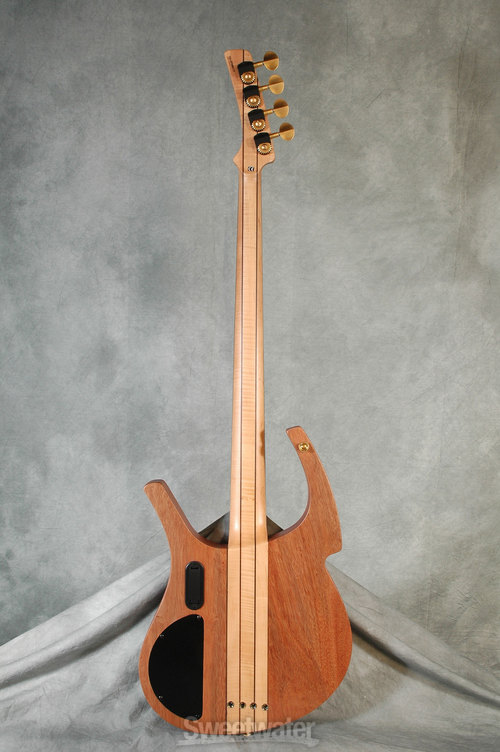
Original Parker backside


The structure of the neck was unique since it used multiple finger joints for stability.


Parker Vibrato
The guitars vibrato was unique as well. Instead of using wound springs, The Fly utilizes a shaped flat steel spring that returns the guitar to pitch. It could be set for bend down down mode, balanced mode (full floating), or fixed mode.

Adjustment Wheel

The tension is controlled by a balance wheel. (The guitars manual cautions not to set it too tight as this could cause the spring to break). The vibrato was engineered in a way to bring the strings back to pitch. Sperzel locking tuners aided in maintaining the instruments pitch and eliminated the need for string trees.


Ken Parker and Larry Fisher set up their business and manufacturing facility in Wilmington, Massachusetts.

2002 Parker Fly Bass
In October 2002, Parker began offering the Fly Bass guitar in both 4 and 5 string versions. These basses were well received for their ease of use. They came with both magnetic and piezo pickup and the player could blend the two sounds together. The basses were also manufactured in the Massachusetts factory.

In 2003 Ken Parker sold his stake in the company to the U.S. Music Corporation.


2003 Redesigned Parker Mojo Flame
As he states, "In 2003, U.S. Music purchased Parker Guitars, and moved the production facilities to the greater Chicago area. Since that time, all of the new models produced by Parker Guitars, including any acoustic or semi hollow instruments, have been designed solely by Parker Guitars' design engineers. I have had no involvement with any of these new design projects.

Creating the Parker Fly, Nightfly, and the Fly Bass was a labor of love. I had a lot of fun designing them and then devising and building the production tooling to make them. These instruments have worn well,  and now the product line has been expanded by the new owners."

U.S. Music Corporation Home Page


The U.S. Music Corporation is a distributor of multiple products, including Parker guitars. This organization manufactured the guitars from their Illinois based factory. They developed the line and changed up a few things.


2003 Parker Fly Classic

U.S. Music took a different approach to Parker Guitars. Some Parker guitars were no longer made with the original composite finish, but were now made of wooden bodies. To be fair, by 2001, Ken Parker had offered some models with wooden bodies.

Also some of the new models appeared to be Parker guitars that had morphed with other popular guitar designs.

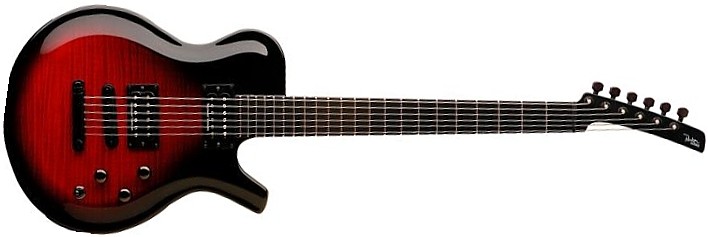
For instance, the Single Cutaway Fly Mojo may have been a wonderful guitar, but the Les Paul influence is obvious.

Parker Single Cutawy Fly Mojo Flame
This was a single cutaway guitar with twin Seymour Duncan humbucking pickups. The body and neck were made of mahogany and were joined by using Ken Parker’s multi-finger neck joint. This guitar featured a tune-o-matic style bridge and a stop tail piece. The neck was topped with an ebony fretboard that had no position markers and the unique Parker 6 on-a-side headstock.

Tuners were still made by Sperzel.

Fly Mojo Flame
The Fly Mojo Flame did have the body shape of a Parker Fly guitar. The literature suggests it was made of mahogany with a “unique AAA flame maple skin over a solid mahogany body allowing the sound of mahogany to fully resonate through.” I cannot determine if this means the body had a maple veneer or a maple photo-flame finish.

This guitar came with a mahogany neck topped with the Parker headstock and included one Duncan Jazz and one Duncan JB humbucking pickup. Once again the fretboard was ebony with no position markers.

The Fly Mojo Flame also had the Parker Fly vibrato, sans the adjustment wheel. U.S. Music eliminated the vibrato adjustment wheel on all models that they produced.

2006 Fly Mojo


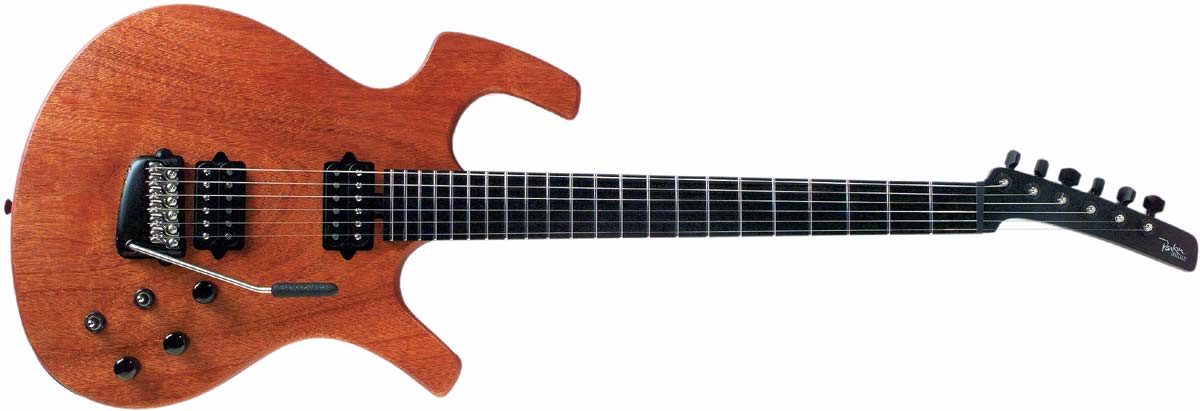
The Fly Mojo was similar in all aspects of the previous guitar, but the body was made of natural unstained mahogany.

U.S. Music continued to build The Parker Fly guitar, but changes were made from the original design to correspond with their vision of this instrument.


2005 Parker Fly Classic
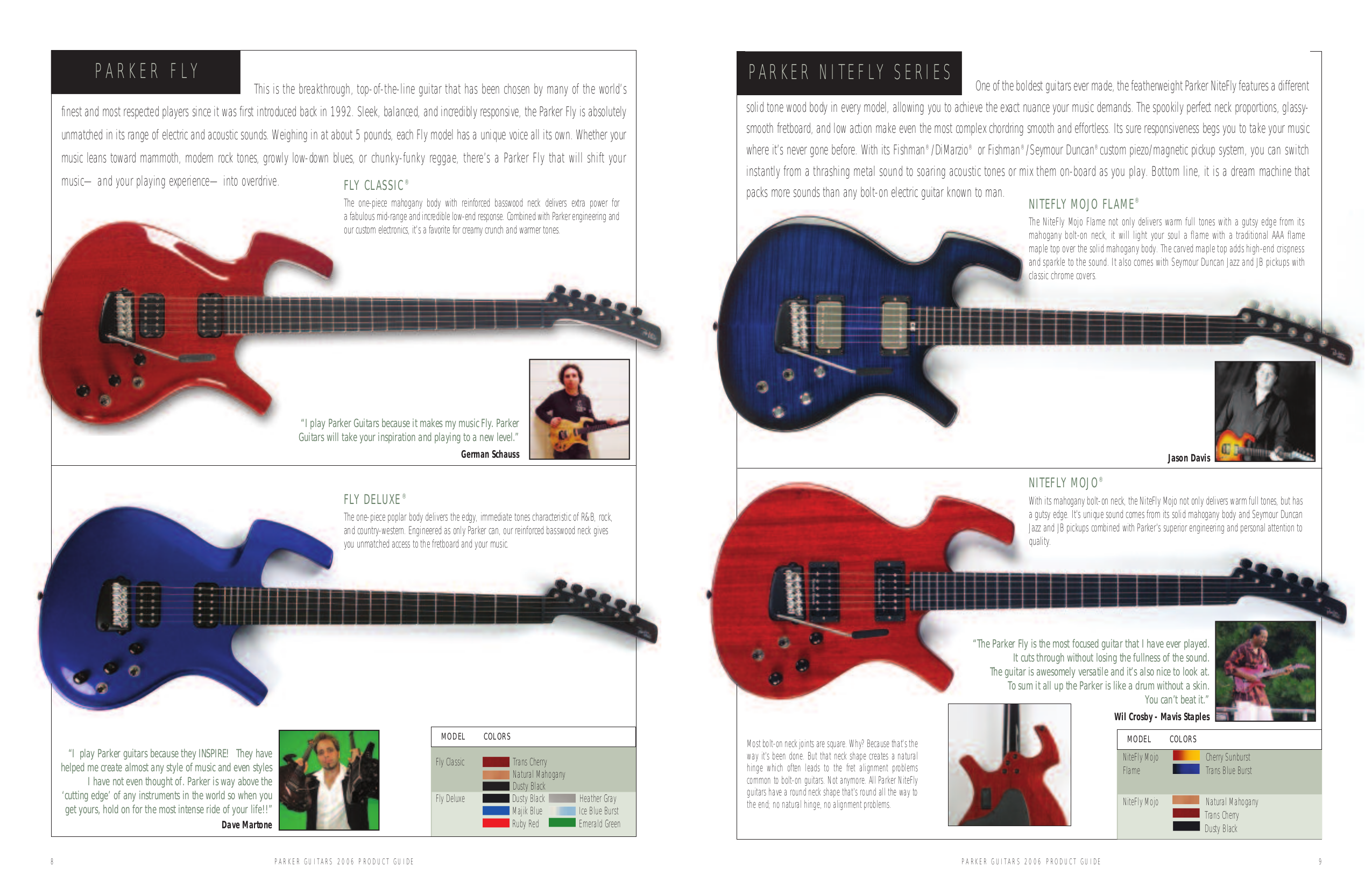
The body was now made of mahogany with a basswood neck. The Fly Classic weighed in at 5 pounds and had the features of the original Fly, except for the choice of body wood and composite finish.

The U.S. Music Parker Fly came with two Seymour Duncan humbucking pickups and included the Parker vibrato. The guitar was available with three colour options.

2005 Parker Fly Deluxe Ice Blue Burst

The Fly Deluxe was a similar instrument that apparently was voiced differently than the original. It came in different six different colour schemes.


The Parker Nitefly Series included two guitars with features in the same shape as the original Parker Fly model. However these both had solid mahogany bodies and bolt on mahogany necks.

NiteFly Mojo Flame
The NiteFly Mojo Flame guitar had the same style neck, with a plain ebony fretboard, topped with the Parker style headstock. The thing that stood out on this guitar was the two humbucking pickups that were topped with chrome covers. One pickup was a Seymour Duncan Jazz pickup and the other was a Seymour Duncan JB pickup. This guitar featured the Parker vibrato. The mahogany body came with what the literature called, “a flame with a traditional AAA flame maple top over the solid mahogany body.”This guitar was offered in cherry sunburst or transparent blue-burst.

NiteFly Mojo


The NiteFly Mojo guitar had the same accouterments however the pickups lacked the chrome covers and there was not a flame veneer topping the mahogany body. It was bare wood and available in a natural finish, a transparent cherry finish, or a dusky black finish.


Southern NiteFly
The Parker Southern NiteFly was Parker’s answer to the Fender Telecaster. The body on this guitar was made of swamp ash and the bolt on neck was maple. The guitar even had black plastic pickguard. The neck pickup was a single coil with a chrome cover that could have been right off of a Tele. The Powerbridge™, looked like the rectangular chrome plate on a Telecaster. It contained a second single coil, slanted pickup and the adjustable bridge saddles contained the Fishman™ piezo elements. There was no vibrato on this model.

What set this apart from a Telecaster was the Parker Fly body, and the Parker headstock. The chrome control plate featured a third knob for the piezo volume. Above it was a second toggle switch to activate the piezo pickup. It was available with blonde, butterscotch, or transparent red finish options.

There were other variants that U.S. Music came up with for their Parker guitars.

NiteFly M


The Parker Nite Fly was one of the models designed by Ken Parker in the late 1990’s. The U.S. Music version of this guitar, called the NiteFly M, had a solid mahogany body and was topped with two humbucking pickups. The bolt-on neck was also made of mahogany. This instrument was offered with a natural oil and wax finish or a similar finish in black. It had the Parker vibrato.


NiteFly Alder
The Nite Fly Alder was Parker’s version of the Fender Stratocaster. This time the body was, of course, made of alder wood, while the neck was maple topped with an ebony fretboard. The pickup layout was similar to that on a strat, but the bridge pickup was a Seymour Duncan humbucking model. The controls were the same as those on a Stratocaster; a master volume, and two tone controls. It too came with the Parker vibrato. It was offered in cream white, Indigo blue,and cherry red.


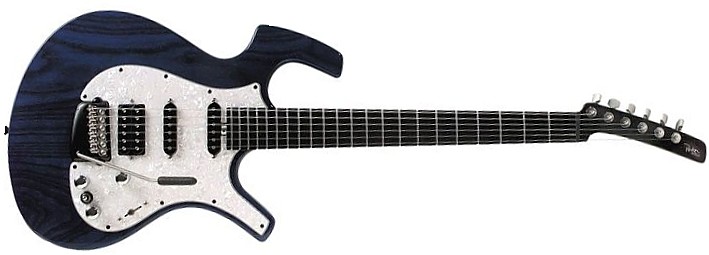
NiteFly SA


The NiteFly SA was based on the original Parker model. It had the typical Parker shape, but was topped with a white plastic pickguard that contained the electronics, including two single coil pickups and a humbucking pickup in the bridge position. A slider switch acted as a pickup selector. The guitars body was made of swamp ash and the neck was maple. It came complete with the Parker vibrato and was available in transparent red or blue.


Parker PM and Parker P Series
The Parker PM Series and P Series were similar to all of the previous versions, but are noted by the company as having significant upgrades.

U.S. Music Parker guitars included in its line up a series four solid body Parker Fly basses, in addition to their hollow-body PAB 40.

PB61SP


The PB61SP featured neck-thru construction of a spalted maple top and mahogany neck with an ebony fretboard and a spalted maple headstock veneer. The tuners and adjustable bridge/saddle were gold-plated. The body was in the Parker Fly Bass shape. This bass, like all Parker basses, featured twin EMG 35CS active bass pickups.


PB51TR


The PB51TR (Transparent Red) was very similar, except the body and neck were made of mahogany and it was finished in transparent red. The tuners and adjustable tailpiece were in a black gun metal finish.


PB41


The PB41 series offered the same great features, such as EMG pickups, however the body was made of Sitka spruce with a Urethan finish, and the bolt-on the neck was maple. It was available in Silverburst, Black Matte, and Gold Matte. The hardware was also done in a black finish. These basses were available in four or five string models.


In 2006 the company added a line of acoustic-electric and jazz guitars under the Parker brand name. These were manufactured off-shore by Washburn guitars.  At that time U.S, Music owned the US distribution rights to the Washburn brand as well.

Bronze Fly


These acoustic models included the 24 fret Bronze Fly, which was a solid body guitar in the shape of the Parker Fly. It had no magnetic pickup, only a Fishman piezo pickup in the Parker style bridge, however there was no vibrato. Ken Parker had offered this guitar when he owned the company under the name The Fly Concert.


Nylon Fly


The Nylon Fly was a similar guitar. This model came with the Fishman piezo placed under a handcrafted ebony bridge.  Both models were topped with gold-plated Sperzel locking tuner. During the years Ken owned the company this guitar was called The Spanish Fly.


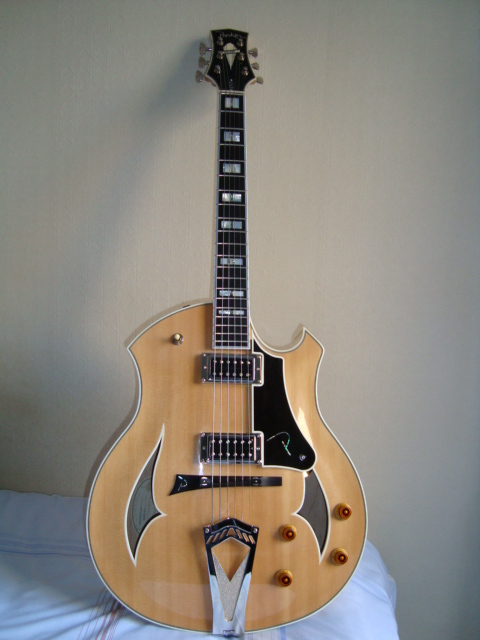
The PJ14N and PJ12 SB were true archtop hollow-body guitars. Both of these guitars had the most unusual body designs as well as unique f-holes.


PJ14N
The body of the PJ14N was made of natural spruce and the guitar featured a single Egnater floating Humbucker pickup with pickguard mounted controls and a 5-ply Rock Maple neck with Gold Grover Titan Tuners. The inlaid trapeze tailpiece appears to be made of ebony and the headstock was highly inlaid. This jazz box had only one sound hole. The bound ebony fretboard was inlaid with mother-of-pearl block fret markers. This guitar came with a 3-on-a-side headstock and it was simply awesome!


PJ12SB


The PJ12 SB (sunburst) featured two Egnater Humbucker pickups mounted on the guitars body with individual volume and tone controls, a stunning brass tailpiece, and a 5-ply Rock Maple neck with Gold Grover Titan Tuners. This guitar featured a bound ebony fretboard with block position markers. The 3-on-a-side headstock had a large split-diamond inlay and above it the Parker logo all in mother-of-pearl. The PJ12 was the same guitar with a natural finish.


Parker Event Series
Another development in 2006 was the introduction of a line of acoustic-electric guitars under the Parker brand.  These models all had ovular sound holes. The guitars were actually made by the Washburn guitar company under the Parker logo and were given the designation of Parker Event Series guitars. These included three wide bodied models and five thinner body instruments. All had the same unique Parker body shape as the Jazz series. The line up included three non-electric acoustic models.

Parker P8E

The P8E guitar was designed with a solid cedar top, with a flamed maple back and sides. The unbound fretboard was made of ebony and had small dot inlaid position markers on the boards bass side The electronics were designed by Larry Fishman and included a piezo unit in the bridge and a Fishman magnetic pickup just under the neck. The master volume control is on the guitars top and on the upper side bout are the controls for treble, bass, and pickup balance.


Parker P9E


The P9E was very similar, except for the choice of wood. For this guitar, the top was solid cedar, but the back and sides were made of Indian rosewood The neck was made of mahogany.


Parker P10E


The P10E came with all the features of the P9E, however the neck had an ivoroid fretboard with dark dot position markers. The bridge was made of this same material.


Parker P6E Event Series
The Parker P6E models featured a thinner body than the aforementioned instruments. This guitar was available in various styles.

This guitar had a solid Sitka spruce top with single ply binding. The accouterments were similar to th aforementioned mode,  with biggest difference being the depth of the body.

The other difference was the necks which were made of 5-ply mahogany and maple. The body on the P6E models were made with mahogany back and sides. Once again the fretboard Is made of ebony with microdot inlays, The electronics were designed by Larry Fisher. These guitars were available in white, black, and transparent red.

Parker P7EQS


The P7EQS had the same accouterments, but had a fancy quilted sapele top.


Parker Intrique Series acoustic


The Parker Intrigue Series, were acoustic guitar, with no electronic features. The unique body shape on these instruments was much different as there is no cutaway section.


Parker Intrique Series acoustic
The PA28 came with a solid cedar top and solid Indian rosewood back and sides. The neck was 5 ply mahogany/maple topped with gold-plated Grover Stay-Tite open back tuners. These instrument had a zero fret to help with intonation.

Also it 2006 Parker also came out with a unique acoustic bass guitar to match up with their Event Series guitars.


Parker PAB 40
The PAB 40 bass guitar featured the same shape as the Event Series guitars. It included nine feedback suppressing slots routed into the bodies upper bout. The piezo and electronics were the customized Fishman Matrix Bass system and installed on the upper side. The bound body was made of American black walnut and included a thumb rest. The ebony fretboard had only dot inlays at the 12th fret. The 2 on a side headstock was topped with gold-plated tuners. The pin bridge was uniquely designed of ebony wood.


JAM Industries 
In 2009, the brand was acquired by JAM Industries of Montreal, Quebec, Canada. Production remained in Illinois. JAM is a multi-national distributor of musical instruments, pro audio and lighting and consumer electronic.

This company has acquired many smaller distribution companies and owns the distribution rights to quite a few well know brands including Digitech, Washburn, Marshall, Hagstrom, Randall, Oscar Schmidt, and Korg.

2010 Parker Maxxfly
In 2010 the MaxxFly model was introduced. This model was based on the Fly guitar, but featured a refined headstock which allowed it to be hung on a wall guitar hanger. The top horn was reshaped to be more traditional and ergonomic.

Standardized pickup cavities were set up to aid in manufacturing. The frets were reduced from 24 to 22, and the body became slightly thicker and heavier.

In 2015 the JAM Corporation announced that Parker's US production had ceased and a search for a new off-shore facility was underway.

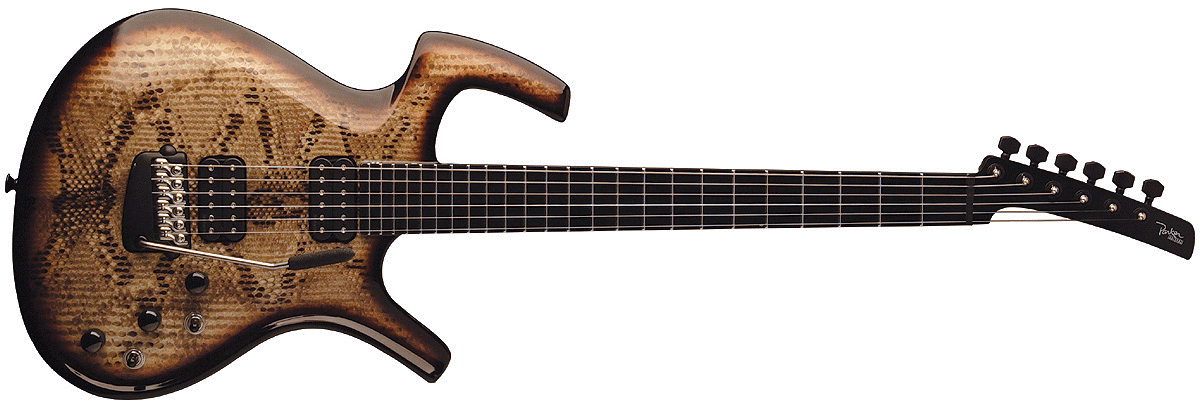
Fly Mojo Snakeskin


Parker did create several special edition models after the 2015 announcement including the Fly Mojo Snakeskin model, the Koa Fly Mojo model, and the Four Season Fly Mojo guitar, which was offered in differing finishes corresponding to the seasons.


Parker Guitars  US Music page
The Parker Fly brand was being manufactured until November of 2016 when the factory in Buffalo Grove, Illinois was shut down. The U.S. Music website states, “The Parker Guitar line-up is currently being updated for re-release in 2017.


Ken in 2013 Holding his archtop


After Ken Parker sold his interest in Parker Fly in 2003 He returned to his first love, which is building archtop guitars. He started doing this in the 1970’s, long before he became preoccupied with the Parker Fly guitar. During these years he was able to strike up a friendship and get advice from Jimmy D’Aquisto.


1991 model
much different Parker
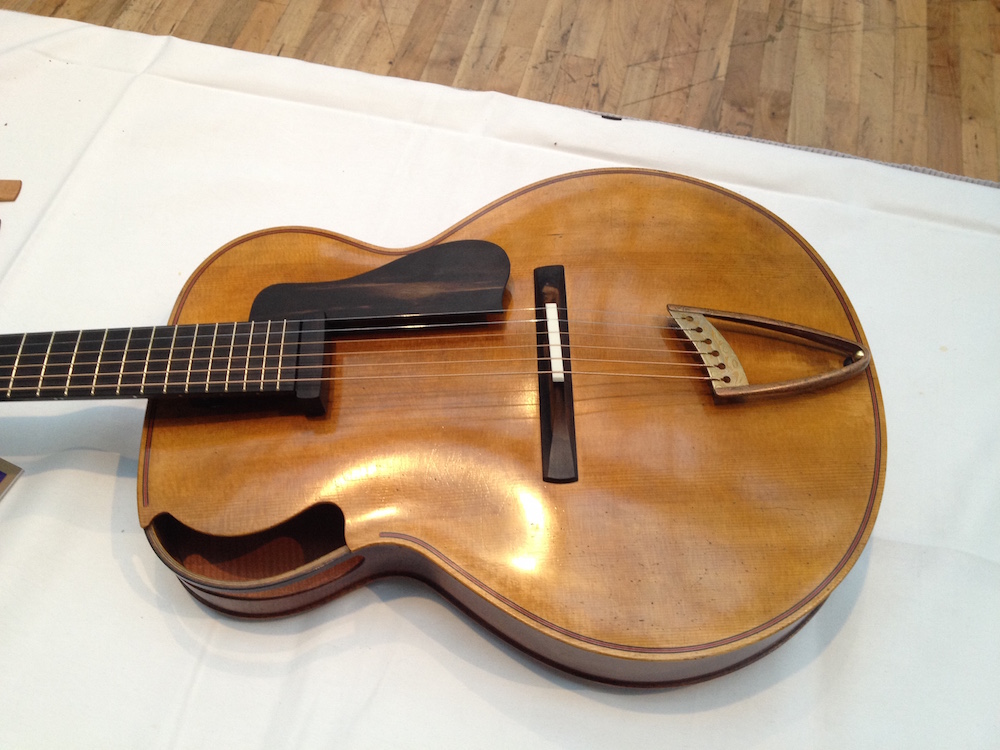
Prior to his illness Ken was been busy creating and selling his own archtop guitars. And these are very unique instruments, like no other guitars on the market. Each guitar is handmade and though they share the same outline, each is a one-of-a-kind piece. Ken had experimented with different woods that exhibit different tonal variations.

Ken also experimented with the archtop guitar neck attachment. He felt that one of the pitfalls of the archtop acoustic was the bridge.


Parker Archtop "Grace"
On most models this involves a bridge with a saddle that is adjusted by means of some knurled knobs to raise and lower the action of the strings. He felt the bridge is such an important element in transferring the string vibrations to the guitars body and the standard method needed to be improved upon.

The bridges on his instruments need no adjusting.

Parker archtop neck and post
To solve this, Ken created a unique adjustable and removable neck. The neck sets above the guitars body on a post made of carbon fiber.

This allows the player to not only adjust the neck, but to play in upper registers without being impeded by the instruments body or neck heel, as there is no neck heel. Another advantage to the removable neck is that the instrument can be dismantled and placed in travel size containers for safe travel on airlines. Parker was able to build an instrument available with a variety of differing necks for the same body, such as a 25.5” scale or a 30” baritone scale, even six or seven string necks that would fit the same body.

Parker neck, bridge, fretboard

Parker’s fretboard design involves an altered conical parabolic curve that is based on the players preference for string gauge and action. He suggests using 12 gauge string sets for his instrument, preferably made of phosphor bronze material, since he uses Fishman Rare Earth SA220 humbucking pickups on his instruments.


Fishman Rare Earth pickup
top and side view
These pickups attach to the pickguard and are snug up against the distal end of the neck. All the wiring is concealed under the pickguard, including the 1/8” output jack. He prefers these pickups to piezo versions as he feels they deliver a more realistic sound.


Parker Archtop headstock & tuners
The headstock on Parker's archtop guitars is similar to the minimalist six-on-a-side type that he used on the Fly guitars. He has chosen Gotoh Stealth tuners to top his instruments. These are the smallest tuners on the market. He covers the back of the tuners with a plate so the machines are not visible.

Ken Parker archtop guitars have a base price of $30,000.

Sadly Ken Parker became ill and was diagnosed with cancer in 2023. 

In a recent social media post he announced he was very ill and had lost use of an arm. It was just days after this announcement that, influential luthier Ken Parker passed away from a rare form of cancer. He was only 73 years old. Parker died at his home in Gloucester, Massachusetts, on October 5, 2025, with wife Susan Kolwicz by his side. He was 73. 

Tributes have poured in from his fellow luthiers including Linda Manzer, Dana Bourgeois, and others. Ken Parker was a beloved and respected member of the luthier community.
 
©UniqueGuitar Publications (text only) 2025
Click on the links below the pictures for sources.
Click on the links in the text for further information


.

Saturday, September 20, 2025

The True History Of The Mickey Mouse "Mousegetar"


The Original Mousegetar

1950 Westinghouse
Television

In 1955 when I was three years old, my family had a Westinghouse console black and white television. I spent hours watching shows on that TV. Most of them were were kid's shows, but there were some locally produced shows that I enjoyed. The 1950's were an age when TV was a new medium and those creating the content were making it up as they went along to fill in air time.


The Mickey Mouse Club
My very favorite television show came on every afternoon. This was The Mickey Mouse Club. This  featured a crew of happy, talented children, that sang and danced and appeared to be having way too much fun. These were the Merry Mouseketeers. They were lead by a couple of adults.

The entire cast wore costumes with their names emblazoned on the front of their tops, and matching headgear with mouse ears caps. 

Vintage Mickey Mouse Cap

The show was a rousing success because at the time every kid in the country had to have a Mickey Mouse Club cap. I had one and my sister had one with a bow.  

As stated, the Mickey Mouse Club was comprised of very talented attractive children that were divided up into groups. 

The main group that was under contract consisted of nine girls and boys, while the other 30 or so kids were added as needed. 

Actor/Songwriter Jimmie Dodd acted as Master of Ceremonies. while artist and animator Roy Williams aka Big Roy acted as a side kick. 

Jimmie Dodd with his Martin
Jimmie sang and played Tenor guitar. For the unfamiliar, the tenor guitar is a four string instrument that was slightly smaller then a full sized guitar.  It was developed to allow tenor banjo players to double on guitar. It was generally tuned in fifths, C3−G3−D4−A4., although some players tune it to the first four strings on a guitar. 


Mousegetar
During the first episodes Dodd played his 1940s Martin 0-18T model which had a mahogany top and body. However early in one of the first season episodes of the show the “kids” presented Jimmie Dodd with a custom built Mousegetar. He used this instrument for the remainder of the four-year series.  

Jimmie wrote all of the songs used on the show including the opening Mickey Mouse March, and the slower closing theme. 

Jimmy Dodd also wrote songs for the show that were meant to inspire children to do the right thing or to learn a lesson, The cast referred to these homilies as "Doddisms". 

Though we fans dreamed of becoming Mouseketeers, it turns out the job involved a lot of hard work. Those children were on the show or practicing routines eight hours a day, six days a week. On Sunday they performed at Disneyland, or at concerts. The typical day also consisted of three hours of on set schooling, broken up in 20 minute intervals, in trailers that were set up on one of the sound stages.

1955 Mousegetar


Now the original custom made instrument had Mickey Mouse’s face on the guitar’s top and cutaway bouts on either side for Mickey’s large ears. Metallic lettering was glued on the lower portion of the body spelled out: Mousegetar. 


Candelario Delgado
The guitars were handmade at Candelas Guitar Shop by shop craftsman Candelario Delgado. This shop is still in existence and still run by surviving family member Tomas and his son. It is located at East Cesar Chavez Avenue in Los Angeles, California. 


This shop has a very interesting history. The craftsmen there have built custom made guitars for Jose Feliciano, Charo, Eric Wilson, Kim Deal and many others.
 

Whatever the cost Disney paid to build the Mousegetar it was certainly worth it because toy companies produced millions of plastic versions with Disney sharing the licensing revenue.

The Mousegetar

According to Disney, two guitars were built for the show. After the show concluded both guitars were given to Mr. Dodd. Dodd passed away at the young age of 54. His family had the guitars housed at the California Institute of the Arts (CalArts) University in Valencia, California for many years. 

In 2019 one Mousegetar was donated by the Dodd family to The Walt Disney Family Museum. 

Mattel Mousegetar

The Mousgetar spun off an industry of toymakers making plastic Mousgetars to sell to all the kids in TV land. One of the makers, Emenee Toys had a connection to the designer of the Maccaferri Selmer guitar. This one shown here was my first 'guitar'. It had nylon strings and a little crank on the side that would play The Mickey Mouse Theme on a music box mechanism inside the instrument. 


The Original Mousegetar
A few years before I started this blog, I wrote to Vintage Guitar Magazine asking if they would do a piece on this classic instrument that meant so much to Baby Boomers. They replied saying they were not interested. 

So I did a little research, found my own answers and history. This gave me the inspiration back in 2009 to start writing about guitars. On today's date I have 555 articles in my archive. Feel free to browse any of the articles.

©UniqueGuitar Publications (text only) 2025
Click on the links under the pictures for sources.
Click on the links in the text for further information.
Please click on the advertisements as they help fund this page. Thank you!


Thursday, September 4, 2025

Mark Twain's $15 Million Dollar Martin Guitar


Mark Twain
Hands down, my favorite author is Mark Twain. 

In the early days of our marriage my wife joined a book club. She wanted to stock our bookcase with the classics. For years they just sat on the shelf looking respectable. I eventually made a goal of reading each book. 

A Few Mark Twain Books
About a dozen of the books were by Twain. They included Puddi'n head Wilson, Those Extraordinary Twins, A Connecticut Yankee in King Arthur’s Court, Roughing It, Innocents Abroad, The Guided Age, The Personal Recollections of Joan of Arc, Life on The Mississippi, and of course Tom Sawyer, and Huckleberry Finn, as well as others.

Mark Twain's 
Other Woman
I also read Twain's autobiography, and a book by Laura Skandera Trombly called Mark Twain’s Other Woman. This was a book about Samuel Clements’ secretary, Isabel Van Kleek Lyon. The title sounds salacious, but it was a scholarly work, and was an interesting look into Twain’s everyday life. 

All of this to say that I have learned a lot about Samuel Clements, his family, and his life. 

But the one thing that I did not know was that Sam Clements enjoyed playing guitar and owned one of the very first C.F Martin guitars ever built. 

C.F. Martin
Christian Frederick Martin began building guitars In 1833. Martin apprenticed under the legendary Viennese master luthier Johann Stauffer. Martin then returned to Germany taking with him all that he had learned. In those days European trades operated under a strict guild system. Upon returning home he became embroiled in a dispute between the cabinet makers and violin makers guilds over who had the rights to make the then relatively new invention the ‘guitar’. 

Marker 196 Hudson St. NYC
This dispute inspired Martin to relocate to America. In 1833 he opened a shop on the lower West Side of New York City. Five years later, at the insistence of his wife, Martin moved to Nazareth Pennsylvania. 

In 1861, shortly after the Civil War started, Samuel Clements purchased a used Martin Size 2 ½ 17 parlor guitar reportedly costing him $10. He used this 1835 Martin extensively as a singer-guitarist, bringing it along to his many travels. 

In fact Mark Twain began his career by traveling and writing stories for a newspaper. Those serialized publications became his first popular book, Innocents Abroad. Twain continued to travel far and wide, often with only his 1835 Martin guitar, paper and ink to accompany him. 

Twain played his 1835 Martin guitar frequently for friends and fellow travelers. He entertained the miners of the infamous California’s Gold Rush and the newspaper men of the Nevada Territories. 


He also rocked the joint with the passengers aboard the steamship Quaker City, bound for Europe and The Holy Lands, and the clipper ship Ajax, bound for the Hawaiian Islands. Many guitarists of his day would approve saying, "Twain prefers to play his Martin guitar for the 'willing women of the West.' ” 


John Hancock III
Just before his death in 1910, the 1835 Martin guitar was entrusted to Colonel John Hancock III, who was the great grandson of American founding father John Hancock. Aside from being a U.S. Cavalryman and a horse breeder, he was a guitar collector. 

The guitar remained in the Hancock family for four generations until it was purchased by renowned guitar collector Hank Risan in the mid-nineteen nineties. 

Risan then worked with UC Berkeley to authenticate the guitar and helped to create the Mark Twain Project. The guitar came with it’s original coffin case and had a genuine shipping label dated 1866, with “Mr. M. Twain, New York.” 


In today’s dollars and due to its provenance, it is valued at over $15 million dollars. In doing research on the instrument Risan also uncovered an unpublished poem by Twain called Genuis. The guitar’s original coffin case bears a shipping label dated 1866, with Mr. M. Twain, New York written on it in script that was penned in Mark Twain’s own hand. 


As of 2015 Risan went on to establish The Private Life of Mark Twain exhibit at the Museum of Musical Instruments, MoMI. This is where the guitar and poem currently reside.

©UniqueGuitar Publications (text only) 2025
Click on the links below the pictures for sources.
Click on links in the text for further information.
Please click on the advertisements to help support this page. Thank you!


Sunday, August 31, 2025

Micro Frets Guitars


Microfrets Orbiter
I used to read all the latest guitar magazines, Guitar Player, Guitarist, Vintage Guitar, and others. I can still remember the old advertisements in those publications. 

Micro Frets
One that stood out was from a company called Micro Frets. This was a guitar that appeared to be cross between a Gibson and a Fender. What stood out was the adjustable nut. The bridge on these guitars had six adjustable saddles that were like a Tune-O-Matic bridge, but the guitar nut also could be moved enabling fine tuning. This feature was known as the Micro-Nut. Although this may be a redundant feature, I found it impressive. 

Micro Frets
Orbiter
Wireless 
Guitar
In the late 1960’s one Micro Frets guitars was even designed with a built-in wireless transmitter that broadcast the signal on a standard FM frequency which was tunable via a variable capacitor. Of course similar technology is used exclusively today, but in 1967 this was an amazing feature.

The Micro Tech Company was started in 1967 by a guitar builder named Ralph Jones and his business partner Francis Marion Huggins. The partners set up a 15,000 square foot factory in Frederick, Maryland, where they were joined by a small group of guitar builders. Jones concentrated on innovation and creating parts while leaving the woodworking chores to the other craftsmen.


In the shop they were cutting the bodies and necks as well as machining the metallic components. Jones invented the unique parts, such as the Micro Tech nut, that set Micro Frets up as distinct from their competition.


The Calibrato tailpiece was a unique tremolo unit. This sophisticated design invented by Ralph Jones kept strings in tune better than existing units. 


Plainsman, Covington,
Huntington, Orbiter

The company was renamed Micro Frets.  Initially Micro-Frets offered four models – the Plainsman, the Covington, the Huntington, and the Orbiter. These instruments came to be known as Stage 1.


The instruments bodies were built by using two slabs of wood, usually poplar or maple, that were sandwiched together. On early models the bodies were secured by clips and held together by screws in the neck plate and bridge. (See the last video)


A Masonite trim gasket surrounded the two body sections. This unique method allowed access and instillation of the guitar’s electronics. Some of the guitars had front facing “F” holes. This construction method also allowed instillation of grill cloth material that covered the sound hole from inside. 


Micro Frets Thumbwheels
Instead of the usual potentiometers, Jones fashioned thumbwheel controls on the edge of the guitars bi-level pickguards. This was eventually rejected as cumbersome for players and replaced by the usual volume and tone pots along with a pickup selector switch. 

Differences In Pickups

The pickups on the first Micro Frets guitars were initially made by DeArmond, but later models used a design created by Bill Lawrence. These pickups were wound and assembled in the plant by Jones’ wife Hazel and production manager Gary Free. 
 
The following year brought changes in production. The guitars in this group are known as Stage 2.


The Masonite gasket was eliminated as were the thumbwheel controls in favor of a simple volume and tone control. This changed allowed the bi-level pickguards to be simplified. The grill cloth behind the sound holes was gone. 


1971 Spacetone - Stage 3

By the next year, 1971, the two body sections were glued together eliminating the need for metal clips and screw joining them.  The guitars made at this time are noted as Stage 3. 

Sadly in April of 1972 Ralph Jones died of a sudden heart attack. His widow, Hazel, and plant manager Gary Free kept the business in operation for the next four years allowing the company to continue employment of workers and utilize existing inventory. By 1975 the building and inventory were auctioned off. 

Approximately 3000 Micro Frets guitars were built and sold during the companies tenure. These guitars were truly unique creations and were ahead of their time. 


In 2004 Will Meadors and Paul Rose purchased the Micro Frets brand name and he built a limited run of about two dozen guitars based on Ralph Jones’ design. After that production ended.


The New Micro Frets

Then in 2017, 50 years after the company was created, Micro Frets went back into production, with an initial launch of three models: Signature, Spacetone, and Orbiter.

©UniqueGuitar Publications (text only) 2025
Click on the links below the pictures for sources
Please click on the advertisements to support this page. Thank you!