Thursday, April 14, 2011

Boutique Amplifiers

Back in the day, when I took up guitar, if you needed a repair done to your amplifier, you took it to a TV and Radio repair shop.  They had manuals from RCA, Crosley, General Electric and Western Electric which were the same circuits’ amplifier manufacturers of the day used to create their products.
Carr Amplifier


Today, televisions and radios are disposable, so TV and Radio repair shops are a rarity.


A  handful of businesses repair amplifiers and some of these companies have gone into creating boutique amplifiers.


Others specialize in building custom amplifiers and modifying existing amps. Many of these companies sell amplifier kits, parts, speakers and cabinets so you can build your own amp.

Torres British Boxer
One of the more well-known companies is Torres Engineering, which is owned and operated by Dan Torres.  His forte is amplifier kits and modification parts and schematics, although he does offer hand built amplifiers for sale.  In addition to amp kits, modification schematics, Torres also sells parts.  Mr. Torres has written articles and advice columns for several guitar publications.

Gerald Weber is the guy behind Kendrick amplifiers and guitars.  He started out repairing and modifying amplifiers before branching out to create his own brand.  He also has created guitars.  He sells parts and kits to build, modify, upgrade or overhaul amplifiers.  


Weber also travels around the country giving hands on seminars, teaching new builders. Mr. Weber is also a writer and dispenses advice through several guitar publications.

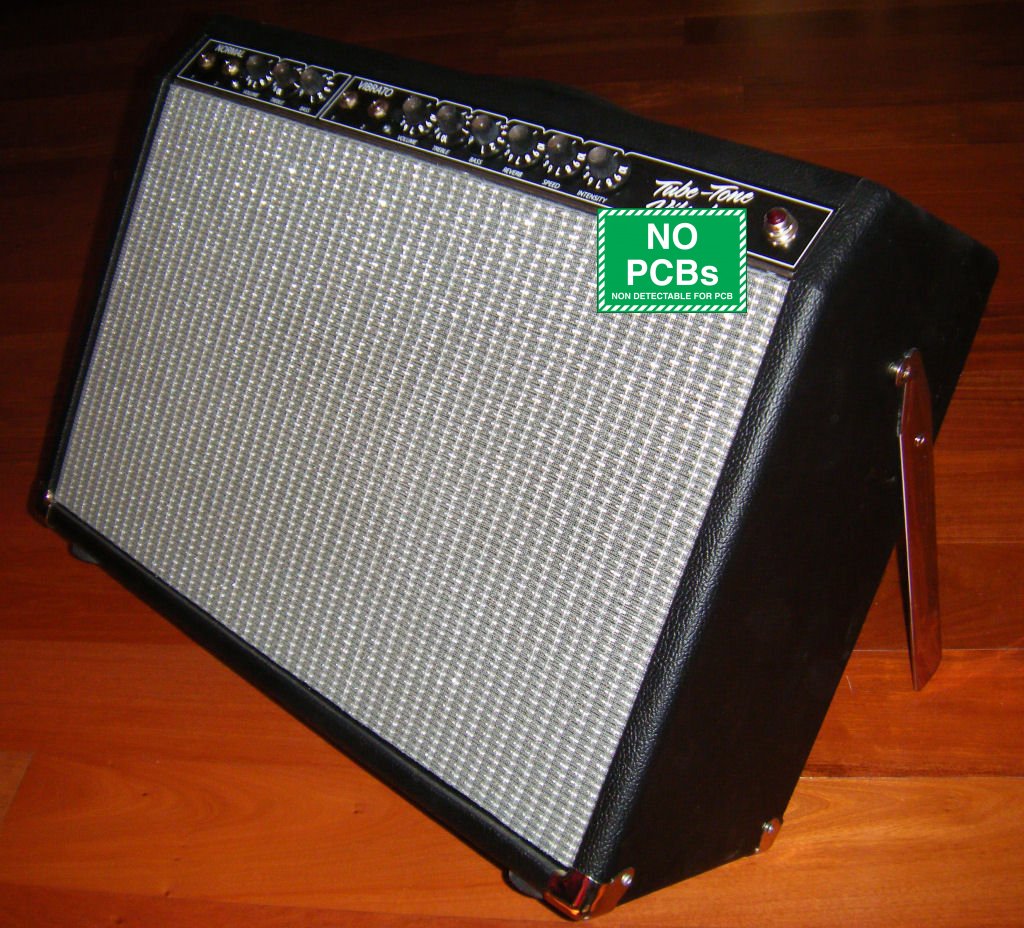
For high quality Fender style amps, check out Tube Tone Amplifiers.  They are hand built recreations of Leo Fenders finest creations made by Californian Raybob Bowman .  He uses point to point wiring and solders each connection by hand with short lead dress.  


Bowman, uses the finest parts available, such as Sprague and Mallory capacitors,  Switchcraft jacks, J.J. Power tubes and Carling switches.  The cabinets are handmade of finger-jointed pine.  He adds a bias potentiometer to each power tube so the voltage can be easily adjusted. His amps even include a courtesy input, just like old Fenders.

Tube Tone Vibro Champ
Tube Tone amps range from the 5-watt Tube Tone Vibro-Champ model to the Tube Tone Twin.  


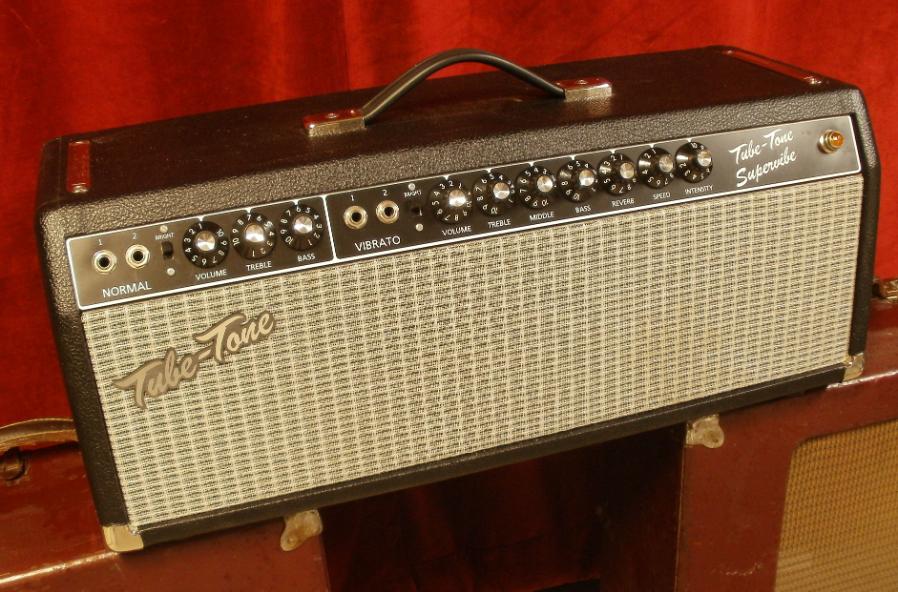
Bowman has come up with a couple of his own creations such as the Super Vibe, which uses a circuit based on a Super Reverb and a Vibroverb.  By flipping a switch on the rear panel, you can achieve the tone of either amp.  As a plus this comes as an amp only unit (head) allowing you to use your own cabinet or purchase one from the manufacturer.


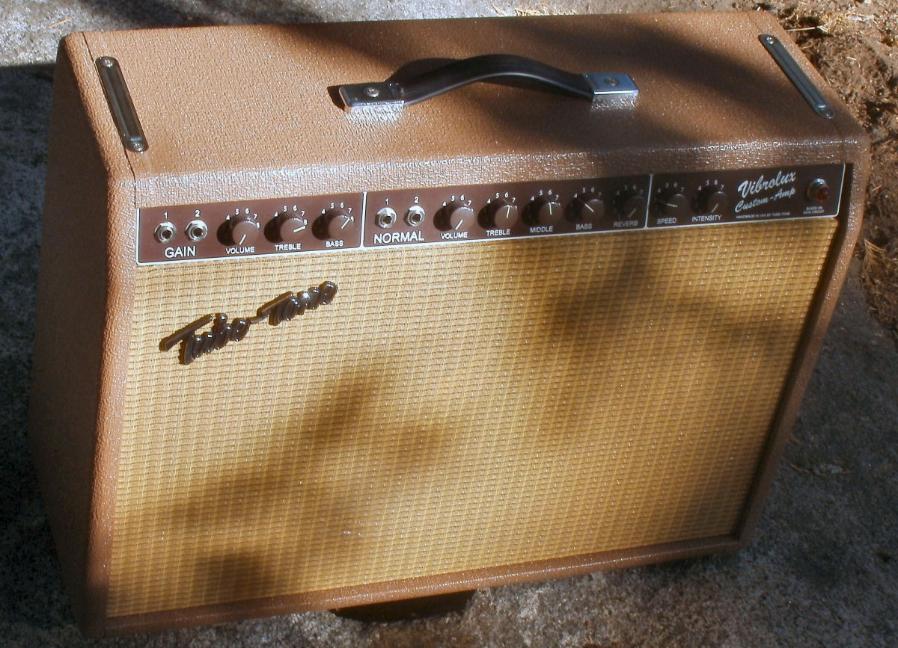
Tube Tone Deluxe Plus
The Tube Tone Deluxe Plus uses two 6L6GC power tubes instead of the usual 6V6GC’s found in Fenders Deluxe Reverb.  Based on this and the use of a larger transformer, the power rating is 37 watts RMS.  


It comes with a 6db boost the power. It also features a unique mod switch that switches tremolo tube to function as a preamp tube which boosts the gain.

Tube Tone Princeton Plus
One of Tube Tones most interesting amplifiers is the Princeton Plus.  This features 6L6GC tubes instead of the normal 6V6GC’s found in a Fender Princeton Reverb.  


The speaker in this amp is a 12” Weber, instead of the normal 10” Fender Special Design.  The amp comes with a mid boost controlled by a foot switch.  

The tremolo circuit uses bias modulation instead of Fenders optical circuit.  There is also a built in impedance selector for adding more speakers.  This amp is beefed up to 35 watts instead of the 18 watts associated with a Princeton Reverb.

Tube Tones pricing is quite reasonable compared to what you would expect to pay for a stock Fender reissue amplifier and especially when comparing price to vintage Fender amplifiers.  Bowman builds Fender amps, like the vintage amps of the 1960's. He also will rebuild your existing Fender amp. 


You ship him your chassis and he will completely redo it to blackface standard.  


If you are considering purchasing a Fender amplifier, I would seriously suggest contacting Tube Tone.

Allen Accomplice
Allen Amplification is a Kentucky company run by Dave Allen.  He sells kits with or without the cabinet and parts.  Allen also sells cabinets. Although he specializes in kits, he does sell completely built amps, based on his own Fender style design.  His creations are unique. 


The Chihuahua


They range from the 10-watt Chihuahua to the 40 watt Old Flame. Like Tube Tone, Allen uses only high quality parts.  He does repairs and modifications on older model Fender amps that do not utilize printed circuit boards.


Brad Paisley & Dr. Z
Mike Zaite was an engineer for General Electric, who built guitar amplifiers as a sideline.  His father owned a TV/Radio repair shop. 


Through circumstance Zaite hooked up with Joe Walsh and provided him with an amplifier, which led to a relationship with (the) Eagles.  Zaite was able to quit his day job and he became Dr Z.


Within a few years, his amplifiers have gone from boutique to almost mainstream.  


His designs are straightforward and somewhat minimal.  They are reminiscent of Ken Fishers Train Wreck amplifiers.


It is worth mentioning that Zaite was a friend of Ken Fisher and collaborated with him on the Train Wreck Airbrake attenuator. 


Zaites amps range from the diminutive 5 watt Mini Z which comes with a built in attenuator to the 60 watt SRZ 65.  


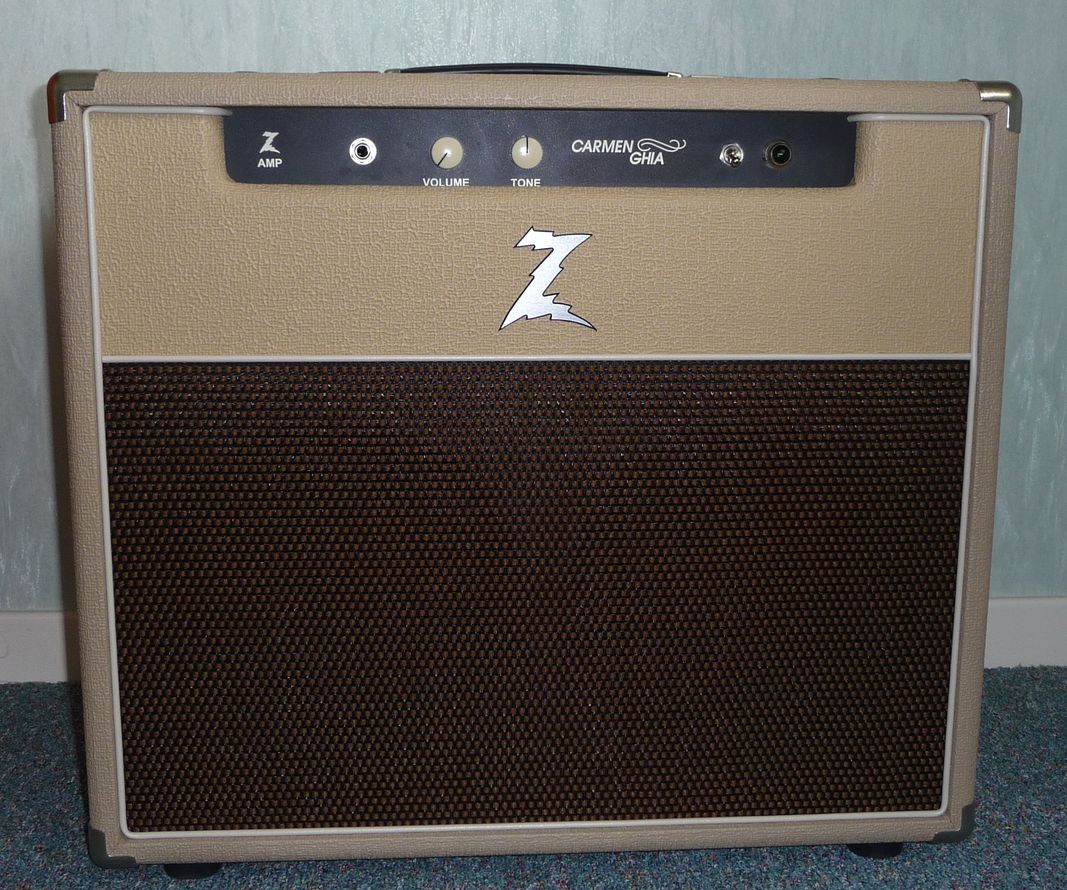
The Dr. Z Carmen Ghia is possibly his most popular amp.

Bruce Zinky worked at Fender for years as an amplifier designer.  He went into business for himself. His most popular product is The Smokey Amp, which is hardly boutique, but most musicians will pay thirty dollars for an amplifier that fits into a shirt pocket and is housed in a pack of cigarettes.  


Zinkys & Supros
Zinky builds only a few amps under his own name.  However, he has procured the Supro brand name and is building Supro amplifiers that are much better than the originals.  


There are two companies worth mentioning for those of you that care to build your own amplifiers. 


Mojotone sells amplifier kits, parts and cabinets. The company has an excellent reputation and are highly regarded for the quality of parts they offer.


Mojotone also offers amp modification kits and electric guitar parts.


Weber, is a company started by Ted Weber who passed away in 2009, makes world class speakers. Most players I know prefer Webers as replacement speakers. Weber also offer amp kits.  They are reasonably priced and may be a good starting point for beginners. The parts are made in China.


Raybob Bowman playing through a Tube Tone Supervibe.


Ken Fisher amplifiers

Tuesday, April 12, 2011

Fakes or Replicas?

There seems to be a fine line between what is counterfeit, what a trademark violation is, and what constitutes a replica.

Someone once said plagiarism is the sincerest form of flattery. Collectibles of all sorts have an inherent value above the original price. 


Years ago, replicas became available for those who could not afford originals. 


If these items sold as replicas and not original or branded with the originators name, they are legal, providing they have consent of the originator.  


Once a copy of an item is produced and sold, laying claim to being manufactured by or using of a company’s trademark or using distinctive proprietary designs, without the originators knowledge, approval, or compensation, this practice is deemed illegal.

Harry Rosenbloom
In 1954, a fellow named Harry Rosenbloom opened a music store in Pennsylvania.  Guitars and accordions were the popular instruments at the time.  The Second World War provided exposure for GI’s to see beyond their own culture.
  
My father became fond of Hillbilly music, as did many soldiers.  This caused a demand for guitars that exceeded manufacturing.  In the 1950's there was a long waiting list for music stores to receive a franchise from a major guitar manufacturer, namely C.F. Martin Guitars. 

Of course, the larger and more established music stores took precedent over new comers when it came to receiving merchandise. 

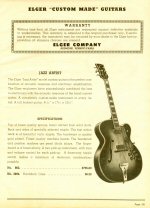
Elger Guitar
Mr. Rosenbloom found a solution by building his own guitars, which he did from 1959 to 1964 using the brand name Elger

His goal was to build a guitar equal to Martin. And truth be told, Harry Rosenbloom hired some fine German luthiers and they built some excellent guitars.

Vintage Ibanez


After five years into this venture, he found it would be more profitable to import guitars.  He turned to the Hoshino-Gakki Gen Company of Japan as a supplier.  Hoshino had purchased the brand name of a defunct Spanish guitar manufacturer named Salvatore Ibanez.


Greco by FugiGen
Actually, Hoshino did not manufacture the guitars, but subcontracted manufacturing to FujiGen Company and Teisco.  In doing so, Rosenbloom became the American distributor for Ibanez guitars until Ibanez purchased his assets. 


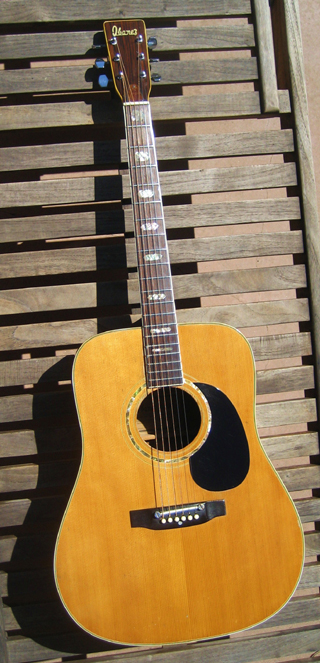
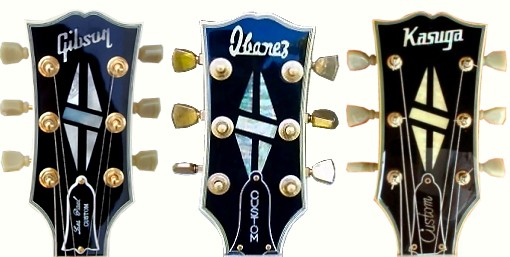
In the early 1970’s Ibanez began building and selling copies of Gibson, Rickenbacker and Fender instruments only with the Ibanez logo on the headstock. Some of the copies were second rate, using plywood for bodies, the routings were inaccurate, necks were bolted on etc.; however many of the Ibanez instruments looked and played like exact copies.  


Because they were built without permission or compensation to the patent holder, in 1977, Gibson/Norlin filed a trademark infringement suit against Elger/Ibanez USA, based on the headstock style. 


Ibanez settled out of court a year later and altered the headstock design of Gibson style instruments.


The Tokai Gakki Company LTD. of Japan has also has built copies of American manufactured acoustic and electric guitars. Interestingly, they entered a partnership with Martin to build the Martin Sigma line.  


For many years, Tokai has produced and sold Fender copies can be spot-on accurate. Throughout the 1970’s most of their line sold exclusively in Japan and Europe.  Tokai later took production of a sub-line of guitars to Korea.  Tokai’s approach to trademark infringement was not to call their instruments by USA names. 

They also utilize different parts and woods. I am not sure how they are able to avoid infringement issues. Tokai has been building guitars for many years apparently without objection.

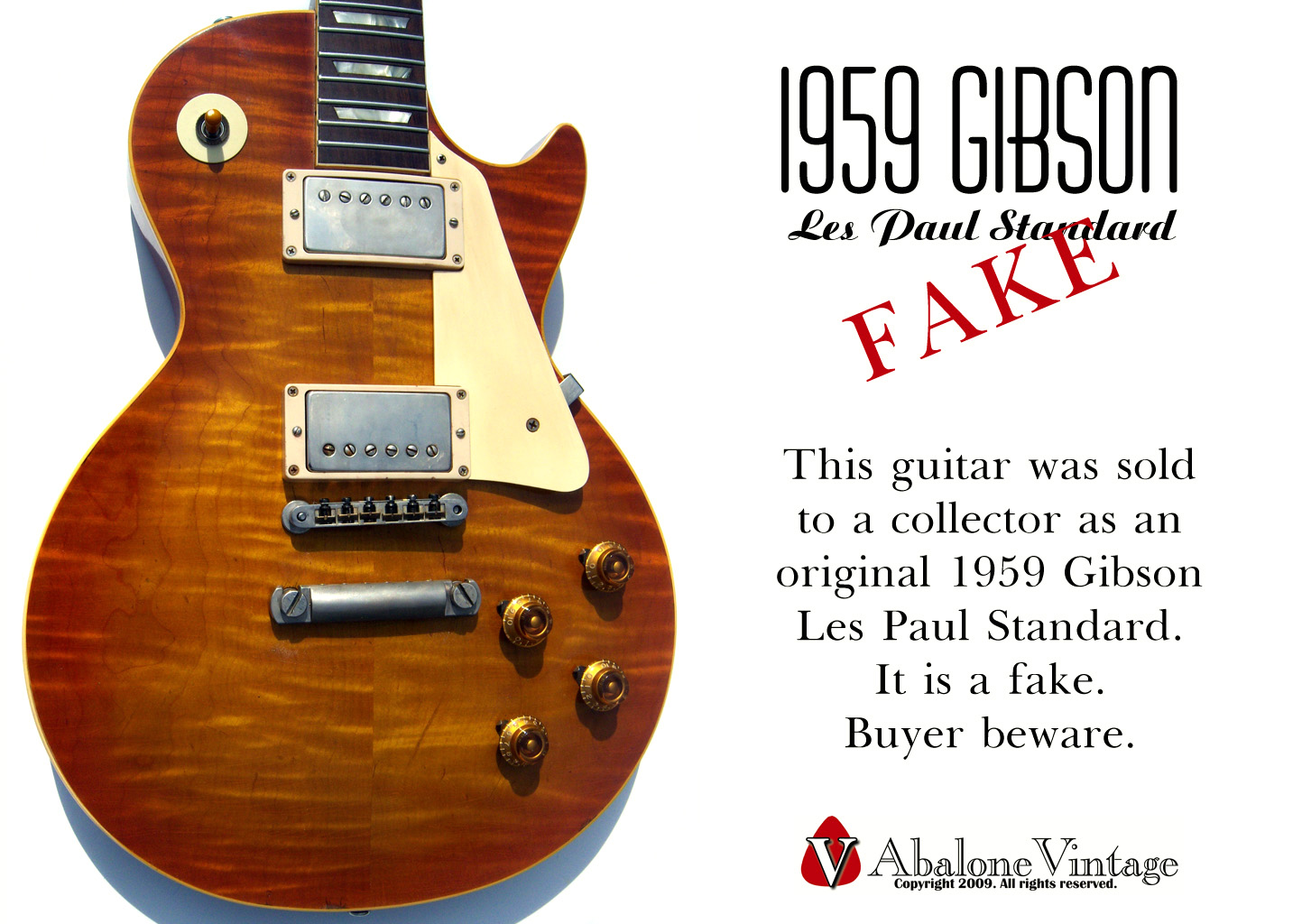
When it comes to guitars, China makes no pretense of recognizing USA trademarks.  There are pages on the internet touting exact duplicates of Gibson, Gretsch, and Fender guitars that sell for hundreds of dollars less than what one would expect to pay.  


These instruments are indeed counterfeits since most display the trade name of Gibson, Gretsch, or Fender on the headstock.  There may be some clues when looking at these instruments, such as using three screws in a truss rod cover instead of two or the logo may be slightly off.  An Oakdale New York music store was raided in 2007 and had their stock removed, since they were passing off counterfeit instruments as the real thing.


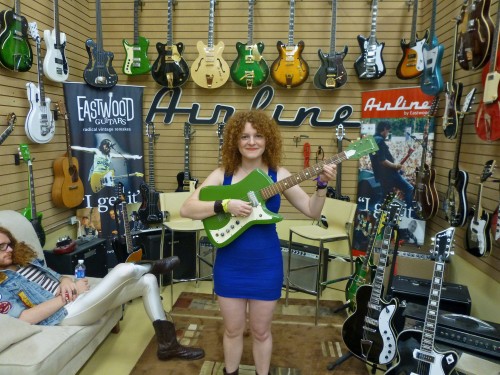
A Canadian company has put a twist on the copy-replica guitar market.  Eastwood Guitars, founded by Michael Robinson is utilizing Asian manufacturers to produce out of production replicas of some unusual guitars.  These are instruments that were made by US companies, European companies, and Asian companies, such as Kay, Airline, Eko, Wandre, Mosrite, Univox, Coral (a Danelectro brand), Italias, and Burns of London. I believe Eastwood currently owns the tradename Airline Guitars, which was used by the defunct Montgomery Ward Co.


Robinson negotiates with the original manufacturer or trade name holder to produce replicas. His goal is to provide new instruments based on vintage guitars that may not be available or affordable to players. In my opinion the is most admirable.  Eastwood produces true replicas.  I have sampled Eastwood guitars and they are fine instruments. Most have some deviation from the original, but the concept is the same. 

Hats off to Mr. Robinson.
©UniqueGuitar Publications (text only)


Saturday, April 9, 2011

Rick Kelly Guitars

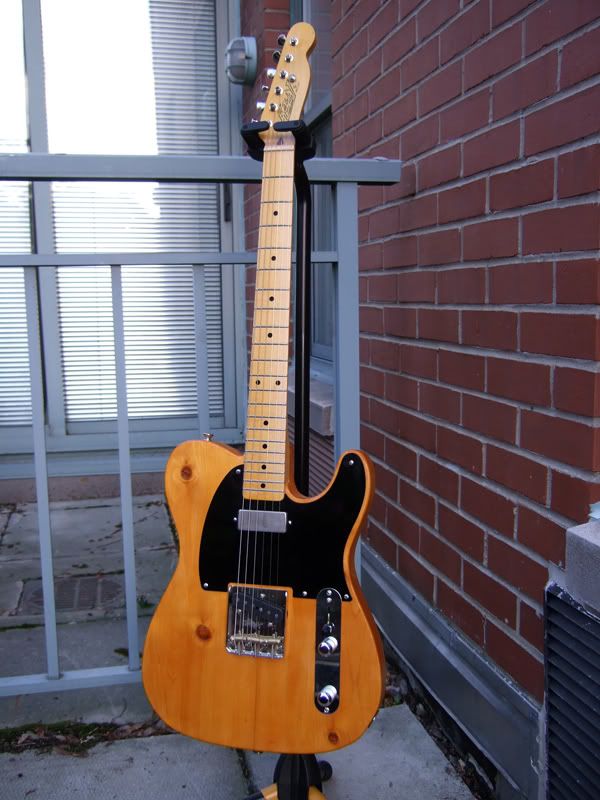
Rick Kelly builds guitars that are immediately vintage instruments, since he utilizes only old wood that he recycles, generally from demolished buildings and from other sources.  This is reminiscent of how the Larson Brothers made their fine instruments.  They too scavenged old wood from building teardowns and remodels.  Kelly is very particular about his wood supply.  The wood he uses is at least 100 years old and in some cases 200 years old, as with his Bowery Guitar project.

This one is called The Worm

No doubt about it, Rick Kelly is a master at building Fender style guitars, especially Telecasters.  Every instrument is handmade. The body and neck have never seen a CNC machine.  They are all hand-cut in his New York shop on Carmine Street.  All his instruments appear to be made in the 1950’s.  


He uses handmade pickups from Lindy Fralin, Don Mare, Seymor Duncan (Antiquity models) and DiMarzio.

Kelly offers four neck sizes, from fat to V shaped, with three different radius’, 7.5”, 9.5” and 10”.  He also offers medium to jumbo frets.  Headstocks range from modified Tele and Strat to Leo’s Tele prototype snakehead style, and a slotted snakehead style.  Kelly builds his own bridges.  

All Kelly guitars have a nitro finish applied by Mr. Kelly.

Kelly refers to the wood he uses as “the King’s wood”; white pine timber that were barged down the Hudson River to build New York City’s ancient buildings.  Kelly has also procured a supply of swamp ash and Arkansas rock maple from farm auctions he attended in the 1970’s.  This was from old farm buildings and barns.

Kelly claims that his guitars are superior to any factory-produced guitar, since the wood he uses has been air dried from the years it spent as building material.  Most factory guitars use green wood that has been kiln dried, which extracts the moisture.  


Aged air-dried wood not only is free of moisture, but the sap and pitch in the wood has crystallized over the years, opening up the woods pores, which causes the wood to vibrate more freely. 
Bill Kirchen with Rick Kelly baritone Tele


Due to the fact the moisture dissipated years ago, old wood is less prone to warping or cracking, plus its weight is lighter which is a plus for vibration.

Rick Kelly’s list of cliental is impressive.  It includes Bill Frisell, Patti Smith, Lou Reed, G.E Smitth, Bill Kirchen, Chris Whitley, Jim Campilongo, Poppa Chubby, Marc Ribot, James Taylor, Richard Thompson and many others.

A Kelly Tele and Kelly Strat
Surprisingly, a Rick Kelly guitar is reasonably priced, but do not be in a hurry to get your Kelly guitar or bass. 


There is a one year wait.


©UniqueGuitar Publications (text only)


Friday, April 8, 2011

The Terz Guitar


Does anyone remember Marty Robbins? Was there anything Marty Robbins couldn’t do? Robbins was a Country and Pop singer-songwriter. He had an beautiful and distinct voice. He had a bunch of hit records, White Sports Coat, El Paso, The Streets of Laredo, Devil Woman and My Woman, My Wife. Robbins also played the guitar. 

He was a movie star and he was a professional NASCAR driver with ten Top 10 finishes. What I remember most about Robbins is his little Martin 5-18 guitar that was his trademark. It was never mic'd. He didn't even use a strap.

But he consistently was strumming away at that little instrument like it was a ukulele. The guitar that Marty Robbins played is also known by the proper name of the Terz guitar.


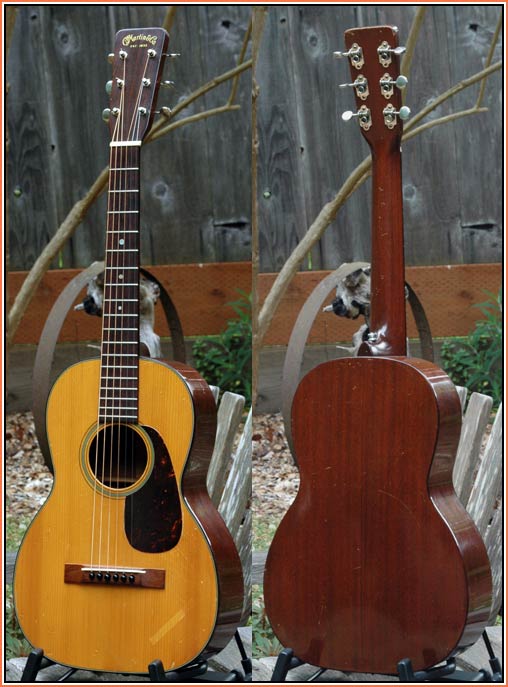
A Terz guitar is a small guitar tuned up a minor third higher than normal tuning so the open strings are G-C-F-A#-D-G, however it can be played in normal tuning. The neck is shorter, in the case of the Martin 5-18 the neck has a 21.4” scale. The body is also smaller than a full size instrument. The word Terz is German for third. It seems guitarists have always been stretching the boundaries of coming up with new sounds for the guitar. During the early 19th century the Terz guitar was an excellent way of augmenting a guitar duet.

5-18
There were even orchestral concertos written using a Terz guitar. The smaller body and higher pitch resulted in a brighter sound that cut through the orchestra. Though it was not any louder, we seem to more readily hear high frequencies.

The Italian version of the Terz guitar was a tiny instrument, while the Viennese version was much like the Martin. In fact we know that Charles Freidrich Martin was affiliated with the Viennese company, Stauffer. Stauffer offered a Terz model. Strings for these instruments were a lighter guage than for a normal 650mm scale neck. This was of course prior to metal or even nylon strings.

The Stauffer Terz instrument was made with a spruce top, and maple back and sides with rosewood binding. Though Terz guitars are probably not practical in today’s music, they are interesting and an alternative to parlor guitars.

Neil Young's Martin 5-18
Marty Robbins was not the only guy that owned one. According to his family, Johnny Cash regularly played a Martin 5-18 at his home and on the road as a songwriting instrument. Michael Hedges played a 5-18.

Sting was also fond of his Terz model. Martin has made two models of the Terz guitar and has his own model.

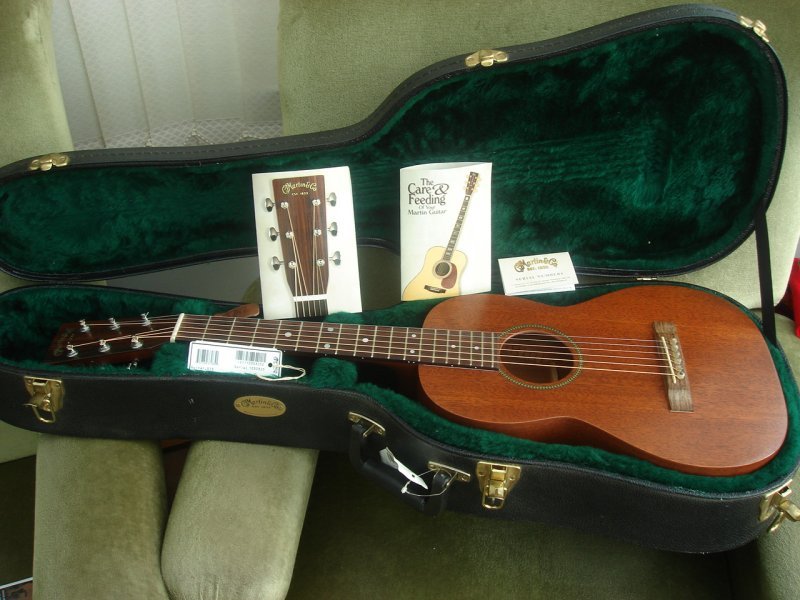
The Martin 5-18, which is currently available as the Marty Robbins Model and the Martin Claire Guitar, which was a tribute to Chris Martin's daughter. It is no longer in production.


5-15
From a historical prospective, Martin built the first 5-18 in 1918.

From 1918 to 1922 the 5-18's were braced for gut strings.

Beginning in 1923 to the present the Martin 5-18's are braced for steel strings.

5-15
Martin built three versions of the Terz instrument; the 5-18, the 5-28 and the 5-15. The Martin Claire guitar was commissioned by Chris Martin in honor of his daughter


Requinto
Based on the fact the Terz is a small guitar, what is the difference between a Terz and a Requinto? The requinto is a Spanish style small bodied instrument that was built to essentially do the same thing a Terz guitar does, only in a Mariachi band.

The Requinto provides a soprano voice.


When compared to 19th century classic Terz instruments (actually it was not the classic era, but the romantic era), the only differences are the tunings and the Requinto tends to have the same body depth as a full size guitar.

The Requinto is normally tuned A-D-G-C-E-A. The modern Requinto is strung with nylon strings and readily available at most large music stores for a price under $500.

Viennese Quint
To make matters more confusing, during the Romantic Music Era, Viennese luthiers also made a Quint guitar, designed to be tuned a fourth higher than a regular guitar.


Modern classical guitar luthiers can build instruments to any size that is specified.


The little Martin Terz instrument is somewhat expensive, $3300 to $4000. Martin currently does not produce size 5 guitars.

Another alternative would be Martins LX line of Little Martins. The scale is slightly longer at 23", the neck joins at the 14th fret and most versions of this guitar are made of wood laminate, although some have solid tops.

 The Little Martins sell for around $329 to $439.