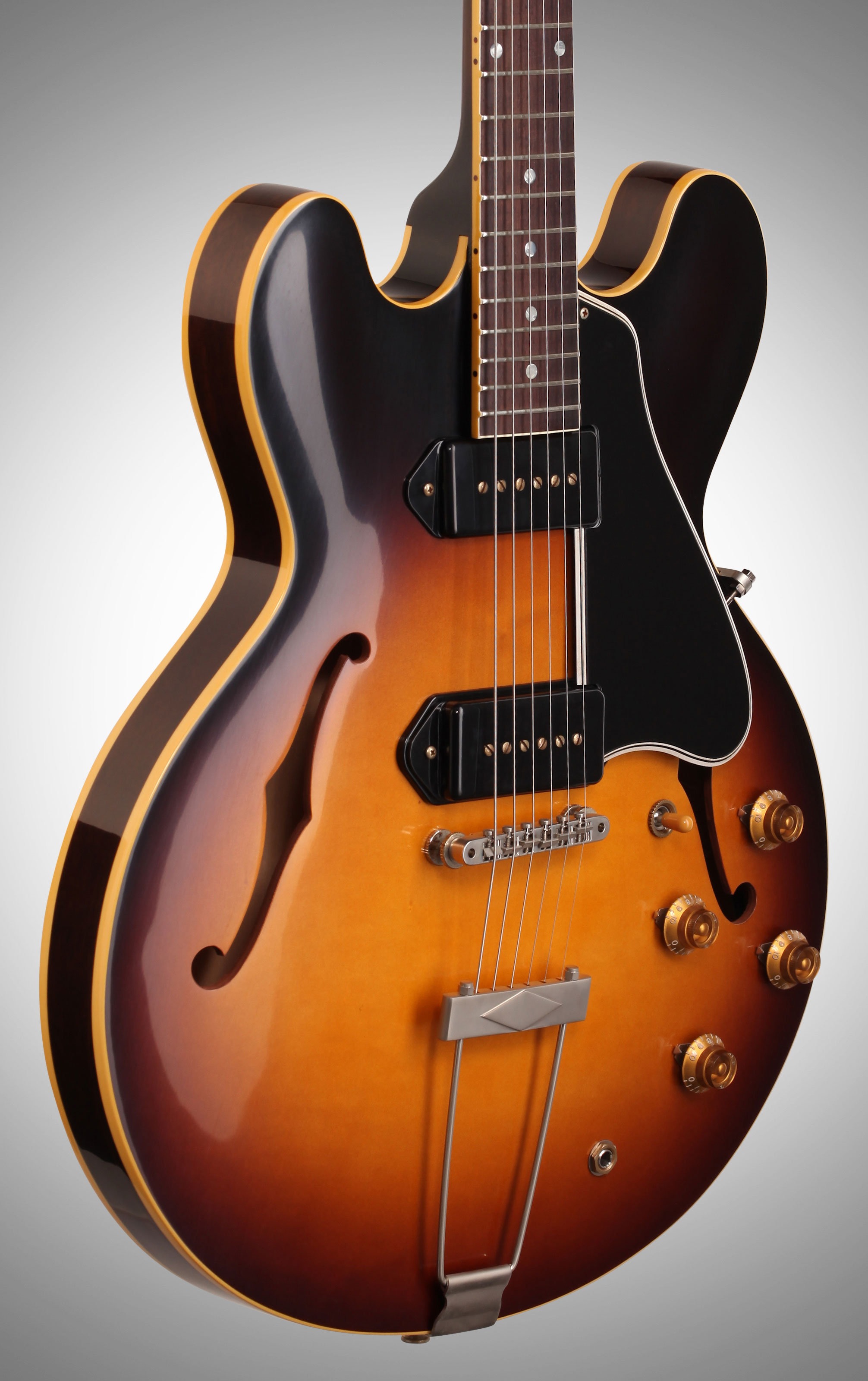
For electric guitarists it is not enough to have your instrument sound like a guitar; We leave that to the jazz players, the classical players, and the folkies. Electric players want to make their instrument growl, wail, and and scream.
Aside from a loud, over driven amplifier, effects pedals are necessary tools for most guitarists and bass players. The granddaddy of them all was the Maestro Fuzztone. This was the original pedal used on the Rolling Stone’s hit song, Satisfaction, and it started a whole industry.
One of the original and most prominent manufacturers of guitar and bass effects pedal is Electro-Harmonix. This company emerged on the scene in New York City back in 1968.
Back in 1967 Mike Matthews, the companies owner and founder was a rhythm and blues piano player and had a day time sales job. His friend, Bill Berko, was an audio repairman who had just constructed a circuit for a guitar fuzz pedal.
Under the advice of Matthews, Berko hired a company to construct these pedals under a deal with the Guild Guitar Company and the device was given the name of the Axis fuzz pedal. It was also sold under the name Foxey Lady.
All parties made a little money off the deal, and eventually Berko and Matthews parted ways.
However Mike Matthews was smitten with the idea of creating guitar effects. As I've mentioned, at the time Matthews was a salesman for IBM and he next teamed up with an IBM colleague who was an electrical engineer by the name of Bob Myer.
In 1969 they worked together to create a distortion free sustain device. Some fuzz tones of that era produced a buzz saw like effect that produced some sustain, while others like the Maestro box, just added gain to distort the guitars signal. Guitarists at that time wanted the ability for notes to be played and held, just like those played by horn players.
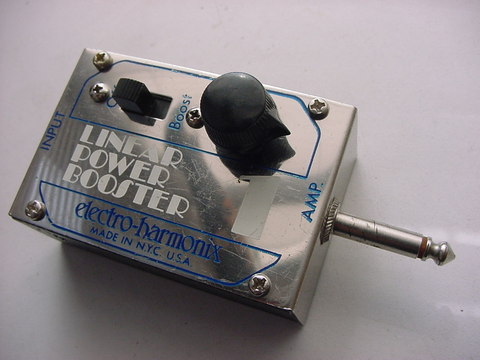
What Myer and Matthews came up with was a small device the Linear Power Booster, and called it the LPB-1. This pedal boosted the signal and made the guitar stand out. It did not sit on the floor, but was made to be plugged directly into the amplifier input.
The next effect that Matthews and Bob Myer created was the a fuzz tone that added a low end heavy sustain to any guitar sound. They gave it the name of The Big Muff Pi. It mixed harmonic distortion, sustain, and fuzz sounds together to make even a small amplifier sound huge. Plus it distorted at any volume. Both devices were instant hits and were put to use by well known artists.
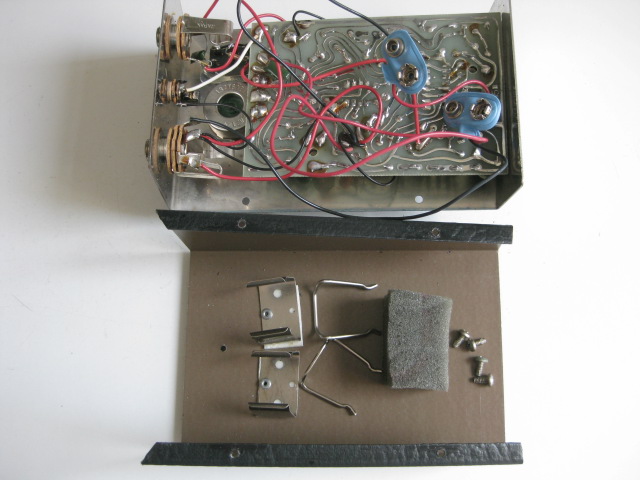
The original version of the Big Muff Pi was pretty much hand-made on perforated electronic boards with the wiring and parts hand-soldiered. But by 1970 these devices were updated to etched PCB boards.
The Big Muff was such a hit that subsequent versions emerged in later years, such as the Metal Muff, which had a higher gain threshold, and the Double Muff, which was two Big Muffs wired in series that offered overdrive through a single circuit, or through a cascaded version.
The Little Big Muff was a smaller version of the unit and had a slight variation in the circuit. The NYC Big Muff came with a tone bypass switch that allowed the user to bypass the tone control and another switch the adjusted the frequencies of 3 filters embedded in the circuit.
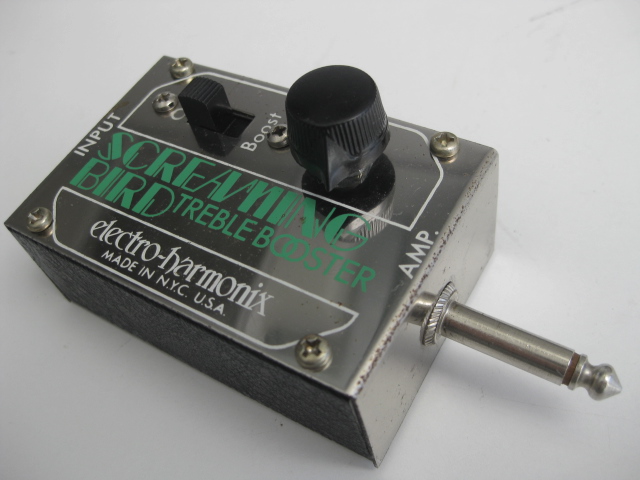
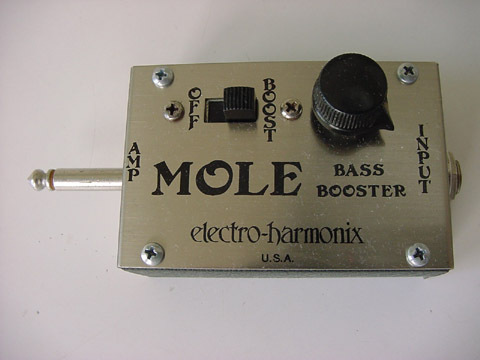
There were several other devices made by Electro-Harmonix in the late 1960's and early 1970's that included a Treble Booster, called the Screaming Bird and a Bass Booster called the Mole, that were made in a similar format to the LPB-1; These small boxes had an input on one end to accept the guitar cable and a plug on the opposite side that went into the amplifier. These units originally sold for around $20 USD.
One of the more popular effects the company produced at this time was the Small Stone Phase Shifter. It was a 4 stage phasing circuit, design by David Cockerell. This device had one large knob to adjust the rate of phasing and a slider switch labeled “Color” that engaged an additional stage of feedback for a more pronounced sound. Think of the Doobie Brothers song “Listen to the Music”.
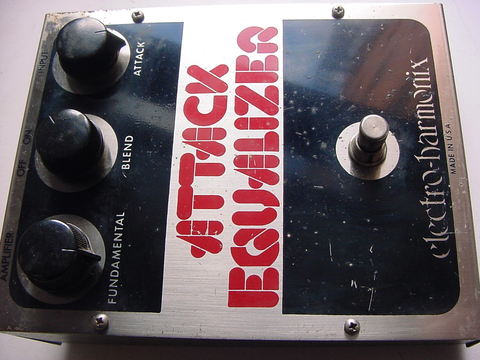
The Electro-Harmonix Attack Equalizer pedal was a combination of a parametric EQ to produce desired equalization and a pre-amplifier to boost the guitars signal.
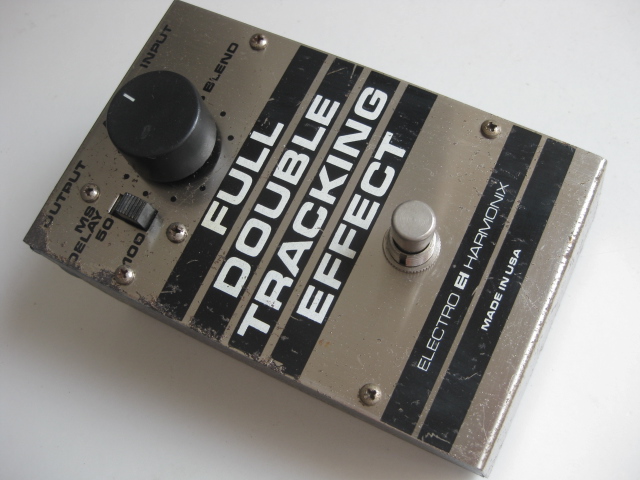
The Full Double Tracking Effect, split the guitars signal. One signal was given a slight delay that was adjustable, while the other was the original guitar signal. It came with a switch that allowed the delay to be 50 ms or 100 ms. The knob adjusted the mix of the original and filtered signals.
The Triggered Y Filter was sort of a phaser unit that allowed the frequency range to be adjusted to Lo or Hi and the amplitude/depth of the filter sweep.
The Echo Flanger produced a modulated Echo and a flanging effect, similar to what record producer did when they would press their finger or thumb on recording tape to cause the one of the tracks to be slightly delayed.
The Electro-Harmonix Memory Man, was introduced in 1978 and produced analog delay and echo using “bucket brigage” integrated circuits and incorporated a chorus effect. So the user could choose echo or chorus
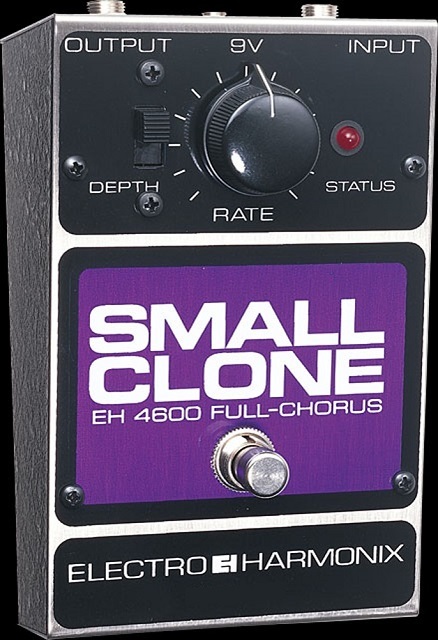
The Small Clone chorus, introduced by EHX around 1981 remains a very popular chorus pedal. it was also produced in two different smaller versions known as the Neo Clone and the Nano Clone.
Electro-Harmonix issued a very popular reverb pedal called The Holy Grail. This pedal came in several different formats including The Holy Grail Plus and the Cathedral. The Holy Stain was a multi-effects pedal that offered two different types of reverb.
Tremolo was one of the very earliest guitar effects and Electro-Harmonix offered a solid-state tremolo/vibrato pedal called the Stereo Pulsar and a tube based model called the Wiggler.
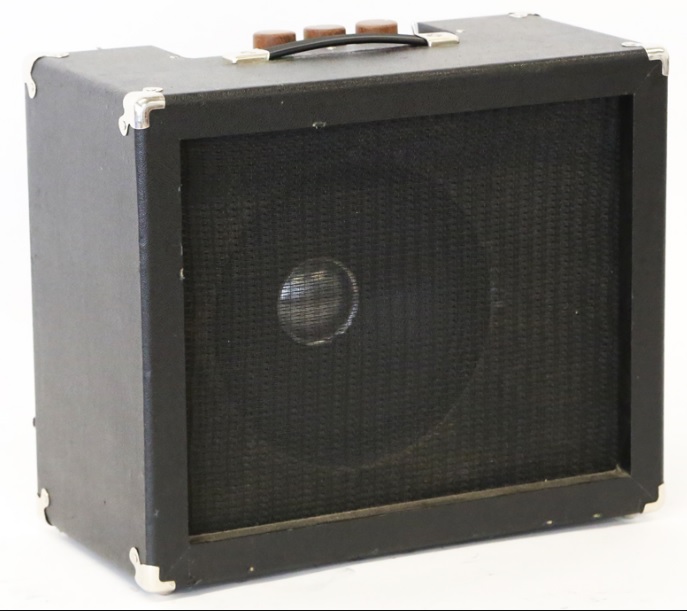
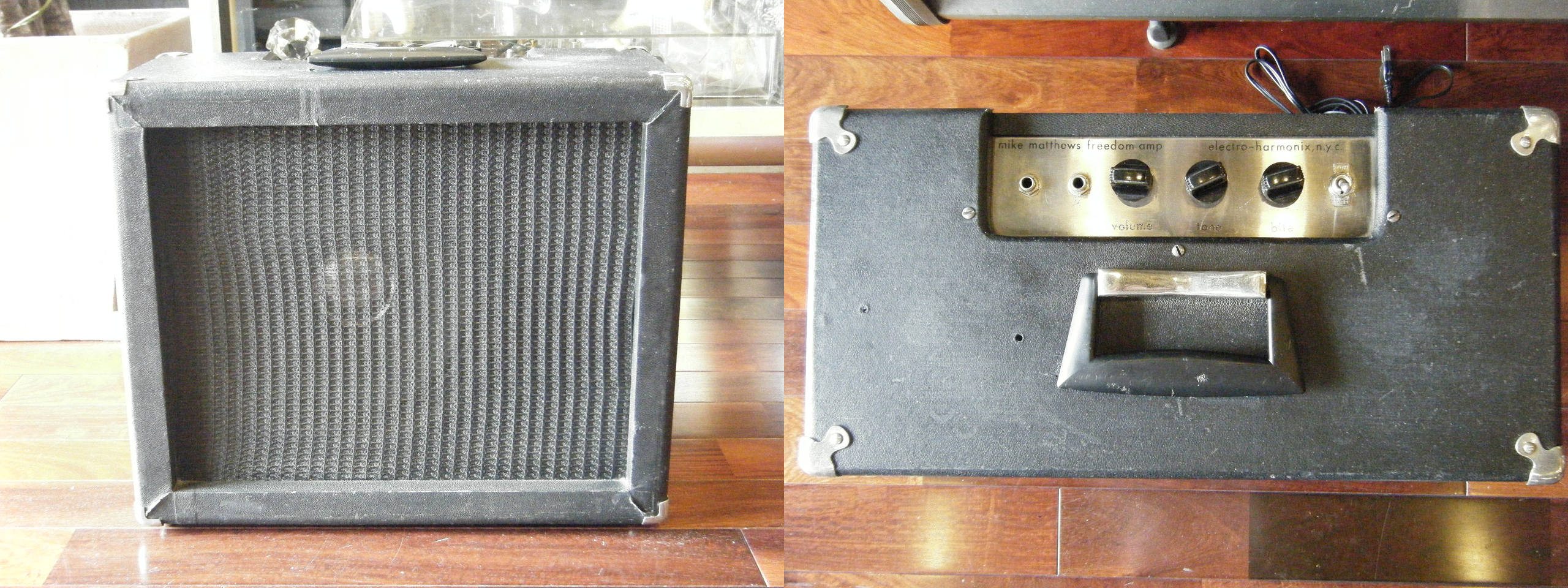
In 1972 the company came out with The Mike Matthews Freedom Amp. This DC powered amp put out around 25 watts RMS into a 10” speaker and was wired point-to-point. The controls included Volume, Tone, and Bite. The housing was rugged and built to be carried around. It was possibly the first battery powered amplifier.
The only drawback was that it took 40 D cell batteries to power the thing. It was also available as a bass model or as a public address amplifier which came with built in reverb.
An updated 1990's version of this amplifier was later produced with a lower wattage but in an all wood cabinet. This version came with a wall adapter and a rechargeable battery.
By 1982 Electro-Harmonix was facing a multiplicity of problems. First there was a labour union dispute. And about the same time the company filed for bankruptcy protection. Two years later, in 1984 Electro-Harmonix was in deeper financial problems and Mike Matthew decided to shift his attention away from the little effects boxes to a new venture.
He launched a new company that he called the New Sensor Corporation, which was based in the Soviet Union. Matthew saw the need for vacuum tubes, which were no longer being manufactured in the United States and in short supply, but were plentiful in the USSR.
Matthews put together factories in three Russian cities to produce Sovtek tubes and eventually became one of the largest suppliers of vacuum tubes in the world. To this day they still offer a variety of the most popular tubes used in modern amplifiers.
At the time the company went on to produce several tube amplifiers under the Sovtek brand name that included the Mig 50, the Sovtek Mig 60, and the Sovtek Mig 100, were all named after Russian fighter jets.
These amps were based on popular circuits and can still be found on the web at bargain prices.
The POG or Polyphonic Octave Generator was released in 2005 and an enhanced version called the POG 2 came out in 2009. These units allowed your instrument to produce notes 2 octaves up and one octave below the guitars signal.
Two of the more interesting and modern Electro-Harmonix creations may look like effects pedals, but are actually amplifiers housed in pedal sized effects box. The EHX 22 Caliber was a 22 watt solid-state amplifer capable of driving an 8 or 16 ohm speaker cabinet.
It was discontinued and replaced by the EHX 44 Magnum, which could pump 44 solid-state watts into an 8 or 16 ohm speaker cabinet. These are small enough to pack into your guitar case. It is important to note, these units must be connected to a speaker load to work.
For 2016 and 2017 Electro-Harmonix has developed some amazing pedals that can coax organ or piano sounds from your guitar without the need for special pickups.
The Key 9 Electric Piano Machine produces a number of electric piano sounds. Combine any of these with the Lester G Deluxe Rotary Speaker emulator or the Lester K Rotary Speaker emulator and as a guitarist you now have all the tools of a keyboard player without the weight of hauling a B-3 and a Leslie cabinet.
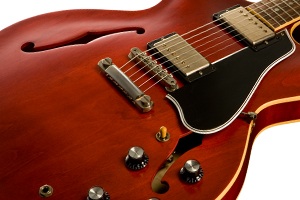
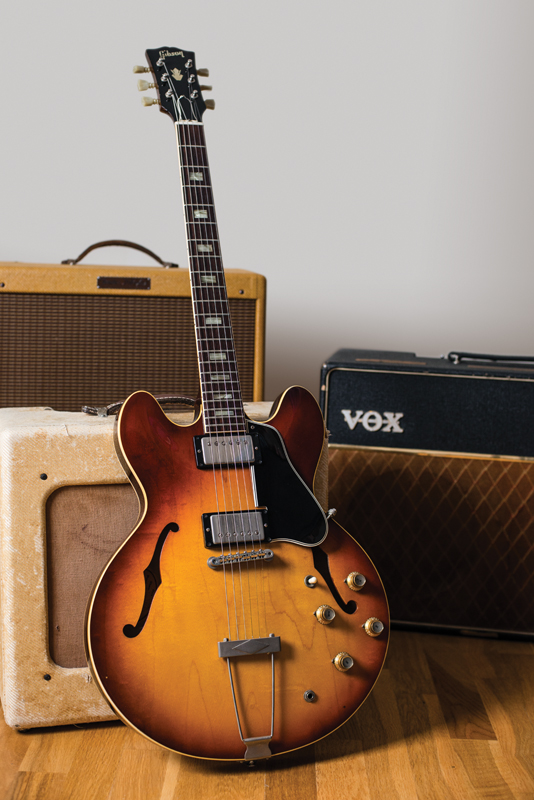
The 1950’s were essential years in perfecting the design of the electric guitar. For Gibson Guitars, under the leadership of Ted McCarty, 1958 was a magical year. He and his team had come up with a series of futuristic solid body guitar designs, which included the Flying Vee, the Explorer and the elusive Moderne, but they also created one of the most original and iconic electric guitars of all time; The ES-335TD, or Electric Spanish model 335 Thin - Double Pickups. Or as it is more commonly known; the Gibson ES-335.
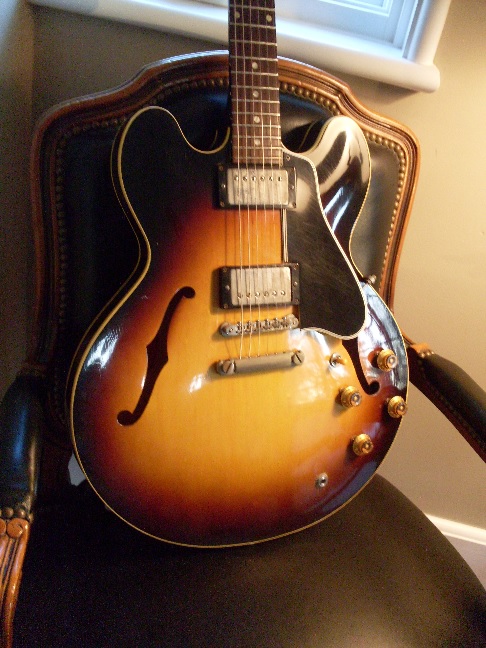
1958 ES-335
McCarty felt the ES-335 was right behind the Les Paul solid body as the companies most important body design. He stated, “I came up with the idea of putting a solid block of maple in an acoustic model. It would get some of the same tone as a regular solidbody, plus the instrument's hollow wings would vibrate and we'd get a combination of an electric solidbody and a hollow body guitar.”
In 1952 Gibson had taken a chance on production of Les Paul’s concept of a solid body guitar which would eliminate the electronic feedback that was common to hollow body electric guitars when they were amplified loudly.
To prove this point, in 1941 Les Paul had created “The Log” which was a solid piece of 4 x 4 pine wood on to which he had attached an Epiphone Broadway guitar neck. Two single coil pickups were mounted to the wooden frame, along with a tailpiece to attach the strings. To make it appear to be a guitar, Paul had sawed the body of an Epiphone guitar in half and bolted the “wings” on either side of the pine plank. And that instrument did not feed back.
In the 1950’s Gibson had its feet staunchly planted in the hollow body guitar market manufacturing some of the finest electric and acoustic instruments. Up until the production of the ES-335, all the Gibson guitars with cutaways had only been manufactured with one either Venetian or Florentine cutaway, but never with two cutaways.
Fender had been making its double cutaway Stratocaster since 1954. Surprisingly enough Paul Bigsby had built double cutaway guitars as early as 1949. And Bigsby’s guitars, though solid in appearance were actually hollow body instruments.
By 1958 Gibson had latched on to the double cutaway concept.
An original 1958 Gibson ES-335 was given a suggested retail price of $335. Although in 1958 most were selling at around $267.50. By the way, in today's money $267.50 is equivalent to around $4,000 USD.
In 1958 the ES-335 body was 1 3/4” deep and had the usual Gibson scale of 24 3/4”. The top and back on the double cutaway body were made of laminated maple as was the center block. The body had single white binding around its perimeter. The neck was also made of laminated maple, for added strength and on original models, it was not bound and had a rather large feel to it. The fretboard was made of rosewood with pearl dot inlays.
The original ES-335 guitars came with either a stop tail piece or a Bigsby B7 vibrato tail piece, which sometimes came with a sticker that said “CustomMade” to hide the routing holes for the stop bar. The bridge/saddle was a tune-o-matic model with adjustable nickel saddles.
This guitar came with twin PAF humbucking pickups and each had an individual volume and tone control in a gold finish with gold tops. Nearby was a three-way selector switch with an amber plastic top. The original models came with the long beveled pickguard. The strap button was made of plastic.
This year the ES-335 was only available with a sunburst or natural finish.
A year later the familiar cherry red finish was added as an option. This year binding was added to the neck. Some of the 1958 models had irregularities in the shape of the neck. By 1959, these issue were resolved. A 1959 ES-335 is considered to be a very desirable guitar to collectors.
A few changes occurred in 1960. This year the neck was given a thinner feel to the back shape. The volume/tone knobs have a chrome reflector top. The pickguard was shortened this year and does not extend past the bridge.
In 1961, Gibson discontinued the ES-335 with a natural finish. This year the strap button were changed to metal. The selector switch tip colour was gradually changed to white. Most notably the serial number was stamped into the back side of the head stock.
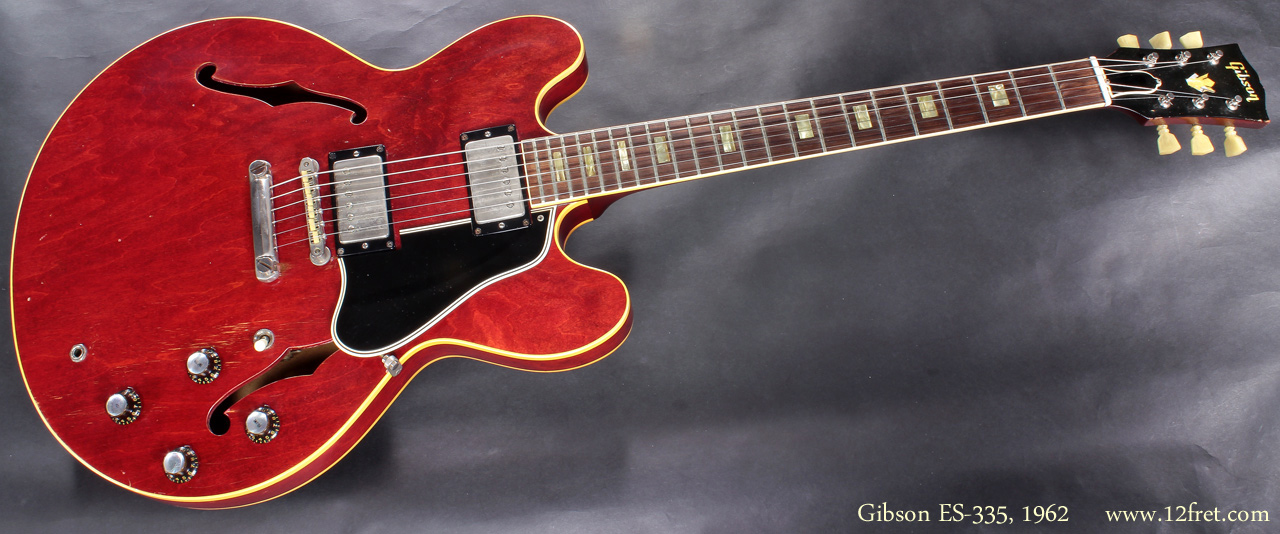
Big changes occurred in 1962. Instead of pearl dot inlaid fret markers, the markers were now small block inlays. The shape of the cutaways have a slight change in that they are now rounder instead of being more pointed. The saddles in the tune-o-matic bridge are now made of white nylon. Most of us will never see this, but the PAF sticker on the back of the humbucking pickups now shows the patent number.
By 1963 the neck shape gradually got larger again.
Through the years Gibson issued some variants on the ES-335 model including a 1981 model called the ES-335 Artist, or more properly, ES Artist, which came with a large headstock logo, no F-holes, a metal truss rod cover, gold hardware, and 3 knobs. The circuit inside the guitar was developed by Moog.
I recall the music store I used to spend time at had a Gibson ES-335 Studio model. It was Gibson’s effort to update and offer a lower price point. This guitar had no F-Holes, and came with twin Dirty Finger humbucking pickups. These were made from the mid 1980’s through 1991.
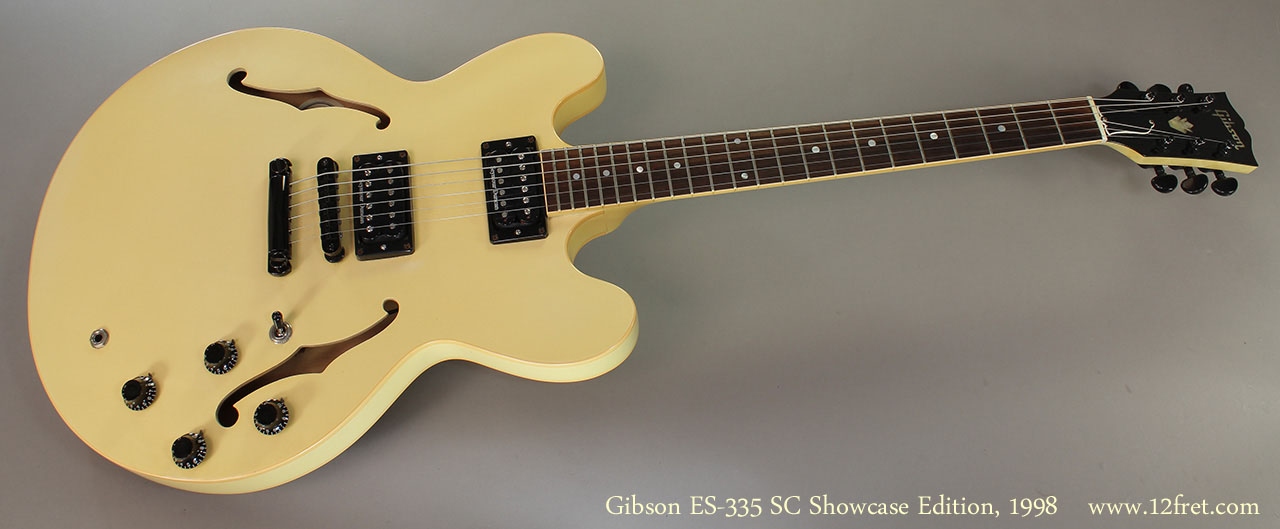
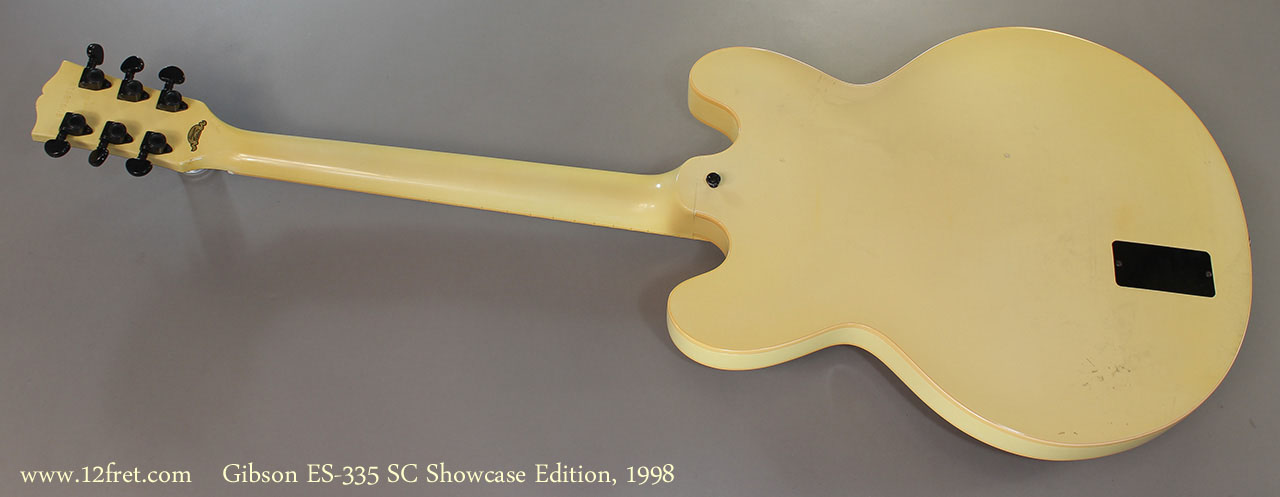
The Gibson ES-335 Showcase Edition lasted only a year. The hardware was black. It came with two EMG pickups. The guitar was either white or beige. Only 200 units were made in 1988.
1994 gave us the Gibson ES-335 Centennial model to celebrate the company’s founding. This also was a limited edition of only 100 units. This guitar came with a gold medallion on the headstock and the tailpiece had diamond inlays.
By 1984 Gibson had moved all electric guitar production our of Kalamazoo, Michigan to Nashville, Tennessee. The ES-335 was then being made at the Nashville factory.
Through the years following 1958, Gibson made other models that were either based on the model ES-335, such as ES-330, which was a hollow body guitar, or the ES-345 and ES-355, which had a broader tonal palette and were fancier guitars, and even the Trini Lopez Standard, which had a similar body, but different sound holes, inlays, and headstock, the ES-335 is the original starting point for all similar models.
Click on the links in the photographs for their source. Click on links in the text for further information.