By 1929 Hoshino Gakki was importing guitars from Spain that were made by Salvador Ibáñez.
 |
| 1905 Salvador Ibanez |
By 1935 Hoshino changed the guitars brand name to Ibanez Salvador and eventually it became just Ibanez. These guitars were imported for the Japanese market.
 |
| 1950's Ibanez electric guitar |
 |
| 1960's Ibanez electric guitars (Teisco) |
 |
| Mann Les Paul |
Though many guitars of that era are referred to as Lawsuit models, only Ibanez guitars of the mid 1970’s would fall into that category. The story behind the lawsuit is rather interesting.
 |
| This is where it all started |
 |
| Vintage Elger Guitar |
However Mr. Rosenblum soon discovered this venture would be very expensive. Within a year Harry Rosenblum shut down manufacturing and decided to import guitars using the Elger brand name. He partnered with Hoshino Gakki and gave them the exclusive North American distribution rights. During the 1960's “made in Japan” denoted a product of lesser quality, so Rosenblum decided to add the brand name Ibanez. This seemed to suggest a product of Spain.
 |
| 1971 Ibanez 335's - bolt-on neck |
 |
| 1974-75 Ibanez Artist - bolt-on neck |
 |
| Letter to Gibson Dealers |
 |
| Cover of 1978 Ibanez catalog |
Through the years many of these guitars have become very collectible.
The Artist Series included the solid body series that was made up of models 2618, the 2618-12 the 2619. All featured mahogany bodies with carved maple tops.
 |
| 2618 |
 |
| 2619 |
While the fancier 2619 came with an ebony fretboard and pearl/abalone/pearl block position marker.
 |
| 2619-12 |
The tuners on the six string models featured pearloid buttons, while the 12 string 2618 had gold-plated metal buttons.
The electronics on these guitars featured the usual twin volume and tone controls and a 3-way pickup selector switch.
 |
| 2622 |
 |
| 2640 |
The features on this guitar are similar to the model 2619, however the controls were quite different. Each neck had an individual master volume and tone control that were shared for the two pickups on the separate necks (4 pickups total). The guitar came with a master volume control. Each neck had a 3 position pickup selector switch. Each neck also featured two Tri-Sound switches. The machine heads for this guitar were gold-plated Ibanez Velvet Tune II models.
 |
| 2617 |
Ibanez models 2629 and 2630 were Ibanez’ semi-hollow body models. The bodies appearance was very similar to a Gibson ES-335, although the horns might be placed slightly differently.
 |
| 2629 |
 |
| 2630 |

The only difference in the MC400 and 500 was the choice of wood used on the outer portion of the instruments bodies.
 |
| MC400 |
 |
| MC500 |
Both guitars had twin Super 88 Ibanez pickups. The tunable bridge was an Ibanez Gibraltar model while the strings attached to the Ibanez Gibraltar slotted tailpiece. The controls were what made these guitars special.
Each pickup had a volume control and a 3-position Tri-Sound switch, but these guitars cam with pre-amp EQ controls; bass, midrange and treble boost potentiometers. The headstock had a natural wood finish and topped with gold-plated machine heads with pearloid button tuners.
 |
| MC300DS |
 |
| MC200 |
 |
| MC100 |
The pickups on both the MC200 and MC100 were Ibanez Super 77's.
The Ibanez Concert series included three beautiful uniquely designed double cutaway solid body guitars that each came with a an arched mahogany body with an arched maple cap. The most exquisite was the CN250 model. It was available in a variety of colours including black (BK), antique violin (AV) which was sort of a burst finish, cherry wine (CW), midnight olive (MO) and cherry sunburst (CS).
 |
| CN250 AV |
 |
| CN250 MO |
 |
| CN200 WH and CS |
There was no Tri-Sound selector switch that came on this model. It was a gorgeous guitar.
 |
| CN100 BS and CW |

 |
| PF400 |
Both pickups were capped with a gold plated cover. The Gibraltar adjustable lock-down bridge and saddles were also gold-plated as was the Quick-Change slotted tailpiece. The headstock was topped with a unique design and bore six-on-a-side gold-plated tuners.
 |
| PF300 AW(amber) |
 |
| PF230 AV |
The PF 200 was an extraordinary instrument. The accouterments were similar to the previous instruments. The PF 200 had two Ibanez Super 70 pickups and basic electronics; two volume and two tone controls.
 |
| PF100 WN |
 |
| 1975 Ibanez model 2663SL and model 2663 |
 |
| Gibraltar bridge - Quik-Lock Tailpiece |
The Iceman came with the Ibanez Gibraltar lockable and adjustable bridge. Some models included a sustain block embedded in the body, that was positioned underneath this bridge.
 |
| Ibanez Triple Coil Pickup |
The Iceman featured either Ibaneez Super 80 pickups or a specially designed triple-coil pickup that was controlled by a 4-position splitter switch.
 |
| Half and Half Nut |
A special nut that was half brass and half bone gave the Iceman a unique tone.
 |
| Iceman Cutaway |
This guitar design is also unique in that it was sold under the Ibanez logo as The Iceman and under the Greco logo as The Mirage.
 |
| Greco Mirage |
Ibanez guitar were distributed by Hoshino Gakki of Japan, which outsourced its production to other companies and branded the instruments as Ibanez with the intent of being distributed in the USA. Subsequently many Ibanez Iceman guitar were actually made by Kanda Shokai, while others were made by the Fugi-Gen Gakki manufacturing plant of Japan. In the 1970's Hoshino was not selling its guitars in Japan. This changed in 1981.
 |
| Greco Dry Z pickup and Ibanez Super 80 pickup |
 |
| IC400 |
The body, neck and elongated headstock were all beautifully bound. This instrument came with either and antique violin finish (2 colour sunburst) or a midnight olive finish, which in my opinion looks black.
 |
| IC300 |
The IC 300 version came with a solid ash body that was only available with a natural korina finish. This guitar was a stripped down model of the JC 400 in that the basic features were similar, but the body, neck and headstock were not bound and the fretboard had pearloid dot inlays. The neck was built-in and all the hardware was all finished in chrome. It came with a sustain block under the Gibraltar bridge.
 |
| IC210 |
 |
| IC200 |
This instrument featured twin Ibanez Super 80 humbucking pickups and a 3 position selector switch on the bodie upper bout. The lower bout bore volume and tone controls for each pickup. This instrument was only available in brown sunburst.
 |
| IC100 BK and WH |
 |
| PS10 |
Perhaps the best version of the Iceman and certainly the most collectible is the PS-10/ Paul Stanley model.

His version of the Paul Stanley PS-10 model was offered to the public in 1978 for $695.
Stanley contrasts the PS-10 to the standard Iceman by comparing a Rolls Royce to a Chevrolet. He goes on to say, that he sat down with Ibanez designers and came up with a guitar: construction, frets, inlays, wiring, the type of tail block that has a sustain block built into it, the half-brass/half-bone nut, and so on. In other words, we took the Artist 2663 shape and made a new guitar. This guitar was offered by Ibanez through 1981.
 |
| 1995 PS10 II |

During 1978 Ibanez introduced some jazz boxes that they called “Acoustic Electric Models”. These were based on the Gibson L-5CES and the ES-175.
 |
| FA700 |
The FA 700 was a beautiful instrument. It had a hand-carved solid spruce top with a curly maple back and sides. The body was bound on the top and back as were the twin F-holes. The set-in neck was made of hard laminated maple and topped with a polished ebony fretboard with pearl rectangular inlaid position markers. The headstock was also bound and topped with ebony veneer with an inlaid design and the logo was also inlaid. The machine heads were Ibanez gold-plated Velve-Tune models.
This guitar came with twin Ibanez Super 70 humbucking pickups each with their own volume and tone potentiometers. The wooden bridge appears to be compensated rosewood. The strings were secured to a fancy gold-plated trapeze tailpiece.
 |
| FA300 |
The model FA 500 featured an arched spruce top and curly maple back and sides. The body was bound on top and bottom. Most of its features were very similar to the previously mentioned instruments but the pickups were different. This guitar featured two Super 70 humbucking pickups both floating above the guitars body.
The neck pickup was attached to the end of the guitars neck while the other was attached to the lower end of the guitars pickguard. Two volume and tone tone knobs were attached to the guitars pickguard along with a 3-way selector switch. There must not have been many FA 500's made as I can find no photographs of this guitar.
 |
| FA510 |
The FA 510 was a very similar instrument, but came with only one floating Super 70 humbucker that was attached to the pickguard and mounted near the neck. It had only a volume control that was mounted on the pickguard. . All models were of a 24.5” scale. This guitar was available in a natural finish (NT) or brown sunburst (BS).
 |
| FA100NT |
The FA 100 BS (brown sunburst) and the FA 100NT (natural) were the Ibanez equivalent of a Gibson ES-175. This instrument featured an arched birch top with birch back and sides. The neck were laminated hard maple and were set-in. The fretboards were ebonized rosewood with pearloid block inlaid position markers. Both the body and the neck were bound. The headstock had Ibanez inlaid at its peak.
 |
| FA100BS |
These guitars came with twin Super 70 humbucking pickups, each with a volume and tone control. The hardware was chrome-plated. The FA 100 models featured a rosewood bridge topped with an adjustable saddle. Strings were secured to a trapeze tailpiece.
 |
| SA400 |
The bound neck was topped with an ebonized rosewood fretboard and had pearloid block position markers inlaid. The headstock was also bound and the Ibanez logo was inlaid in pearloid on the ebony headstock veneer along with a design.This guitar featured twin Ibanez Super 80 pickups each with individual volume and tone controls. One very interesting feature was the stereo option that came as a standard feature. The bridge and saddle were the Ibanez Gibraltar locking model and the strings attached to their Quik-Change slotted tailpiece. All hardware was gold-plated. The SA 400 came in either a cherry or walnut finish.
 |
| SA100 |
The SA 100 was Ibanez’ answer to the Gibson ES-335. This instrument also had a birch body that was bound on the top and bottom. The F-holes did not have binding. The set-in neck was made of laminated maple and topped with an ebonized rosewood fretboard that had pearloid dot fret markers. It had 22 frets. The body had twin Ibanez Super 80 pickups each with a volume and tone control. All hardware was chrome-plated. It came in brown sunburst or cherry.
 |
| FA800BS |
The headstock, body and neck were all bound as was the pickguard. The logo “Ibanez” was inlaid into the ebony veneer on the headstock along with Ibanez’ special design. All hardware was gold-plated. The compensated bridge was made of rosewood and the strings attached to a trapeze tailpiece. This guitar came with a brown sunburst or natural finish.

The inlays (mother-of-pearl and abalone) were perfectly placed, without black glue to cover up mistakes. The headstock inlays were immaculate and the body and neck finish are smoothly applied. Inside, you won't see wood shavings or paint spots on the back. The quality and craftsmanship was excellent.
 |
| GB10 (NT) & (BS) |
The body, neck and headstock were all bound. Inlaid in the ebony headstock veneer was the Ibanez logo and a sort of modified flowerpot design with the initials “GB” included.
The GB 10 came with a stylized and compensated dense ebony bridge that sat on top of the body. This guitar was thinner than the GB 20. One of the most interesting features was the tailpiece. It was in two sections; one for the three treble strings and one section for the three bass strings. It was adjustable to set the tension for each section. All hardware was deluxe and gold-plated. The truss rod cover was bound and had George Bensons’ name etched into it. The GB 10 is still in production. Average street price is around $3500.00 USD.
 |
| GB20 |
The model GB 20 was a handcrafted instrument in the style of the Ibanez FA 800. This guitar featured a carved and arched spruce top with Birdseye maple back and side. The neck was made of three pieces of hard rock maple and topped with an ebony fretboard. The fretboard had pearl and abalone block position markers and was topped with a bone nut. The body had 7-ply biding on the top and 3-ply on the back, neck and headstock. The neck featured a zero fret.
The headstock was inlaid with the Ibanez logo and a modified flowerpot design with the initials “GB” above. All hardware was gold-plated. This guitar featured a single Johnny Smith style floating humbucker pickup that was attached to the triple bound tortoise shell style pickguard. There was a single volume knob mounted on the pickguard. The bridge/saddle was adjustable and made of ebony with inlaid designs. And this model included the split die-cast tailpiece that came with adjustable knobs for the strings tension. The GB 20 was only produced through 1982.
In addtion to the Paul Stanley PS 10 Iceman and the George Benson model guitars, Ibanez built signature models for a couple of other well known artists.

The body of the Bob Weir model 2681 was based on a double neck guitar designed by luthier Rex Bogue. At one time Weir used a single neck version of The Bogue guitar. The body shape also bore some resemblance to the Yamaha SG that was introduced in 1973.
 |
| 2681NT |
The Ibanez 2681 has two symmetrical upper cut-a-ways on its upper bouts. The guitars body was carved from a solid piece of ash and featured a German carve on its upper portion. The upper section of the body was double bound with a strip of cream binding, another strip of abalone and an outer strip of cream binding. The cream binding from the cutaway going into the neck was wider to accommodate the slant of the neck.
The guitars neck was made of hard laminated maple. There was a reddish strip (possibly walnut) between three sections of maple. This strip extended to the rear of the headstock. The guitars neck was topped with a highly polished ebony fretboard and the neck and headstock were bound. On the fretboard and extending through the headstock was a beautifully inlaid vine design. The headstock was a work of art and wonderfully carved on the top and sides. The vine design was inlaid in the headstock with pearl.
The machine heads were gold-plated and top-of-the-line Velve-Tune Ibanez models. The nut was the Ibanez half bone/half brass model.
The model 2681 strings passed over a gold-plated Ibanez Gibraltar locking bridge and were secured to an Ibanez Quik-Release gold-plated tailpiece that had a brass “cloud” design behind it. This was also gold-plated. Under the bridge was a sustain block.
This model 2681 was topped with twin Ibanez Super 70 humbucking pickups with gold-plated covers. This guitar was available in a natural wood finish (NT) or a antique violin finish (AV).
 |
| 2680AV |
The headstock was of a similar carved shape, but was unbound.
Fast forward to 2005 and Ibanez revealed another Bob Weir model called the Cowboy Fancy model BWM1. The ash body was similar to the 2681, however this was a completely different beast.
 |
| Bob Weir Cowboy Fancy |
The headstock on this guitar was larger than the 1978 version at Bob Weir’s request. He believed it would add sustain. It was also elaborately inlaid. All hardware was gold-plated.

The electronics and controls on this guitar were quite unusual. On the guitars upper bout are four toggle switches. The first three are on/off switches for each pickup. The fourth switch controls the humbuckers. In the up position they are in humbucking mode and the down position is a coil tap.
On the lower bout are three large knobs. The first is a master volume. Next to it is a master tone control and the third is an EQ level control. Below these knobs are three smaller knobs which are the Ibanez EQ tone system. They are center notched and provide 15db + or - in three frequency bands, Bass/Middle/Treble. The BWM1 was reissued in 2016.
 |
| Gerry Beckley of America |
This instruments body was made of book matched and hand sculpted ash. The upper side of the body was designed with the distinctive German carve.
 |
| 2670 |
Inlaid on the fretboards were vine inlay designs. Both necks came with the Ibanez half and half nuts.
The headstock was sculpted and a vine inlay designs were embedded in the ebony veneer. The headstocks were bound with cream binding. The machine heads were capped with fancy plastic buttons. All hardware was gold-plated.
This guitar came with two sets of twin Ibanez Super 80 pickups. Each pickup had an Ibanez Tri-Sound tone selector switch that was mounted below them along with a pickup selector switch. Each neck had a master volume and tone control. It also had a three way throw switch to select which neck was to be played.
The strings on the Artwood went over an Ibanez Gibraltar locking adjustable bridge/saddle that had sustain blocks under each neck. The strings were them secured by Ibanez Quik-Release tailpiece. It was a gorgeous guitar.
 |
| Stanley Clarke Ibanez |

The tremolo unit was completely adjustable and had fine tuning knobs. Below it was a locking block.


The JEM 777 featured 6100 Jim Dunlop fretwire. The neck was made of solid maple and had “disappearing pyramid” position markers. The nut was a Floyd Rose locking nut.
This was the guitar with the “Monkey Grip.” It originally came in green, pink and yellow (desert sun). Within a year new colour options were adding including a dark floral pattern (with vine inlay on the neck) and a root beer model with a rosewood fretboard and a larger monkey grip. In 1989 a black finish was added. Through the years new colours and pickup options were added.
 |
| UV77MC and UV7BK |
By 1993 Ibanez had come out with a new Steve Vai model known as the UV 777 and UV 7P. The pickups were two DiMarzio Blaze II E humbucking models for the bridge and neck and a DiMarzio Blaze II single coil in the center. This was the seven string version of the JEM 777.

In 1991 Ibanez built the PGM guitar for Paul Gilbert, guitarist for Racer X and Mr. Big. These were the days of the super-strat and Ibanez came out with their RG Series. Gilbert went on to help in designing the Reverse Iceman.

The PGM guitar was another super-strat, with a different shape than the JEM 777. The body of the PGM was made of basswood. The neck was made of solid maple with a bound rosewood fretboard. The position markers were pearloid inlay and had a shark’s tooth shape. The neck featured the Ibanez six-on-a-side shape for the headstock.
This guitar had the Ibanez Edge Tremolo with the Toplock III locking nut (both by Floyd Rose). The PGM came with two DiMarzio PAF Pro humbuckers in the bridge and neck position and a DiMarzio FS-1 single coil pickup in the center position.
The electronics were similar to those on the JEM 777 and were control by the 5-way blade lever switch. This guitar came with a blue finish and two pink graphic F-holes (painted on). The volume control was the only potentiometer and was located at the bottom on the lower F-hole.
 |
| PGM300 and PGM500 |
Through the years the PGM series was updated. By 1996 it came in different colours and the the machine heads were moved to the bottom of the headstock.
 |
| Ibanez PMGFRM1 |
The PGMFMR1 guitar used Korina wood for the body. The neck was set-in to the body.
Instead of the Edge tailpiece, this guitar used the Gibraltar bridge/saddle and a Quik Change stop tail piece.
The instruments neck was laminated in three pieces, korina/bubinga/korina and topped with a rosewood fretboard with pearl dot position markers.
The body featured a tortoise shell style pickguard topped with three DiMarzio Area 67 single coil pickups. The guitar came with one volume control, one tone control and a five-way blade switch. Only 45 units were made.
 |
| Ibanez PMGFMR2 |
The set-in neck was laminated in three pieces and made of mahogany/bubinga/mahogany and topped with a rosewood fretboard with pearl dot position markers. Hardware was the same as on the first model, but this guitar came with two DiMarzio Air Classic humbucking pickups.
 |
| 1994 Ibanez Talman |
This guitar came with three lipstick pickups that were called Sky lipstick pickups and looked a lot like those on a Danelectro guitar. The Sky pickups were created by Kent Armstrong, the son of Dan Armstrong.
Most instruments in this series came with three single coil Sky lipstick pickups, however the deluxe version of the Talman came with two gold-plated mini humbucking Sky pickups and a gold-plated Sky lipstick pickup in the center position.
 |
| Example of Photoflame |
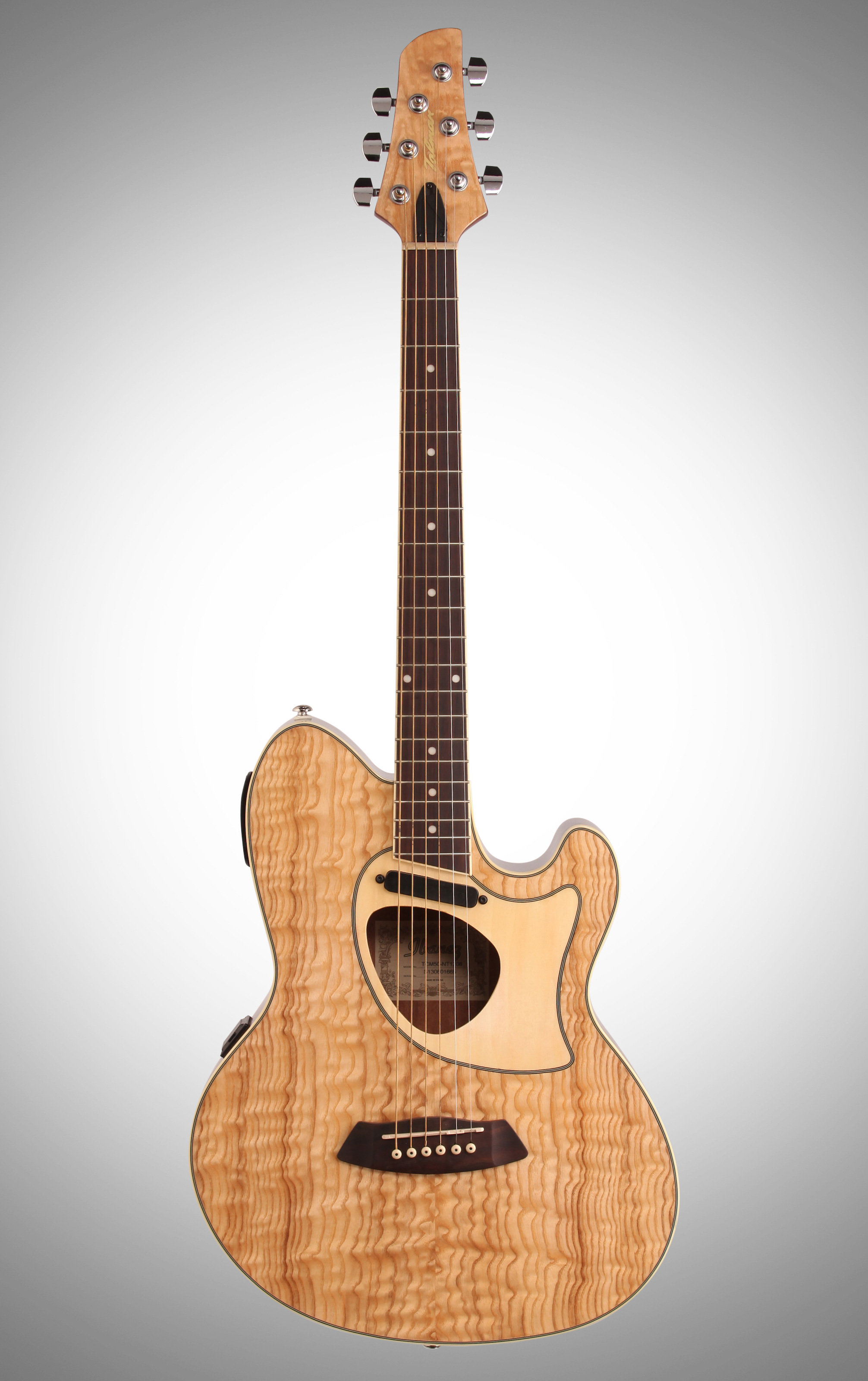 |
| Talman TCM50 |
In 1996 the Ibanez Artist Series of “acoustic-electric" guitars, which were actually either hollow-body electrics or semi-hollow-body electrics were renamed the Artstar series. This series survives today.
 |
| PM1000 |


As far back as 1983, guitarist Joe Pass was an Ibanez endorser. The company created his model based on the style of his D’Aquisto model.
 |
| 1983 JP20 |
The headstock was exquisitely bound and featured the Ibanez logo and Mr. Pass’s initials inlaid on the veneer.
The strings went over a rosewood adjustable bridge and attached to a trapeze tailpiece that was covered with a block of ebony.
 |
| 1988 Ibanez JP20 |

Guitarist Joe Satriani also became an endorser in 1988. His model was first given the numbr 540R. By 1990 the guitar was updated with dual pickups and renamed the JS model.

Many of the Ibanez series created in 1978 and mid 1980’s still remain in the line up today and are too numerous to mention. The current Ibanez catalog is 75 pages long.
©UniqueGuitar Publications (text only)


No comments:
Post a Comment